REVIEW · VERONA
Verona Highlights Walking Tour in Small-group
Book on Viator →Operated by Ways · Bookable on Viator
A Roman arena and Juliet’s myth in one walk? That’s the fun here. I love the 2-hour, get-your-bearings route and the way the guide turns street corners into clear Verona stories. One thing to plan for: the big indoor stops (like the Arena and Juliet’s House) have entry tickets that are not included.
Meet in Piazza Bra with a local guide in English, then enjoy an unhurried pace through Verona’s historic center. This is a small-group tour (max 16), and it runs rain or shine, so bring sensible shoes and expect some walking over uneven streets.
Key points before you go
- Small group (max 16): easier questions, tighter pacing, less waiting
- Roman-to-Shakespeare route: you connect the city’s layers fast
- Arena di Verona focus: you see why this place still hosts opera
- Castelvecchio + Scaligero Bridge: medieval engineering with war-history context
- Juliet’s House and Romeo’s House exterior: legends with real location clues
- Piazzas that explain power: Bra, Erbe, and dei Signori make sense in one loop
In This Review
- A 2-Hour Loop That Gives Verona Context Fast
- Piazza Bra Meeting Point: Easy Start, Great Central Base
- Castelvecchio and Scaligero Bridge: Medieval Verona With Real War History
- The Arch of Gavi (1st Century AD): When Verona Was Roman and Active
- Arena di Verona: A 2,000-Year-Old Stage Still Working
- Juliet’s House Courtyard and Romeo’s House Exterior: Legends With Location Clues
- Piazza Bra to Piazza delle Erbe: Squares That Explain Verona’s Power
- Piazza dei Signori and Arche Scaligere: Dante, Tombs, and Political Theater
- The Real Value: What a Local Guide Adds (and How to Use Them)
- Price and Logistics: Is $42.33 Worth It?
- Who This Verona Highlights Tour Suits Best
- Should You Book This Verona Highlights Walking Tour?
- FAQ
- How long is the Verona Highlights Walking Tour?
- Where does the tour start and end?
- Is the tour offered in English?
- Are the tickets for the Arena di Verona and Juliet’s House included?
- Is hotel pickup or drop-off included?
- How many people are in the group?
- Does the tour run in bad weather?
- Is access to Juliet’s Balcony included?
- Can I cancel for a full refund?
A 2-Hour Loop That Gives Verona Context Fast
If Verona is new to you, this tour is a smart move. In about two hours, you cover a long timeline—from Roman Verona to medieval rulers to the Shakespeare magnet—without feeling like you’re sprinting.
The payoff is not just seeing famous spots. It’s learning how they connect: why the city’s layout makes sense, how power shifted over centuries, and what you’re looking at when you stand in front of stone that survived wars, restorations, and constant crowds. I also like that the pace stays relaxed, so the facts don’t feel like a lecture.
The trade-off is that it’s still a walking tour. You’ll want comfortable footwear and a bit of stamina, especially if you’re sensitive to weather.
Piazza Bra Meeting Point: Easy Start, Great Central Base
The tour begins and ends at Piazza Bra, right in the heart of Verona. That matters because you’re not hunting for a distant meeting point or stitching together multiple transit moves.
From here, you can already feel what you’re here for: the broad open square, the cafés, and the obvious draw of the Roman Arena di Verona nearby. It’s a clean anchor point for your first day because you’ll recognize the area when you head out afterward—especially helpful if you plan to return for dinner or a longer stroll.
Since the tour is offered in English and capped at 16 travelers, you should be able to ask questions without getting lost in the crowd noise.
Other Verona walking tours we've reviewed in Verona


Castelvecchio and Scaligero Bridge: Medieval Verona With Real War History
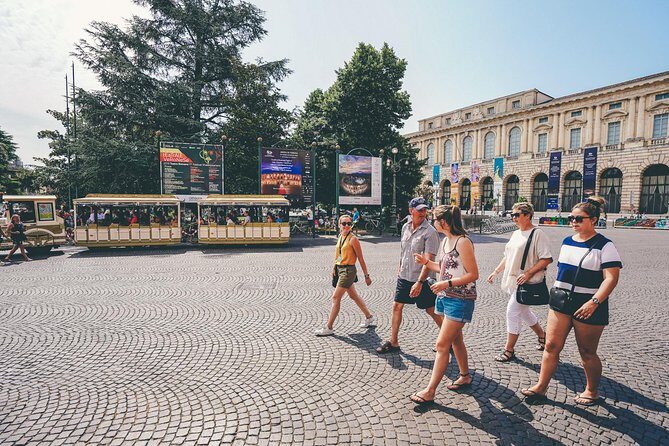
One of the first highlights is the walk by Castelvecchio, Verona’s late-medieval castle. This isn’t just scenery. The guide’s angle is practical: what these fortifications were for, who controlled the city, and how the castle’s location relates to the river and the route of travel.
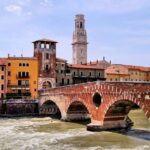
Then you cross to the story of Scaligero Bridge, which connects the castle to the Adige’s left bank. What makes this bridge stand out is that it almost didn’t survive: it was heavily damaged in a bombing and later rebuilt to match the original look. That single detail turns a pretty crossing into a small lesson on how Verona protected its identity through the 20th century.
If you like places that have both beauty and backstory, this section is a strong start. And because these are outdoor areas, you’re not stuck waiting indoors if the weather turns.
The Arch of Gavi (1st Century AD): When Verona Was Roman and Active

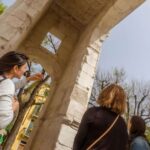
Next comes the Arco di Gavi, an elegant 1st-century AD Roman construction connected to the Roman architect Vitruvius and the gens Gavia, an important Roman family of Verona.
Why I like including this stop: it’s a reminder that Verona wasn’t a medieval invention. The city’s importance runs deeper, and Roman engineering still shapes what you can see today. When you walk past Roman arches in other Italian cities, it can feel decorative. Here, the guide helps you connect the arch to the broader urban plan of Roman Verona and how those structures carried status and movement.
Even if you’re not a history person, you’ll likely leave this part with at least one clear mental picture: this was once a working Roman crossroads, not just a quiet stone town.
Arena di Verona: A 2,000-Year-Old Stage Still Working
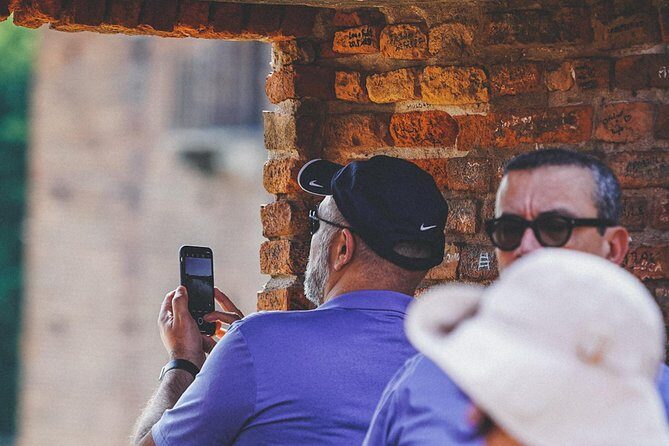
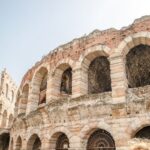
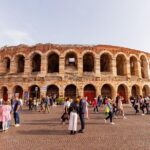
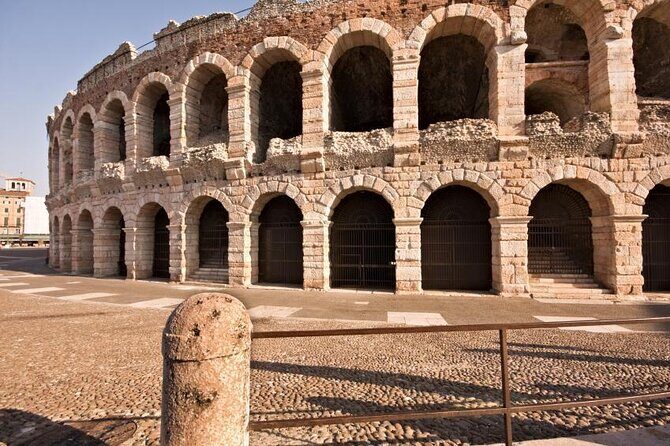
You finish this Roman chunk at the star: Arena di Verona. This amphitheater was built in the 1st century AD during the Augustan period (around AD 30), and it’s still remarkably well preserved.
The tour focuses on what makes it special: how it once could hold up to 30,000 people, and how it remained central to public life across centuries. The guide also explains the kind of care and actions needed over time to keep it standing so well—because that’s the difference between a ruin you admire and a monument you can still experience.
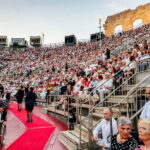
You’ll also hear how it functions today. The Arena is famous as the setting for Verona’s opera season, including the popular Verona Arena Festival, which brings classical music lovers from around the world in summertime.
A practical note: the Arena entry involves tickets. The tour helps you reach it and understand what you’re looking at, but you should expect to handle admission separately.
Juliet’s House Courtyard and Romeo’s House Exterior: Legends With Location Clues
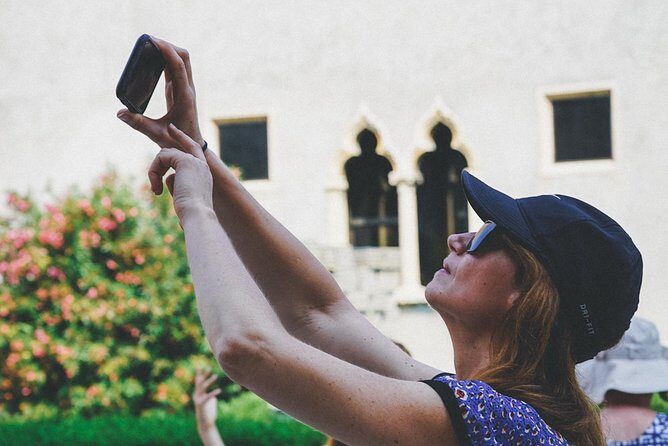
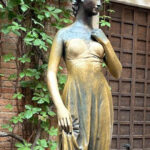
Next stop is Casa di Giulietta (Juliet’s House). You’ll see the courtyard associated with the Capuleti house—the setting that sparked Shakespeare’s Romeo and Juliet.
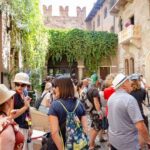
This is where the tour becomes fun in a different way. Instead of treating the story as a costume drama, the guide gives you the “this is why it matters here” angle—so you understand why this location became a cultural magnet. You also get a clear sense of how popular the balcony side of the legend is, because this area draws heavy visitor traffic.
Then you’ll move toward Romeo’s House, which is a medieval palace. Important detail: it’s private and inhabited, so you can only see it from the outside.
One timing consideration matters for planning. From December 6, 2025 to January 6, 2026, the tour does not include access to Juliet’s Balcony as usual. During that window, balcony access requires a ticket purchase, and the tour won’t buy it for you.
If you’re visiting during that holiday window, plan ahead so you’re not disappointed on the spot.
Other small group tours in Verona


Piazza Bra to Piazza delle Erbe: Squares That Explain Verona’s Power
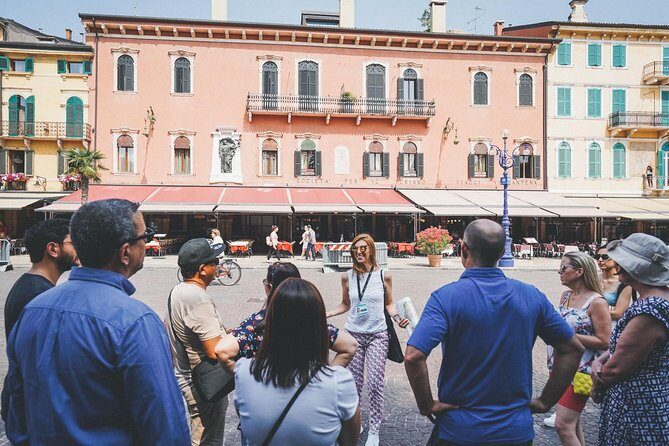
After the Shakespeare stops, the tour shifts into urban navigation mode. It’s clever because Verona’s history shows up in the layout—where people gathered, where officials acted, and where the city’s identity condensed into public space.
You spend time in Piazza Bra, the largest piazza in Verona lined with cafés and restaurants, plus charming buildings that frame the square’s open feel. This is a good palate cleanser after the more intense crowd atmosphere near the Arena and Juliet.
Then you head to Piazza delle Erbe. This square was the Forum, the center of city life during Roman times, and it’s still loaded with meaning. The middle of the square has monuments that reflect different rulers of Verona, and the most famous one is the fountain built during Scaligeri rule. The result is you see how civic identity was displayed in stone and water, not just written in documents.
If you like walking tours that actually help you look around, this part is a win. After a stop like this, you’ll know what to look for when you’re back on your own later.
Piazza dei Signori and Arche Scaligere: Dante, Tombs, and Political Theater
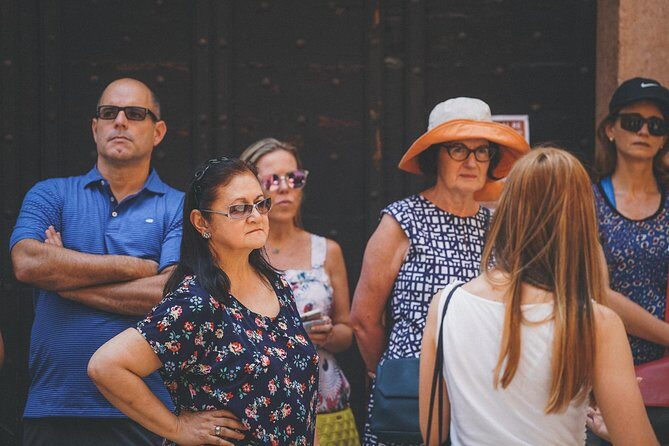
Two more stops tighten the story around power and legacy.
First is Piazza dei Signori, the former center of power in Verona. A large statue of Dante Alighieri dominates the square, and it even earned the nickname Piazza Dante. That link makes the square more than a pretty stop—you’re seeing how cultural memory gets stamped onto civic spaces.
Then you visit Arche Scaligere, the Scaligeri cemetery. The key feature here is the three arches built for Cangrande I, Mastino II, and Cansignorio. It’s an outdoor view, but it’s still a strong “how rulers wanted to be remembered” moment. These monuments show how public authority, art, and funerary display worked together.
This is also one of the best areas for slower observation. If the day is tiring, stand for a moment, look at the shapes, and let the guide’s explanation connect the dots.
The Real Value: What a Local Guide Adds (and How to Use Them)
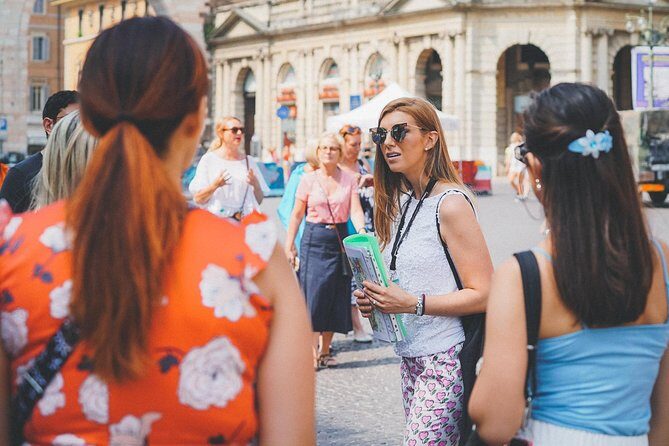
A big reason this tour earns high marks is that it doesn’t treat landmarks like checkboxes. The guide brings facts and insight that help you interpret what you’re seeing—churches and palaces in the historic center, why the city developed where it did, and what shifts in time look like on the ground.
I also like that the tour encourages questions as you go. If you’re the type who likes to understand the logic behind a city—why a bridge was rebuilt, why a square was designed a certain way—this is exactly the format for you.
A simple tactic: when you reach a stop, ask one focused question. For example:
- What time period am I looking at right now?
- What was the main purpose of this place?
- If I come back later, what should I notice first?
With a small-group setup, those questions actually get answered instead of squeezed into a group scramble.
Price and Logistics: Is $42.33 Worth It?
At $42.33 per person, this is priced like a serious “first-day” experience, not a casual stroll. For that money, you get a local guide, a well-paced loop through major sights, and a route that saves you from piecing together directions and context yourself.
Here’s the balanced part: ticketed entries are not included for key stops like the Arena and Casa di Giulietta. So your real cost will likely be a bit higher if you want to go inside. Still, the value tends to hold because you’re paying for interpretation and route efficiency, not just proximity.
Another practical factor is timing. With lots of demand (on average booked about 28 days in advance), booking ahead helps you get the slot you want and reduces the stress of last-minute planning.
If you’re the type who enjoys reading about a city but wants it translated into real places, this price makes more sense than a self-guided day where you’ll have to guess what everything means.
Who This Verona Highlights Tour Suits Best
This tour is a strong fit if:
- You want an efficient first introduction to Verona
- You enjoy history when it’s explained through real locations
- You’re traveling with limited time and still want the major highlights
- You like small groups and the chance to ask questions
It may be less ideal if you want long museum-style visits or you hate walking. Also, some parts of the route may be harder if you have reduced mobility, since it notes certain areas are not easily accessible.
Should You Book This Verona Highlights Walking Tour?
Yes—if you want a smart, story-driven starter day in Verona. This tour does a lot of work for you: it connects Roman Verona to medieval power to Shakespeare legend, and it does it in a relaxed pace that still gets you to the key stops.
Book it especially if:
- Verona is a one-stop trip and you want the big sights in order
- You prefer guided context over wandering without a plan
- You’re okay with handling entrance tickets for the Arena and Juliet areas
Skip it or rethink if you want long stays at each site, or if you’re only interested in one specific attraction. For pure one-place focus, you might get better value picking that attraction and spending more time there.
If you’re visiting within Dec 6, 2025 to Jan 6, 2026, remember the special Juliet’s Balcony rule so you can plan for a ticket on your own.
FAQ
How long is the Verona Highlights Walking Tour?
It runs about 2 hours.
Where does the tour start and end?
Both start and end are at Piazza Bra in Verona.
Is the tour offered in English?
Yes, it is offered in English.
Are the tickets for the Arena di Verona and Juliet’s House included?
No. Admission tickets for the Arena di Verona and Casa di Giulietta are listed as not included.
Is hotel pickup or drop-off included?
No. There is no hotel pickup and drop-off.
How many people are in the group?
The tour has a maximum size of 16 travelers and is designed as a small-group experience.
Does the tour run in bad weather?
Yes, it runs rain or shine.
Is access to Juliet’s Balcony included?
Usually it is part of the experience, but from December 6, 2025 to January 6, 2026, access to Juliet’s Balcony is not included as usual. You’ll need to purchase a ticket yourself, and the tour won’t purchase it for you.
Can I cancel for a full refund?
Free cancellation is available. You can cancel up to 24 hours in advance for a full refund.