Verona glows at Christmas time. This small-group evening walk threads together the city’s most famous corners—plus a hilltop view you’ll remember from Castel San Pietro—with Verona Christmas markets in the middle of it all. The itinerary moves smartly through classic highlights like the Arena di Verona and Juliet’s house, and it’s guided by locals; one reviewer highlights Luisa for strong historical storytelling and being easy to work with.
Two things I really like: you get a guided line to the big sights without feeling rushed, and most stops list free admission, so your $92.69 goes toward the guide and the time on your feet—not paying entry fees. The one possible catch is the hilltop ride: the funicular ticket isn’t included, and it’s closed on 25 December, so plan accordingly if you’re traveling that day.
In This Review
- Key Points That Make This Christmas Verona Tour Worth It
- Piazza Bra at 4:30 pm: Your Christmas-Start Shortcut
- Arena di Verona and the Roman-Stage Feeling
- Palazzo Barbieri: Where Civic Power Hides in Plain Sight
- Piazza delle Erbe: A Square That Feels Like Verona’s Living Room
- Casa di Giulietta: The Balcony Moment (With Context)
- Castel San Pietro by Funicolare: The View That Makes the Walk Pay Off
- Ending in Piazza Bra Market Time: Souvenir Shopping Without the Guesswork
- Price and Value: What $92.69 Gets You in Verona’s Peak Season
- Who This Tour Fits Best (And Who Might Skip It)
- Should You Book This Christmas Verona Tour?
- FAQ
- Where does the tour start?
- What time does the tour begin?
- How long is the tour?
- What’s included in the price?
- What isn’t included?
- Is the funicular accessible on December 25?
Key Points That Make This Christmas Verona Tour Worth It
- Max 15 people keeps the walk friendly and easy to ask questions on
- A late-day start (4:30 pm) means you’re in Verona for Christmas atmosphere as night falls
- Arena di Verona + Juliet’s house are both on the route, with time to actually look
- Funicolare di Castel San Pietro adds a real wow factor view over the city
- Piazza Bra Christmas market ending gives you time to browse and buy souvenirs
- Free admission at most stops helps the value stay strong for the price
Piazza Bra at 4:30 pm: Your Christmas-Start Shortcut
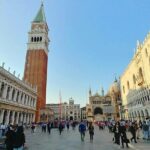
I like tours that drop you into the atmosphere first. This one starts at Piazza Erbe (meeting point), and the walk begins right away around Piazza Bra, the heart of Verona’s Christmas scene. Expect a festive square, decorated for the season, with that slightly magical feeling that only happens when the city is in holiday mode.
Piazza Bra is a great starting point because it’s central and easy to understand. In a short window, you’ll go from shopping mood to landmark mode, without having to figure out how all the sights connect. It also sets you up for an evening route that makes sense: you’re not starting with the hardest-to-reach viewpoint—you warm up with the city’s festive core first.
If you’re the kind of traveler who enjoys walking, people-watching, and light shopping, you’ll appreciate how the tour keeps you in the action. There’s also a practical side: it’s one of those routes where, even if you only half-listen to your guide (you won’t), you’ll still collect a clear map of the city’s main sights.
Other small group tours in Verona

Arena di Verona and the Roman-Stage Feeling
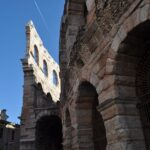
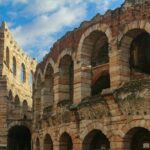
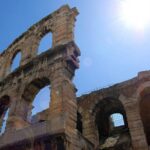
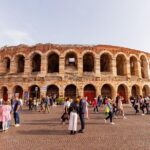
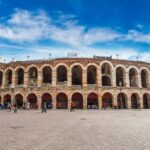
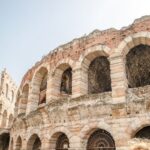
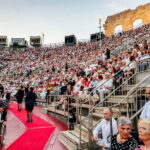
Next up is the Arena di Verona, one of the best-preserved Roman amphitheaters. This place is special for a reason that’s more than just postcard beauty. It’s described as largely intact, and it’s still open to the public—so it doesn’t feel like a museum object frozen in time. On top of that, it hosts concerts, which adds a modern pulse to the ancient structure.
The tour gives you about 30 minutes here, which is just enough time to appreciate the scale, notice the stone details, and understand why this arena still matters. I find that the Arena works best when you can slow down for a moment rather than sprint through like you’re speed-running your bucket list.
One consideration: this is an outdoor stop. In December, Verona can be chilly, and the time outside is real. Bring a jacket you’ll actually wear, not the one you saved for later.
Palazzo Barbieri: Where Civic Power Hides in Plain Sight
After the big Roman landmark, the pace shifts to something more subtle: Palazzo Barbieri, Verona’s Town Hall. The building has an interesting connection to the Austrian civic guard, and today it’s used as the municipal headquarters. That mix—past to present—helps you see Verona as more than just a stage set for tourists.
The stop is shorter (around 15 minutes), so think of it as a focused “look and learn” moment. I like these mini-stops because they break up the heavier sights and give your brain a chance to absorb what you’ve already seen. Also, buildings like this teach you how the city functions today, not only what it looked like centuries ago.
If you prefer architecture to pure sightseeing checklists, this stop will land well. If you’re expecting a dramatic interior tour, you might find it more exterior-focused, since the time is brief and the overall tour stays outdoors.
Piazza delle Erbe: A Square That Feels Like Verona’s Living Room
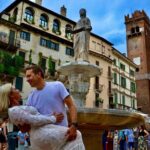
Then you reach Piazza delle Erbe, one of the city’s most elegant squares. It’s known for an architectural mix—monuments and palaces from different eras—which creates that layered “Verona is built in layers” feeling. It’s the kind of place where you can look up at facades, then glance down at details, and keep finding new things in the space between conversations.
You’ll get about 15 minutes here. That time window is ideal for appreciating the setting without turning the tour into a long wander with too many decisions. I also like that Piazza delle Erbe is a natural bridge: it sits between the classical and romantic sides of Verona, so your brain is primed for the Shakespeare connection right after.
A practical tip: if you’re also shopping around the markets, this square can be an easy mental landmark to remember. Even when the streets start looking similar in winter, you’ll have an anchor.
Casa di Giulietta: The Balcony Moment (With Context)
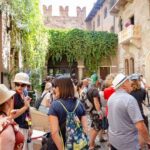
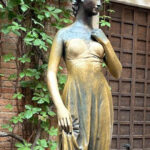
No Verona tour feels complete without Casa di Giulietta. You’ll spend about 30 minutes at Juliet’s house, where the story is tied directly to Shakespeare. The standout is the iconic balcony people come to see, but the bigger value is the context—why Verona became part of a world-famous love story, and how that story has stuck around as a living cultural symbol.
For me, the best way to enjoy this stop is to treat it like a storytelling pause. Let your guide fill in the meaning, then take a moment just to stand there and look. Even if you’re not a die-hard Shakespeare fan, you’ll understand why the place is still crowded: it connects literature to a real street scene.
The one potential drawback is crowd energy. December brings people out, especially around popular icons. If you’re someone who dislikes queues or shoulder-to-shoulder situations, go into it with the mindset of quick absorption rather than lingering in one spot forever.
Castel San Pietro by Funicolare: The View That Makes the Walk Pay Off
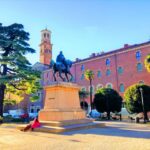
This is the part that often sells the tour: Funicolare di Castel San Pietro, the cable-way ride up to Colle San Pietro. The ticket is not included—expect to pay 2 euro round trip in cash—and it’s closed on 25 December. Once you’re up there, the reward is the view: you can enjoy a wide look over Verona from Castel San Pietro.
The ride itself is about 30 minutes in the schedule, which is enough time to get up, settle, and take photos without feeling like you’re trapped in line forever. I love viewpoint segments because they give the tour a payoff. After moving through squares and landmarks, suddenly you get the city in one frame, with streets and rooftops helping everything you saw earlier click into place.
A practical consideration: it’s a hilltop. That means colder air, especially near sunset. If you’re planning to take pictures, dress for it, and keep moving so you don’t end up frozen while you’re trying to frame the perfect shot.
Ending in Piazza Bra Market Time: Souvenir Shopping Without the Guesswork
The tour ends back at the meeting point area, with the big finale at Piazza Bra, where the Christmas market is located. This is smart timing. You’ve already done the landmarks. Now you get time to slow down and browse, snack-free if you prefer, or just enjoy the atmosphere and grab gifts.
Because the ending sits right in a market square, you don’t have to plan transport or navigate to a separate location later. You can decide on the spot what to buy, what to skip, and how long you want to wander before heading out on your own.
If you like practical shopping—small, local souvenirs rather than bulky items—this ending pattern is a good fit. It’s also a nice way to avoid that travel problem where you see a market once and miss it later when the crowds thin.
Price and Value: What $92.69 Gets You in Verona’s Peak Season
At $92.69 per person, this isn’t a “cheap and cheerful” tour, but it also isn’t overpriced for what you get. Here’s the value logic: the tour includes a local guide, an outdoor small-group experience (max 15 travelers), and access to multiple major Verona stops.
Even better, the listed admissions for the core sights are free at each stop (Piazza Bra, Arena di Verona, Palazzo Barbieri, Piazza delle Erbe, and Casa di Giulietta). The only paid component you’re likely to add is the funicular ride (around 2 euro round trip, paid in cash). That means your money is primarily paying for time, guidance, and a smooth route—not turning into an entry-fee scavenger hunt.
Duration matters too. It runs about 2 hours 30 minutes, which is long enough to cover meaningful stops and still short enough that you won’t feel like your whole evening got swallowed. That’s the kind of scheduling that works well during Christmas season, when plans stack up fast.
One more value detail: there’s a private option. If you’re traveling with a group that wants more flexibility, or if you just want lower stress and more direct Q&A, that option can make the price feel more reasonable.
Who This Tour Fits Best (And Who Might Skip It)
This tour is a strong match if you want a guided introduction to Verona at Christmas time without building a full self-guided route. You’ll enjoy it if you like iconic landmarks (Arena, Juliet) and you also care about experiencing the Christmas markets as part of the city, not as an afterthought.
It’s also a good fit for travelers who like asking questions. The tour’s small size (max 15) makes it easier to stay with the group and actually hear your guide.
I’d be cautious if you need wheelchair access. The tour is listed as not wheelchair accessible, and since it’s outdoors and includes a hilltop visit, it’s not built for limited mobility.
If you’re traveling on 25 December, think about the funicular closure. The tour’s hilltop portion depends on that ride, so your plan needs to adapt.
Should You Book This Christmas Verona Tour?
Yes—if your goal is a timed, guided evening that blends Verona’s top sights with real Christmas market time. For the money, the best part is that you’re paying for a guide and smart route flow, while most major stops are listed as free admission. Add in the small-group limit and the hilltop viewpoint, and it’s a solid way to see a lot without turning into a frantic tourist marathon.
If you’re very sensitive to cold and crowds, or if you’re visiting on 25 December, you’ll want to check your comfort level and how the funicular situation affects your ideal highlights.
FAQ
Where does the tour start?
It starts at Piazza Erbe, 37121 Verona VR, Italy. The meeting point is also listed as near public transportation.
What time does the tour begin?
The start time is 4:30 pm.
How long is the tour?
The duration is about 2 hours 30 minutes.
What’s included in the price?
Included features are a local guide, an outdoor small-group tour, pickup from the designed meeting point, and a private option tour. A mobile ticket is used.
What isn’t included?
Food and drinks, gratuities (recommended), and the Castel San Pietro funicular tickets are not included. The funicular is listed as 2 euro round trip paid in cash.
Is the funicular accessible on December 25?
No. The Castel San Pietro funicular tickets are listed as closed on 25 December.