REVIEW · VERONA
Cesarine: Small group Pasta and Tiramisu class in Verona
Book on Viator →Operated by Cesarine: Cooking Class · Bookable on Viator
A fresh pasta lesson in a Verona home beats any kitchen tour. You get hands-on cooking with a local Cesarina, plus a welcome aperitivo and an end-of-class tasting you actually helped make. It’s a small setup (max 12), taught in English, and designed for a real family-style pace.
What I like most is the focus on doing, not watching. You’ll make two types of fresh pasta and learn how to pull together traditional sauces that make Italian cooking feel logical, not mystical. The other big win is the tiramisù coaching—step-by-step, with the kind of assembly details you usually only hear from an Italian nonna.
One thing to consider: this is a home-based class, so space and logistics are more “real life” than a polished studio. If you’re hoping for a super structured, restaurant-like experience, you might find the setup slightly informal—and you’ll need to follow the home’s current health rules, including distancing and mask/glove use when needed.
In This Review
- Key things that make this class worth your time
- Verona Pasta and Tiramisù in a Real Home Kitchen
- What You’ll Cook: Two Pastas, Traditional Sauces, and Tiramisu
- How the Class Runs: Aperitivo, Cooking Steps, and Your Tasting
- Why the Cesarine Experience Feels Personal (and Surprisingly Practical)
- Sanitary Rules in a Home Setting: What to Expect and How to Plan
- Small Group Size, English Instruction, and the Comfort Factor
- Price and Value: Is $162.21 Worth It?
- Who Should Book This Class (and Who Might Skip It)
- Should You Book This Cesarine Pasta and Tiramisu Class?
- FAQ
- How long is the Cesarine pasta and tiramisù class?
- Where does the class start and end?
- How many people are in the group?
- What language is the class taught in?
- What dishes are included in the class?
- Is there a welcome aperitivo and a tasting?
- Does the class use a mobile ticket?
- Are there any health and sanitary rules in the home?
- What is the cancellation policy?
Key things that make this class worth your time
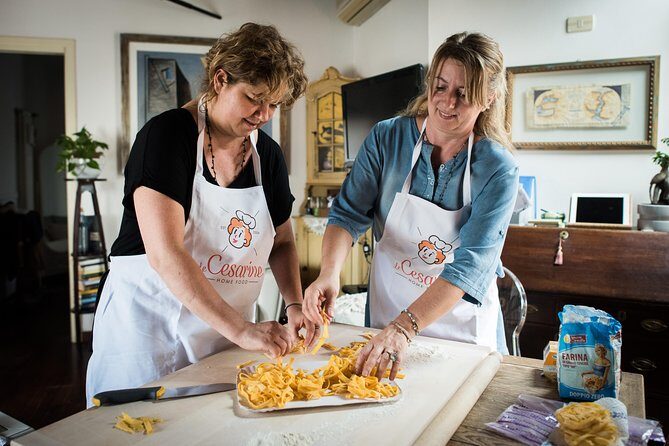
- Cesarina hosting style: a family, home-cooking vibe rather than a demo with strangers
- Two fresh pasta types: not just one skill track, but multiple techniques in one sitting
- Traditional sauce-making: you learn how the flavor actually gets built, not just what goes in
- Tiramisù assembly secrets: practical guidance for the layers and the texture you’re aiming for
- Aperitivo start + tasting finish: you’re fed twice, and you taste what you made
- Small group (max 12): enough attention to ask questions without losing your spot
Verona Pasta and Tiramisù in a Real Home Kitchen
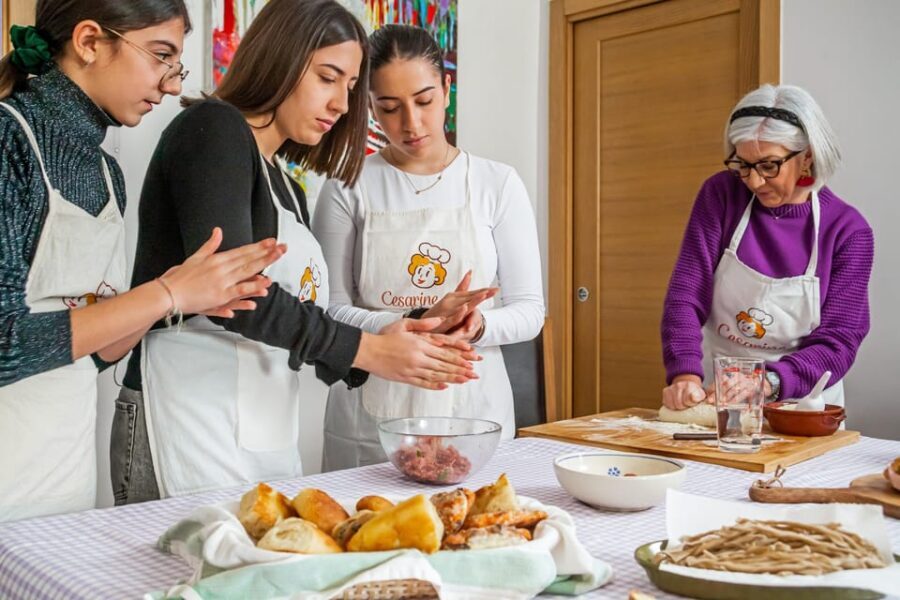
Verona is great for wandering, but this is one of those rare activities that makes the city taste like itself. The setting matters. Instead of a big class room, you cook in a local home with a Cesarina (your host) who teaches family methods and keeps the mood friendly and focused.
I like that this class is built around the full flow of cooking. You arrive, you get settled, you start with a drink, and you end with the meal. That arc makes it feel less like a ticketed activity and more like you’re being welcomed for dinner—except you’re the one making the dinner.
Also, it’s paced for normal humans. The class runs about 3 hours, and because it’s capped at 12 travelers, you’re not stuck hoping the instructor sees your hands when you’re trying to mix, fold, or portion something. It’s the difference between feeling like a student and feeling like you’re part of a small kitchen team.
And yes, it’s in English, which takes a lot of stress out of the experience. You’ll still be working with Italian terms and steps, but you won’t be guessing what “that texture” is supposed to mean.
Other pasta and tiramisu classes in Verona


What You’ll Cook: Two Pastas, Traditional Sauces, and Tiramisu
The menu is wonderfully tight: fresh pasta for the main and tiramisù for dessert. That sounds simple, but the value is in the variety. You’re not repeating the same task for three hours and calling it an experience.
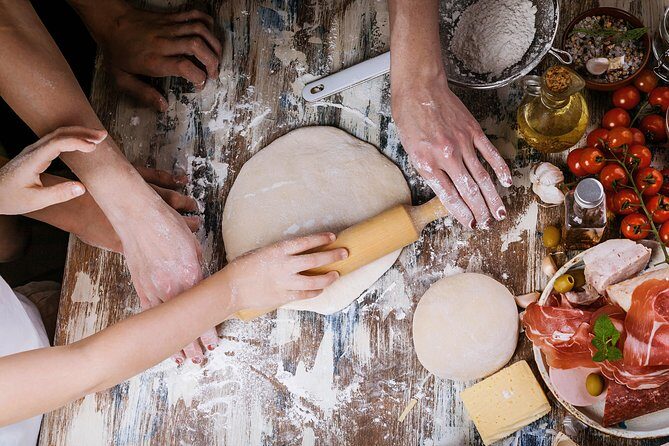
You’ll prepare two different types of fresh pasta. That’s a smart choice for a visitor because it gives you more than one pasta technique to take home. Different shapes usually mean different rolling, cutting, shaping, and timing. Even if you never recreate it perfectly back in your own kitchen, you’ll leave with a clearer sense of dough handling and how pasta changes as it cooks.
On the sauce side, you’ll work through traditional sauces paired with your pasta. Again, it’s not just ingredients on a plate. You’ll learn how the sauce comes together, which is the real skill. A lot of cooking classes stop at mixing components. Here, the goal is for you to understand why you do each step—so the final result tastes balanced instead of “whatever happened.”
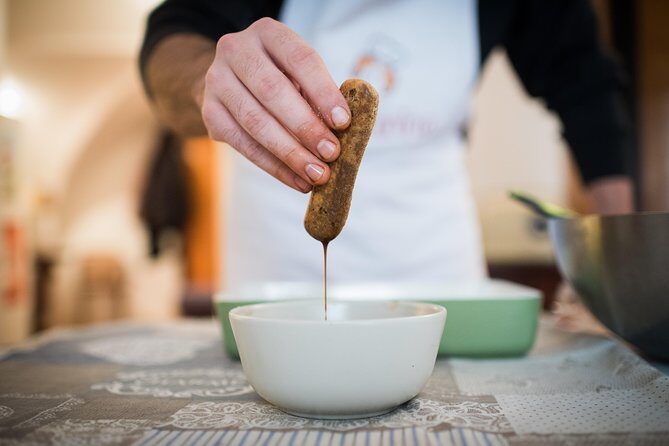
Then dessert: tiramisù. You’ll learn the secrets to assembling tiramisù the way an Italian home cook does. That includes the practical details people often skip: layer timing, how the custard should behave, and how you avoid a tiramisù that ends up too runny or oddly stiff.
If you’ve ever had tiramisù that felt like a sweet blob, this is exactly the kind of class that can correct your expectations. The coaching is the point.
How the Class Runs: Aperitivo, Cooking Steps, and Your Tasting
The rhythm is easy to follow: a welcome aperitivo gets you into the evening mood without sending you into the kitchen immediately. It’s also a good social buffer. Even if you’re coming solo, the drink helps you settle and talk before the flour starts flying.
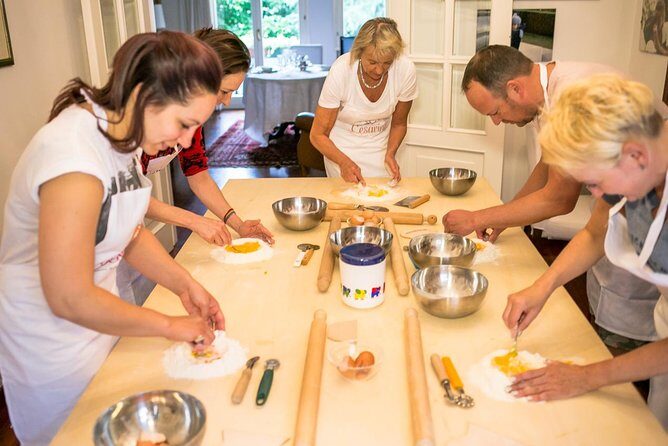
Once cooking begins, expect a hands-on format where you’re actually doing the tasks. Fresh pasta takes coordination—kneading, rolling, shaping, and timing. This is where the small group size pays off, because it’s hard to learn if you’re constantly waiting your turn.
You’ll also do the sauce work in the same session. That matters because sauces can be temperamental with heat and timing. When you do pasta and sauce together, you learn to manage the kitchen flow, not just the recipes.
At the end, you don’t leave hungry. You’ll sit down for a tasting of the pasta and tiramisù you prepared. That’s a key value point. You’re not paying to leave the kitchen with food you didn’t get to try. You get closure: you cook, you taste, and you can connect the final dish to the steps you performed.
Why the Cesarine Experience Feels Personal (and Surprisingly Practical)
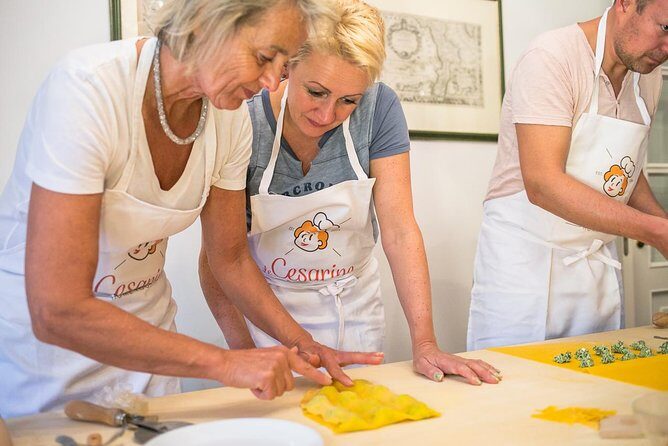
One of the most praised parts of this type of class is the host approach. You’re not treated like a number. You’re hosted. That sounds like marketing fluff until you’ve watched someone patiently explain the same technique three different ways depending on how your hands move.
In classes led by Cesarine such as Cristiana and Aurora (names that come up often), the teaching style tends to be warm and detailed. The value isn’t just friendliness. It’s clarity. When someone explains how to assemble tiramisù and then corrects what you did—without making you feel clumsy—you learn faster and you enjoy it more.
You’ll also benefit from the home setting. It changes how people talk about food. In a restaurant class, the language can feel formal. In a home class, you get practical cues like how to handle the dough, what consistency to look for, and how to recover if something goes off by a small amount.
And for visitors, that practical tone is gold. You’re going home with memories, yes—but you’re also leaving with kitchen intuition.
Sanitary Rules in a Home Setting: What to Expect and How to Plan
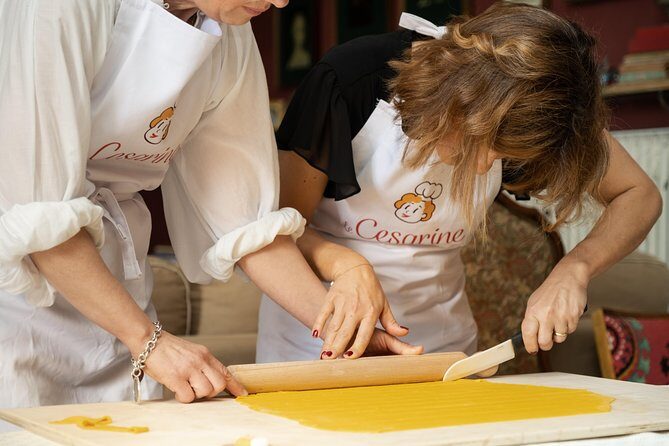
This class explicitly follows careful sanitary rules, and the home provides essential supplies like sanitizing gel and paper towels for handwashing. You’ll be asked to maintain 1 meter distance when possible. If you can’t keep that space, the guidance includes using masks and gloves.
This is worth planning for because home kitchens are naturally tighter than commercial spaces. You’ll likely stand close at some point while working around shared stations, so treat this as a normal part of the experience rather than a disruption.
Practical tip: wear clothing you can move in. You’ll be working with dough and ingredients, and you’ll want sleeves that won’t constantly bother you when you’re leaning in or handling tools.
If you’re sensitive to these guidelines, I suggest you come prepared with any mask preferences you already follow at home. The home supplies are noted, but it’s still smart to bring what you’re comfortable using.
Other food tours and tastings in Verona





Small Group Size, English Instruction, and the Comfort Factor
With a maximum of 12 travelers, the class stays workable. You don’t get stuck at the back, and it’s easier for your Cesarina to keep an eye on what you’re doing. This is the kind of group size that supports questions.
English is also part of the comfort equation. Food has a language of its own, but you should be able to follow the instruction and ask about texture, timing, and assembly steps without translation lag.
Another practical note: the class is described as near public transportation. That matters in Verona because you don’t want to spend half your evening figuring out where you parked or how far you’ll need to walk before and after.
Finally, you’ll receive a confirmation at booking, and you’ll have a mobile ticket. That’s simple on the day itself.
Price and Value: Is $162.21 Worth It?
At $162.21 per person, you’re paying for more than a recipe. You’re paying for access to a local home kitchen, an experienced host’s time, and the full arc of the meal—aperitivo, cooking, and tasting.
Here’s how I’d think about value:
- You’re not just learning one dish. Two pasta types plus sauces plus tiramisù means you leave with multiple techniques.
- You’re tasting your work. Many classes end with packaging or leftovers. Here, you finish with a meal.
- The group is small. That increases the odds you get actual help, not vague instructions.
Is it cheaper than buying ingredients and copying a recipe later? Sure. But it’s not trying to be. This is about learning in a guided, hands-on way in the best possible setting: a Verona home.
One extra planning angle: this experience tends to be booked about 36 days in advance on average. That doesn’t mean you can’t find a spot last minute, but it does suggest demand. If your Verona days are fixed, it’s smarter to lock it in earlier.
And if your schedule changes, the option for free cancellation up to 24 hours before the start time can reduce risk.
Who Should Book This Class (and Who Might Skip It)
This is a great fit if you want more than sightseeing photos. If you like food experiences that feel grounded and not overly staged, you’ll likely enjoy it.
It’s also a strong choice for couples and small families. One class example included two daughters aged 11 and 9, and the kids enjoyed the activity. If your children are curious about hands-on cooking, they may actually have fun—not just “sit and watch.”
I’d also recommend it if you want a practical souvenir. Verona is wonderful for walking and views, but a home-cooked meal you helped build sticks longer than a postcard.
You might consider skipping it if:
- You prefer strictly hands-off food experiences where you watch and someone else cooks.
- You’re highly sensitive to home-kitchen conditions (tighter space, shared stations).
- You want a longer, multi-course restaurant-style meal with lots of additional dishes. This class is focused, and the menu stays tight.
Should You Book This Cesarine Pasta and Tiramisu Class?
If you want a Verona experience that feels local and hands-on, I think you should book it. The biggest reasons are the same reasons people keep coming back: real home hosting, fresh pasta made in class, and tiramisù guidance that’s detailed enough to make the dessert make sense.
If you’re on the fence, here’s the simplest decision test: ask yourself if you’d rather spend 3 hours cooking with a friendly host than adding another walking stop to your day. If the answer is yes, this is exactly the kind of day that makes Verona click.
Just book early enough to match your schedule, and bring the right mindset: be ready to get flour on your hands and learn by doing.
FAQ
How long is the Cesarine pasta and tiramisù class?
It lasts about 3 hours.
Where does the class start and end?
It starts in Verona, VR, Italy, and ends back at the same meeting point.
How many people are in the group?
The class has a maximum of 12 travelers.
What language is the class taught in?
The class is offered in English.
What dishes are included in the class?
You’ll cook fresh pasta (including two different types) and you’ll learn to assemble tiramisù. The tasting at the end includes the pasta and tiramisù you prepared.
Is there a welcome aperitivo and a tasting?
Yes. You begin with a welcome aperitivo and end with a tasting of your pasta and tiramisù.
Does the class use a mobile ticket?
Yes, the ticket is mobile.
Are there any health and sanitary rules in the home?
Yes. The home provides sanitary equipment like hand sanitizing gel and paper towels. You’re asked to maintain 1 meter distance, and if you can’t, you may need to wear masks and gloves.
What is the cancellation policy?
You can cancel for a full refund up to 24 hours before the experience starts.