REVIEW · VERONA
Verona Walking Tour with Audio and Written Guide by a Local
Book on Viator →Operated by Walking Cap · Bookable on Viator
Verona is best when you can stop anytime. This self-paced walking tour uses a local’s audio + written guide so you can learn the stories as you wander—at a price that won’t wreck your budget. You’ll hit standout landmarks along the way, including the Castelvecchio area, Roman-era gates, and Verona’s famous squares. One thing to consider: this experience depends on your phone working smoothly, since the guide is digital.
What I like most is the freedom. You control the pace, pause when you want a photo, and reread or replay the explanation without any pressure to keep moving with a group. The second big win is that the route is designed to flow, ending where it belongs: the Arena di Verona. The catch is simple—you’ll need a smartphone with internet to access the audio and map, and you may want headphones if the street is loud.
In This Review
- Key things to know before you start
- Verona at your pace: how this audio-and-text format works
- Price and time: when this tour makes the most sense
- Start and finish at Arena di Verona: a smart way to structure your day
- Stop-by-stop: what you’ll see and why each place matters
- 1) Castelvecchio Bridge (Scaliger Bridge) for views and quick photo power
- 2) Museo di Castelvecchio area: courtyard and garden time
- 3) Porta Borsari, the Roman entrance to Verona
- 4) Ponte Garibaldi and its crossing trick
- 5) The main church stop with notable paintings (Duomo)
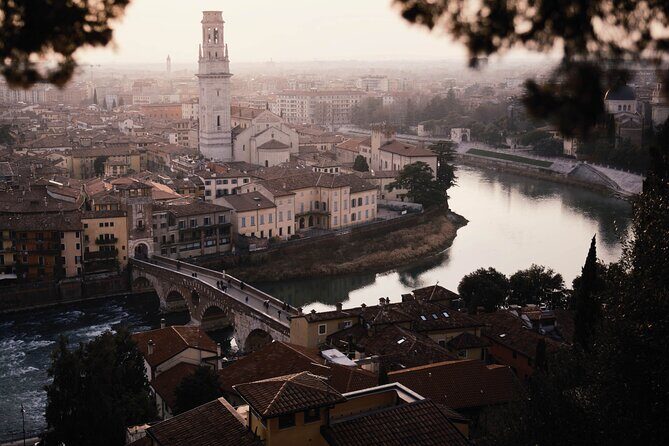
- 6) Ponte Pietra for Roman-era structure and St. Peter’s Hill views
- 7) Piazza dei Signori: Verona’s drawing-room feel
- 8) The tall 84-meter viewpoint tower
- 9) Piazza delle Erbe on top of Roman Forum history
- 10) Casa di Giulietta: iconic house, plus a lesser-known angle
- 11) Il simbolo della città: the Arena di Verona to close the loop
- Headphones or phone speakers: how to avoid audio frustration
- Who this walking tour is for (and who should skip it)
- Value check: is $7.86 really fair?
- Quick practical checklist for your walk
- Should you book this Verona walking tour?
- FAQ
- How long is the Verona walking tour?
- Where does the tour start and end?
- Do I need a smartphone to use the guide?
- Are headphones included?
- What languages are available?
- Is the tour offered in English?
- Do I need tickets to visit the stops?
- How many people is the tour limited to?
- What is the cancellation policy?
Key things to know before you start
- Local audio, not a generic script: the narration is built for specific stops along Verona’s walking loop.
- Audio plus written guide: you can switch between listening and reading depending on noise or preference.
- Smartphone-based map guidance: the route is designed to be followed from your phone.
- Photo-friendly bridge moments: the route includes a highlight stop where you can stand and shoot great images.
- Free access for several featured sights: the guide lists multiple stops with free entry or free areas (like courtyards/gardens).
- English available, with multiple languages overall: you’ll get text and audio options in several major languages.
Verona at your pace: how this audio-and-text format works
This is not a sit-and-listen tour. It’s a walking route you run on your own schedule. You start at Arena di Verona (P.za Bra, 1), follow the guide from stop to stop, and finish back at the Arena. The point is simple: you’re in charge.
The guide is digital and comes with both audio and written content in multiple languages. Even though the listing notes English as the offered language, the material includes audio and text options in English, Spanish, Italian, German—so you can choose what fits you best. That matters in Verona because you’re walking through busy streets, then suddenly standing in quieter spots where reading feels better than listening.
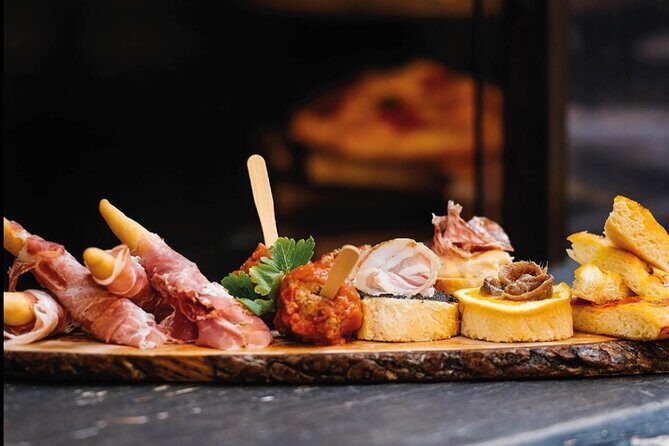
What makes this format good value for money is that you’re buying a route and context, not an hour of someone talking at you. At $7.86 per person for roughly 2 to 3 hours, you’re paying less than a typical group tour, while still getting explanations tied to the places you’re actually seeing. It’s a nice fit when you only have a short time in Verona or you don’t want the “everyone stay together” energy.
Other Verona walking tours we've reviewed in Verona

Price and time: when this tour makes the most sense
For a low-cost tour, the timing is realistic. The route is built around short stops—often around 10–20 minutes each—so you can stretch it without feeling trapped. In practice, this is the kind of experience you use as a “first bearings” walk. You’ll see the big highlights and learn what they mean, then you can return later for deeper sightseeing.
The duration is listed as 2 to 3 hours (approx.). That range is helpful because Verona isn’t just monuments—it’s streets, viewpoints, and pauses. If you stop for gelato, linger at a bridge, or take extra time in a museum courtyard, the route is flexible enough to slow down.
One practical consideration: there’s no included headphone setup. The guide can play through your phone’s speakers, or you can use headphones if you have them. If you’re sensitive to noise, I’d bring wired headphones or earbuds. If you rely on phone speakers, plan for the fact that Verona’s streets can be loud.
Start and finish at Arena di Verona: a smart way to structure your day
Starting at Arena di Verona is more than convenience. It’s the perfect mental anchor for a walking day because the Arena is one of Verona’s most recognizable landmarks, and the tour’s pacing naturally funnels you into the older parts of the city. When you finish at the same place, you also avoid the “where do I end up?” problem.
The Arena’s listed opening hours for the stated period run essentially day-long (12:00 AM to 11:30 PM). Still, it’s wise to treat that as a guideline and double-check on the day if you’re planning any optional time inside.
You’ll also appreciate the loop-style approach if you’re navigating on your own. Verona can feel compact, but distances still add up. A route that ends where you began makes it easier to plan dinner, return to your hotel, or connect to public transport.
Stop-by-stop: what you’ll see and why each place matters
1) Castelvecchio Bridge (Scaliger Bridge) for views and quick photo power
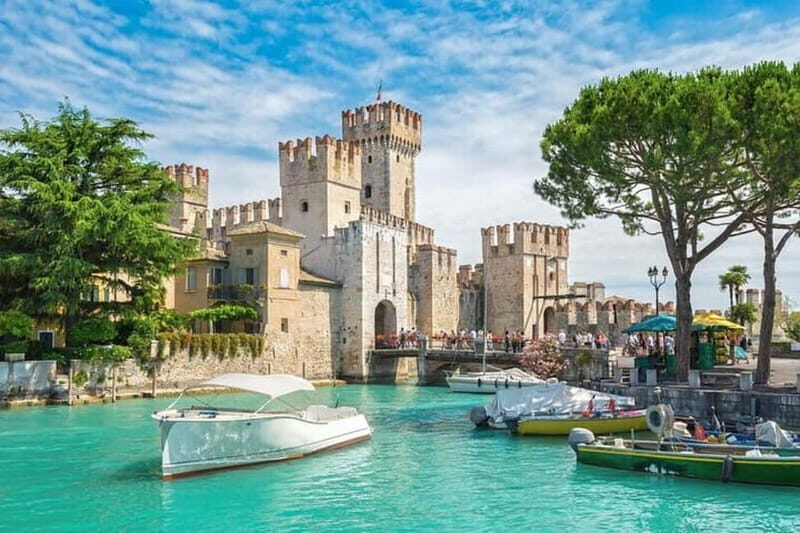
Your first major introduction is Castelvecchio Bridge, often highlighted as Scaliger Bridge. This is where the tour tells you the city through a bridge viewpoint—because in Verona, bridges aren’t just crossings. They’re part of the story of how the city evolved and how people moved through it.
The practical takeaway: this is an early “set the tone” stop. You’ll have enough time to take photos without needing museum energy yet. If you’re the type who likes a great first image, don’t rush past it.
Other self-guided tours in Verona
2) Museo di Castelvecchio area: courtyard and garden time
Next comes Museo di Castelvecchio. The guide points out that you can enter areas like the courtyard and garden for free. Even if you don’t spend hours in the museum interiors, that free outdoor space is a worthwhile way to get the Castelvecchio atmosphere—stone, history, and a calmer pace after a bridge viewpoint.
This stop also gives you a break from the constant “street walking” feeling. You get a small pocket where you can pause, look around, and absorb why this area is tied to important Verona families.
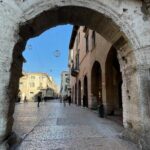
3) Porta Borsari, the Roman entrance to Verona
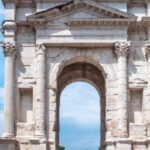
Then you reach Porta Borsari, a World Heritage Site and the main Roman-era entrance to the city. This is one of those stops where the guide’s job is huge: a gate can look simple, but when you learn the context, it stops being “just a wall” and becomes a time marker.
Expect a quick but meaningful history lesson here—short enough to keep your day moving, but with enough detail to make the monument feel real.
4) Ponte Garibaldi and its crossing trick
After Porta Borsari, the route leads to Ponte Garibaldi, one of Verona’s seven bridges. The guide includes a special story about a trick that was once used to cross this bridge. You don’t need to know the exact trick in advance—the fun is hearing why this bridge had some clever practical twist tied to how people traveled.
Keep an eye out for a safe place to pause while listening. This is another photo-friendly zone, but Verona streets can get busy.
5) The main church stop with notable paintings (Duomo)
The next stop is the city’s most important church, with “interesting paintings.” You’re at Duomo territory here. This kind of stop works especially well with an audio guide because churches can overwhelm you when you’re trying to look at everything at once. Having the narration point you toward what to notice helps you see more in less time.
Plan for a little “slow down” moment. Don’t treat this like a quick glance. If you use the audio thoughtfully, you’ll get more out of what you see.
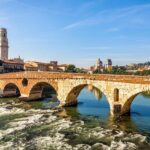
6) Ponte Pietra for Roman-era structure and St. Peter’s Hill views
Then it’s off to Ponte Pietra, built in Roman times. The tour frames it with a “quick stop” mindset, but that’s not a negative. Ponte Pietra is ideal for a short visit because the viewpoint payoff is immediate.
The guide also flags a cool view toward St. Peter’s Hill, so you’re not just standing on another bridge—you’re getting a relationship between the bridge and the surrounding city.
7) Piazza dei Signori: Verona’s drawing-room feel
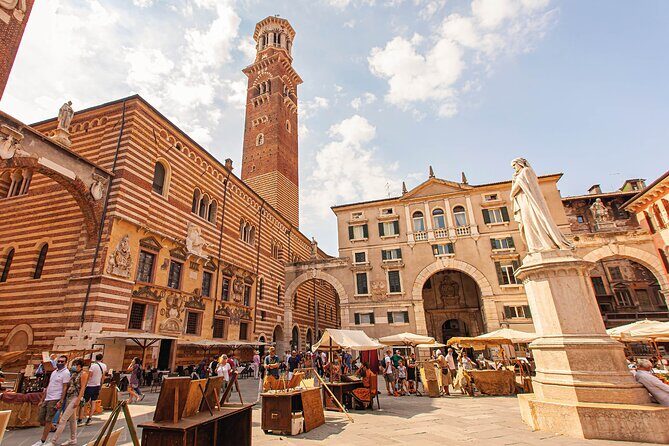
Next is Piazza dei Signori, sometimes described as Verona’s drawing room because of its beauty and the way the architecture frames the space. The stop is short (about 10 minutes), which means you’ll want to be ready to look outward—lines, perspectives, and the buildings surrounding the square.
This is a great place to pause your walking for a moment, then continue. If you’re a “people-watching + architecture” traveler, this stop will reward you.
8) The tall 84-meter viewpoint tower
After Piazza dei Signori, the route includes the tallest building in the city at 84 meters, where the views are described as stunning from the top. The guide doesn’t require you to go up—your listening will help you decide whether it’s worth it based on your time and energy.
Even if you don’t climb, you’ll still get the “why here matters” explanation, which helps you understand why Verona’s skyline is part of the story.
9) Piazza delle Erbe on top of Roman Forum history
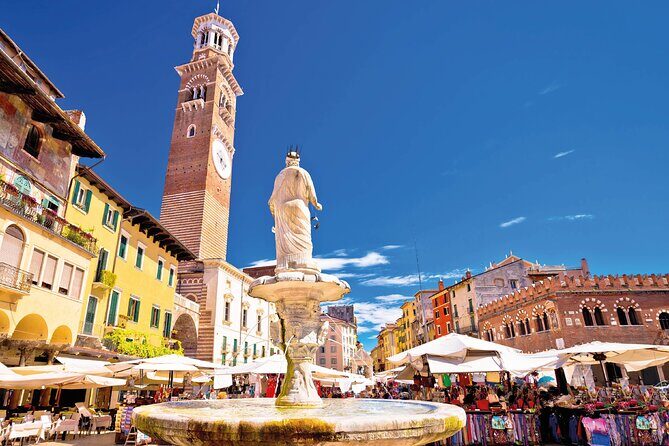
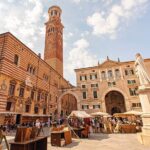
Then comes Piazza delle Erbe, the oldest square in Verona and located above what used to be the Roman Forum. This is one of the best “meaningful layers” stops on the route. You’ll be standing in a lively square while learning that beneath the surface is older history.
This is also a good time for a snack break because the stop is longer (about 20 minutes). I’d use at least a portion of that time to slow down and enjoy the square rather than rushing for the next landmark.
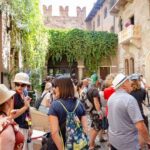
10) Casa di Giulietta: iconic house, plus a lesser-known angle
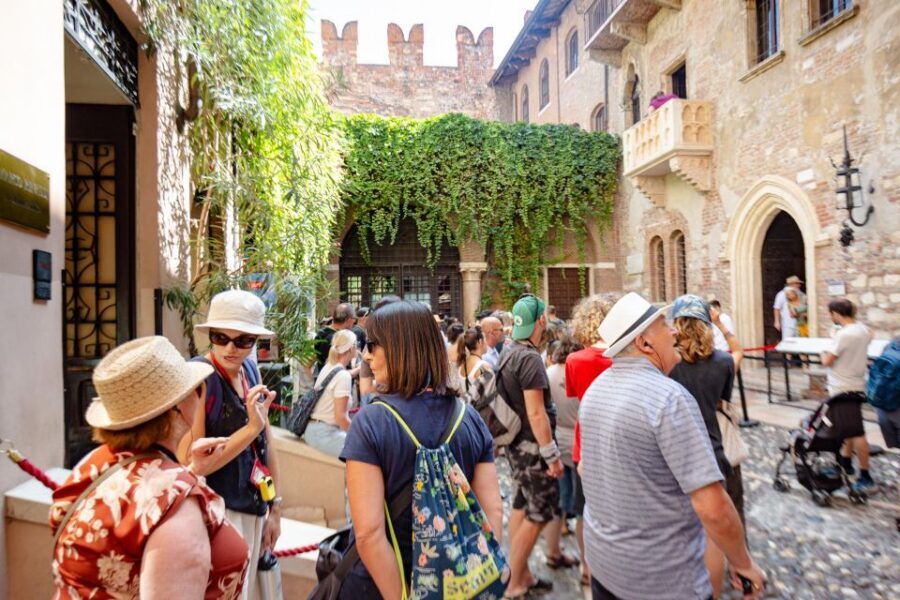
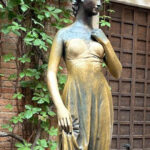
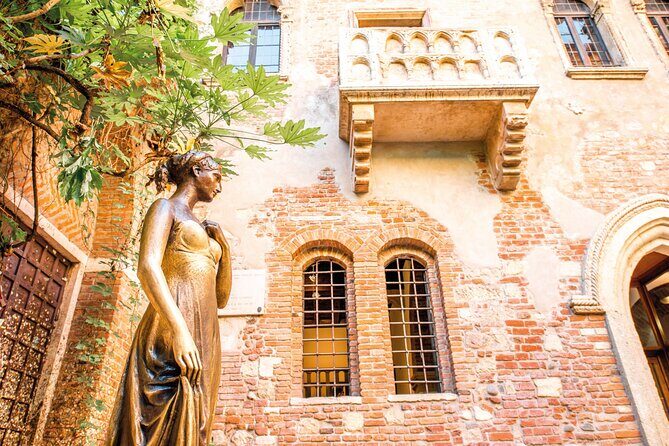
Next is Casa di Giulietta, one of Verona’s best-known monuments. The tour points out that while the famous balcony is visible from outside for free, there’s also a curious story few people know behind the house.
If you’re visiting during peak hours, treat this as a “quick look, listen, and move” stop unless you’re eager for deeper time at the site. The audio angle helps you connect the legend to the place you’re actually seeing.
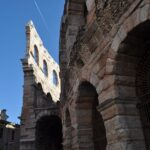
11) Il simbolo della città: the Arena di Verona to close the loop
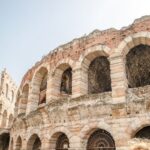
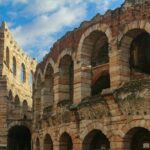
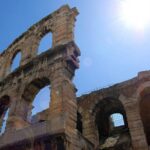
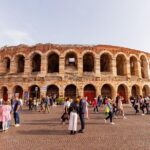
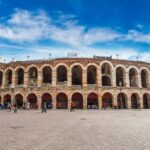
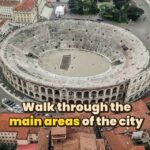
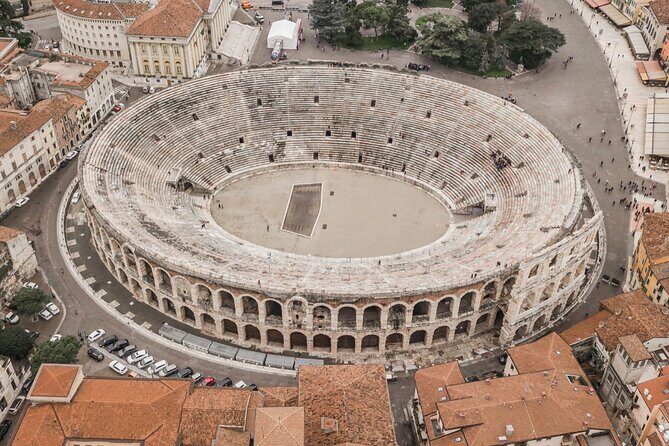
Finally, the route closes with the Arena di Verona, described as the city’s symbol and a Roman amphitheater. This ending matters because it gives your whole walk a sense of structure: Roman entry, Roman bridges, old squares, then the big Roman finale.
It’s a satisfying way to close because you’ll have spent your whole route learning how Verona’s layers connect. When you reach the Arena again, it feels less like a random stop and more like the last page of a story.
Headphones or phone speakers: how to avoid audio frustration
This guide can play through your smartphone’s speakers or through headphones if you bring them. Headphones are the easiest way to keep the audio clear, especially near busy squares and along bridges.
If the audio doesn’t load, the provider’s basic fix is straightforward: refresh the page. That’s worth knowing before you start, because a digital guide can sometimes hiccup when your connection is weak.
One more practical tip: if you’re using your phone for navigation and audio at the same time, be mindful of battery. The guide is built to be light on battery usage, but your phone still has to work. If your battery is already low, plug in a portable charger before you head out.
Who this walking tour is for (and who should skip it)
This works best for you if:
- you want a low-cost overview of top Verona highlights
- you prefer self-guided pacing over group schedules
- you like learning through short explanations while you walk
- you’re comfortable using a phone for navigation and audio
You might want to skip it if:
- you strongly dislike smartphone-based guides
- you can’t count on internet access while you’re out
- you want an in-person guide to answer questions on the spot (this is not that format)
Also, the tour notes a maximum group size of 99 travelers. Since this is self-paced, that number mainly matters for the platform and tour setup, not for how much you’ll feel crowded.
Value check: is $7.86 really fair?
I think the price makes sense because you’re buying three things:
1) a route that covers major Verona sights efficiently
2) audio + written explanations tied to each place
3) a way to go at your speed without paying for a private guide
The included audio/text being multi-language is another value lever. And the route includes several stops where the guide notes free entry or free areas, such as free courtyard/garden access at Castelvecchio and outdoor viewing options like the balcony area at Casa di Giulietta.
Even if you only use the audio for half the route, the remaining half still gives you a coherent walk. It’s one of those deals where you’ll feel the savings most if you were already considering a paid group tour.
Quick practical checklist for your walk
Before you leave your hotel:
- charge your phone (and consider a portable battery)
- bring headphones if you want cleaner audio
- set aside 2–3 hours plus any extra photo or snack time
- wear comfortable shoes for bridges, stairs, and cobblestones
If you get stuck at the digital portion, remember the simple solution: refresh the page and try again. And read the voucher instructions carefully when you activate the guide.
Should you book this Verona walking tour?
Book it if you want an efficient way to see the best of Verona with explanations that fit your tempo. The audio-and-text combo is ideal when you like control: stop for photos, sit for a moment in a square, then keep going when you’re ready.
Skip it if you need a traditional live guide, or if you know your phone won’t cooperate outdoors. This is a great tour for independent walkers who enjoy learning while moving—especially when you want a strong highlight loop that ends at the Arena di Verona.
FAQ
How long is the Verona walking tour?
It’s listed as about 2 to 3 hours.
Where does the tour start and end?
The tour starts and ends at Arena di Verona, P.za Bra, 1, 37121 Verona VR, Italy.
Do I need a smartphone to use the guide?
Yes. The guide is digital, and you need a smartphone with internet connection to use it.
Are headphones included?
No. You’ll use your smartphone, either through its speakers or with your own headphones.
What languages are available?
The audio-guide and written guide are available in multiple languages: English, Spanish, Italian, German.
Is the tour offered in English?
The experience is offered in English.
Do I need tickets to visit the stops?
The stop details provided list free access for several areas and sites, such as free admission for Castelvecchio Bridge, free courtyard/garden access at Museo di Castelvecchio, and free access at multiple other points along the route.
How many people is the tour limited to?
The tour/activity has a maximum of 99 travelers.
What is the cancellation policy?
Free cancellation is available up to 24 hours in advance for a full refund.
If you want, tell me what day/time you’re going and whether you’re more interested in history, viewpoints, or “legend stops” like Juliet, and I’ll suggest how to pace the 2–3 hours.