Verona clicks into place fast when you walk it with a guide. This highlights-and-stops style tour strings together the city’s big stories in two hours, from Roman stone to Romeo’s legend. I like that it keeps moving (so you see more) but doesn’t feel rushed in a scary way.
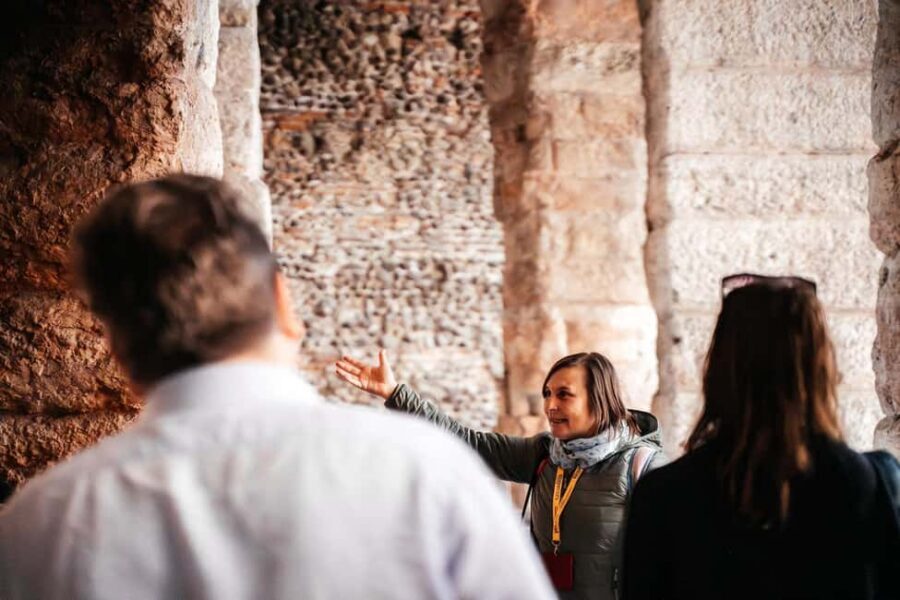
Two things I really like: first, the guides get strong marks for being informative and entertaining—examples include Sara, Graziano, Maria, Elettra, and Constanza. Second, the route is built for orientation: Piazza Bra, Roman ruins, Gothic churches, river views, and the major squares, all on one loop. One consideration: this is mainly an outside-city walk—so if you want to go inside monuments, you’ll likely need extra plans and tickets.
In This Review
- Key Points You’ll Feel on the Walk
- Verona in 2 Hours: Roman Stone to Romeo Lore on Foot
- Price and Value: What $37.77 Buys You (and What It Doesn’t)
- How the Tour Actually Runs: Private Experience, Small-Group Options
- Piazza Bra and the Arena: Start With the Big Square, Then Go Roman
- Vicolo del Guasto and Porta Borsari: Side Streets and Roman Gate Energy
- Riva San Lorenzo and San Giovanni in Foro: River Views Plus Church Details
- Piazza delle Erbe and Piazza dei Signori: Where Verona Feels Like It’s Working
- Santa Anastasia and Arche Scaligere: Gothic Shapes and Scaliger Legacy
- Ponte Pietra and Casa di Romeo: River History and Romance Clues
- Courtyard of the Old Market: Your Ending Spot for More Wandering
- Who This Tour Is Best For (and Who Might Want More Time)
- Should You Book This Verona Highlights Walk?
- FAQ
- How long is the Verona Highlights & Hidden Gems Walking Tour?
- How much does the tour cost?
- Where does the tour start and end?
- Is this tour private?
- What languages are available?
- Are monument and museum entries included?
- Is this tour inside the monuments?
- Is food or drink included?
- Is the tour near public transportation?
- What’s the cancellation policy?
Key Points You’ll Feel on the Walk
- Short, focused stops (about 9–10 minutes each) that help you map Verona quickly.
- Guides who explain more than dates, with extra site advice for after the tour (Sara, Graziano, Maria, Elettra, Constanza).
- Roman-to-Gothic-to-Romeo route, so the city’s themes connect naturally.
- Adige river promenade views from Riva San Lorenzo and the bridge at Ponte Pietra.
- Exterior sightseeing focus, meaning you get context fast, while interior tickets stay optional.
Verona in 2 Hours: Roman Stone to Romeo Lore on Foot
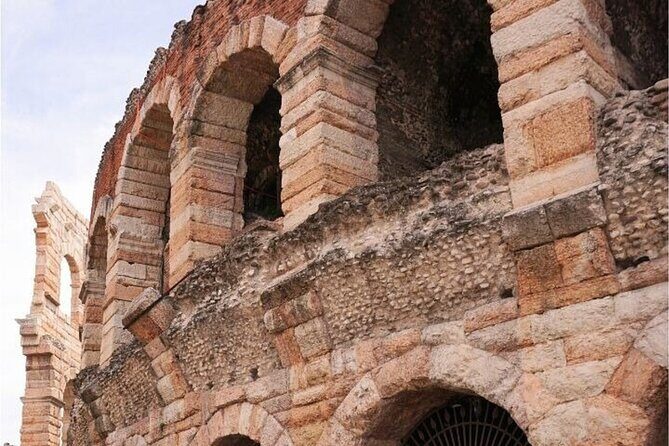
If you’re short on time, this is a smart way to start. You’ll cover a lot of Verona’s historic center without needing to study a map like it’s an exam. The pacing works because the tour is built around quick “spot-and-story” stops—each one gives you a visual anchor and a bit of meaning so the next place makes more sense.
The biggest win here is how the route teaches the city’s layers. You begin with major civic space in Piazza Bra, then shift into Roman-era Verona with the Arena and a Roman gate. After that, the walk moves through medieval and Renaissance-flavored streets and squares, then lands at Gothic architecture and Scaligero funerary monuments. And yes, you’ll spend time at the Romeo connection too—Casa di Romeo—so Verona feels like Verona, not just a list of landmarks.
Other Verona walking tours we've reviewed in Verona

Price and Value: What $37.77 Buys You (and What It Doesn’t)
At $37.77 per person for about 2 hours, the price feels reasonable because you’re paying for guided storytelling and a curated path between top sights. You also get a mobile ticket, plus help from the team to book tickets if you want to add visits to specific places.
Here’s what’s not included: admission to monuments and museums. The tour is also described as a city tour rather than a tour inside monuments. So you shouldn’t expect reserved-entry perks or long “inside” time. If you’re the type who wants to do the full interior version of every stop, treat this as a high-quality orientation first, then add ticketed visits afterward.
In real terms, I see it as paying for direction and context. Once you understand what you’re looking at, you’ll choose what to do next with more confidence.
How the Tour Actually Runs: Private Experience, Small-Group Options
This experience is set up as private (your group only), with an option for small groups. A minimum of 2 participants is required for the group option, and only your group joins you. That matters because it keeps the pace comfortable—less scrambling, fewer crowds in your immediate space, and more chance to ask questions.
It runs in English, and guides may also speak Spanish, French, German, or Italian. The meeting point is Via Dietro Listone, 1, 37100 Verona VR, and the tour ends back at the starting area.
Also note the time blocks: many stops are around 9–10 minutes. That means you’ll see the key exterior features and get the “why it matters” explanation, but you won’t linger for long museum-style reading.
Piazza Bra and the Arena: Start With the Big Square, Then Go Roman
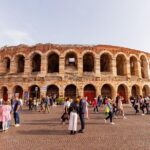
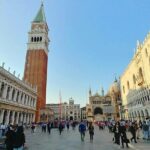
Your tour kicks off at Piazza Bra. This is Verona’s main square, and it’s the right first stop because it gives you scale. You can spot the feel of the center right away: wide open space, main-street energy, and buildings that frame the city’s identity.
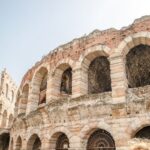
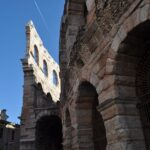
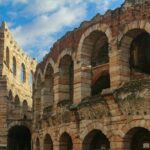
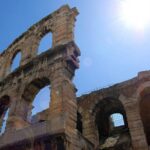
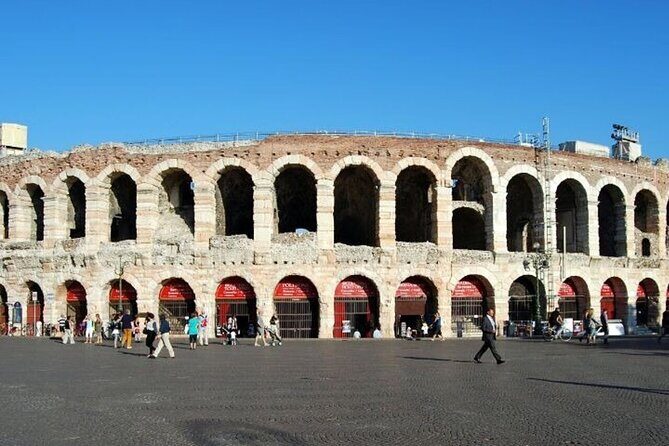
From there you move to the Arena di Verona. Even if you don’t go inside, the Arena is a powerful sight. The tour frames it as a Roman amphitheater that once hosted gladiator contests and performances—now a cultural symbol of Verona. You’ll likely walk away with an understanding of why the Arena is such a visual anchor: it’s not just an old structure, it’s a statement of how Romans shaped public life.
A practical tip: expect some photo time here, but keep your eyes on the guide’s explanation too. The better you understand the Arena’s role, the more interesting it looks rather than just looking impressive.
Vicolo del Guasto and Porta Borsari: Side Streets and Roman Gate Energy
Next comes Vicolo del Guasto, a smaller, quieter corner you reach by walking off the main pulse. This is where Verona starts to feel like a city you live in, not a museum you march through. The tour route emphasizes historic buildings and quaint shops, and it’s a nice contrast after the grand opening sites.
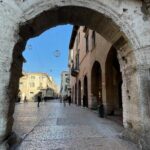
Then you head through Porta Borsari, a Roman gate and a World Heritage Site. This stop is important for orientation because it connects you to the Roman city layout. Seeing a gate in place helps you picture how people entered and moved through the city long before modern streets existed.
If you like architecture, this is a good stretch. If you’re not an architecture person, it still works because the gate gives you a “memory hook” for the Roman theme you started with at the Arena.
Other hidden gems and off-the-beaten-path tours in Verona
Riva San Lorenzo and San Giovanni in Foro: River Views Plus Church Details
When you reach Riva San Lorenzo, you get a scenic change of pace. This is a riverside promenade with views over the Adige River. Even with limited time, being near water changes the feel of the walk—less stone-on-street intensity, more open air and sightlines.
After the river, the tour visits Chiesa di San Giovanni in Foro. This is one of those stops where the tour focus is on noticing architectural and decorative details. The church reflects Verona’s religious heritage, and it’s a helpful reminder that the city isn’t only famous for romance stories and Roman ruins.
Drawback to keep in mind: because it’s not positioned as a long interior experience, your time for close-up detail may be shorter than you’d want if you’re specifically chasing interior art.
Piazza delle Erbe and Piazza dei Signori: Where Verona Feels Like It’s Working
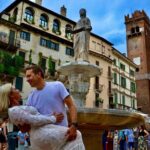
Piazza delle Erbe is the lively market square in the center of Verona’s historic life. You’ll see colorful stalls selling fresh produce and local delicacies, and you’ll get a sense of why this square has stayed important through time. It’s the kind of place where you can decide in minutes whether you want a snack later or just watch for a while.
Then the walk continues to Piazza dei Signori. This is another major square, framed by palaces and monuments. If Piazza delle Erbe feels like Verona’s everyday rhythm, Piazza dei Signori feels more like its power and civic presence.
These two stops together are a smart pairing. One teaches you daily life; the other teaches you governance and landmark density.
If you enjoy street life, this is where you’ll likely slow down naturally for photos and observation, even if the guided stop itself is brief.
Santa Anastasia and Arche Scaligere: Gothic Shapes and Scaliger Legacy
The tour visits Basilica di Santa Anastasia, highlighted for its Gothic architecture. Even if you only view it from the outside, Gothic buildings tend to reward attention: you can spot how the facades and lines create a sense of lift. Inside views may not be part of the standard included experience, but the exterior is still meaningful once the guide frames what makes Gothic distinctive.
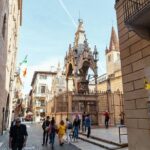
Next you’ll finish this arc at Arche Scaligere, the Gothic-style funerary monuments for the Scaligeri family, rulers of Verona during the Middle Ages. This is a strong stop for anyone who likes how cities remember their leaders in stone. It also balances the earlier Roman theme: from Roman public spectacle to medieval authority and memorial art.
In both of these stops, the guide explanation matters. Without it, you can walk past details and miss what makes them important. With it, you start seeing the city as a readable timeline.
Ponte Pietra and Casa di Romeo: River History and Romance Clues
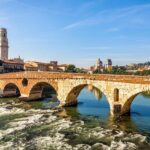
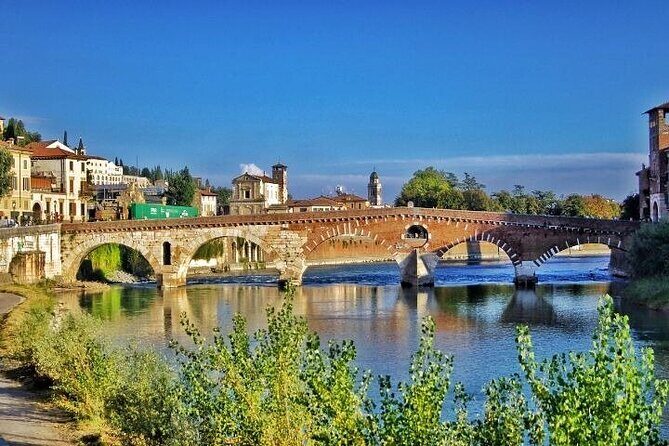
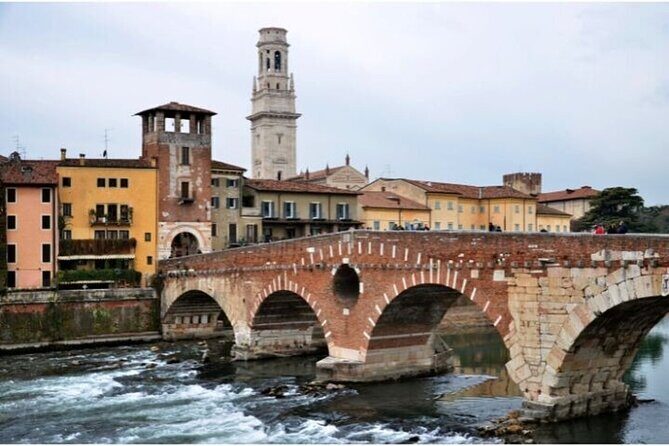
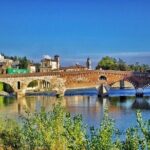
Ponte Pietra comes next. It’s an ancient bridge crossing the Adige and it offers wide views of the river and surrounding cityscape. This is a satisfying visual break before the more story-based stop later. It’s also one of the easiest places to understand why Verona’s center feels scenic: the river creates a natural axis through the city.
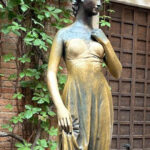
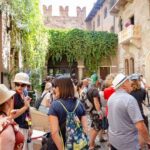
Then you reach Romeo’s House (Casa di Romeo). The tour connects the location to Shakespeare’s tragic lovers, Romeo and Juliet. Even if you’re not a drama fan, the point is bigger than fandom. This is how Verona uses literature to keep itself globally relevant, and the tour helps you see that connection as part of the city’s modern identity.
Important expectation check: this is presented as an exterior city tour. If you want deeper coverage of specific romantic sites, you may need additional tickets or time on your own.
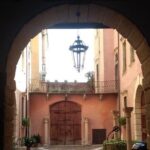
Courtyard of the Old Market: Your Ending Spot for More Wandering
The walk concludes in the Old Market district near the Courtyard Of The Old Market. It’s a fitting end because you’re still in the historic center, surrounded by old buildings and narrow streets. That makes it easy to continue on your own right after the tour rather than going back to a hotel and forgetting everything.
This is also where I’d use your new mental map. You’ll know which areas are Roman-flavored, which are Gothic, and which are more square-and-street focused. Then you can choose what to return to later—at your own pace, with ticket time if you want it.
Also, because several guides are praised for follow-up advice, you’re likely to leave with ideas for what fits your interests after the walk.
Who This Tour Is Best For (and Who Might Want More Time)
This tour is recommended for all travelers, and it tends to be a good first-day move in Verona’s historic center. I think it’s especially good for:
- First-timers who want a smart overview fast
- Couples who want the essentials without a heavy schedule
- People who prefer outside walking over museum time
- Anyone who cares about a guided story more than interior ticket time
You might want something longer or more specialized if:
- You want extended time inside major sites like churches or the Arena area
- You’re visiting Verona for only a small window and every stop needs deep access
- You dislike walking with a steady pace and fixed stop durations
Should You Book This Verona Highlights Walk?
Yes, if you want a quick, high-signal orientation to Verona that covers Roman, Gothic, river, squares, and Romeo in one loop. The route is practical, and the guides have strong feedback for explaining sites clearly and adding extra suggestions. With a reasonable price and a short 2-hour format, it’s a good value tool for planning the rest of your trip.
I’d book it early in your Verona stay—then use the tour to decide what to add later. If your dream trip is all interior visits and museum time, plan to supplement this walk with extra ticketed experiences after you understand what you’re looking at.
FAQ
How long is the Verona Highlights & Hidden Gems Walking Tour?
It’s about 2 hours.
How much does the tour cost?
The price is $37.77 per person.
Where does the tour start and end?
It starts at Via Dietro Listone, 1, 37100 Verona VR, Italy, and ends back at the meeting point.
Is this tour private?
Yes. It’s described as private, meaning only your group participates. A small-group option exists with a minimum of 2 participants.
What languages are available?
The tour is offered in English, and guides may also speak Spanish, French, German, and Italian.
Are monument and museum entries included?
No. Admission to monuments and museums is not included.
Is this tour inside the monuments?
It’s a city tour and not a tour inside the monuments.
Is food or drink included?
No. Drink and food are not included.
Is the tour near public transportation?
Yes, it’s listed as near public transportation.
What’s the cancellation policy?
Free cancellation is available. You can cancel up to 24 hours in advance for a full refund.