REVIEW · VERONA
Tour to discover the Unique History of Verona, the City of Art
Book on Viator →Operated by Guide in Verona · Bookable on Viator
Verona is a time machine in street form. You’ll start at the Arena di Verona and finish at Casa di Giulietta, learning how the city’s layers connect, not just collecting photos. I especially love the mix of major landmarks plus the smaller “why it matters” moments, and I love how the guide ties art and buildings to real stories. One possible drawback: the meeting point area can feel confusing if you’re not using your phone, and some church interiors can be affected by events.
This tour runs as a small group (max 15), so you’re not shouting over each other. If you get Eugenio (Evgeny), you’ll likely appreciate the storytelling style—lots of history and art talk, plus he’s been described as friendly and accommodating with questions and adjustments. Still, because it’s a walking route with several stops, wear comfortable shoes and plan for crowding near the final Juliet sights.
In This Review
- Key Things I’d Circle on Your Verona Map
- A 2.5–3 Hour Walk That Threads Verona’s Timeline
- Starting at I Portoni della Bra: Where the Tour Sets Its Tone
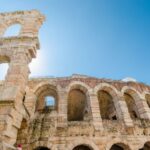
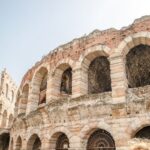
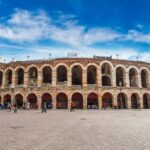
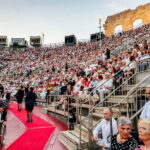
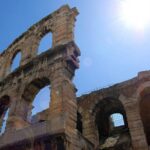
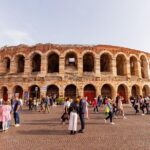
- Arena di Verona: Free Entry and the Monument’s Secret History
- Scaligero Bridge and the Roman-to-Medieval Visual Line
- San Lorenzo and Santa Anastasia: Churches That Show the City’s Layers
- Arche Scaligere and Piazza dei Signori: Medieval Power in Plain Sight
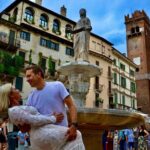
- Piazza delle Erbe: Where Verona Lives Between the Landmarks
- Romeo’s House to Casa di Giulietta: The Love-Story Ending (and the Crowds)
- Guide Style Matters: Eugenio’s Stories and the Q&A Advantage
- Price and Value: What $70.14 Buys You in Verona Time
- Logistics Tips So You Don’t Lose the First 15 Minutes
- Who Should Book This Verona History Walk?
- Should You Book This Tour?
- FAQ
- How long is the Verona history tour?
- What does it cost per person?
- Is the tour offered in English?
- Is pickup included?
- How many people are in the group?
- Where does the tour start and end?
- Are tickets/admissions included?
- What are the tour operating times?
Key Things I’d Circle on Your Verona Map
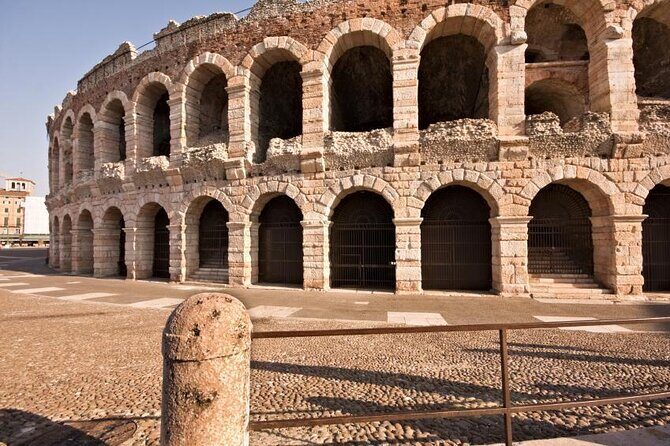
- Arena di Verona stop with free admission ticket to get inside the monument’s story
- Scaligero Bridge + Arco dei Gavi + Porta Borsari for a Roman-to-medieval visual line
- San Lorenzo (XII century) included, plus Santa Anastasia as a major church stop (ticket not included)
- Arche Scaligere for a clear view of medieval Verona’s power
- Romeo and Juliet finale: Casa di Romeo early, Casa di Giulietta at the end
A 2.5–3 Hour Walk That Threads Verona’s Timeline
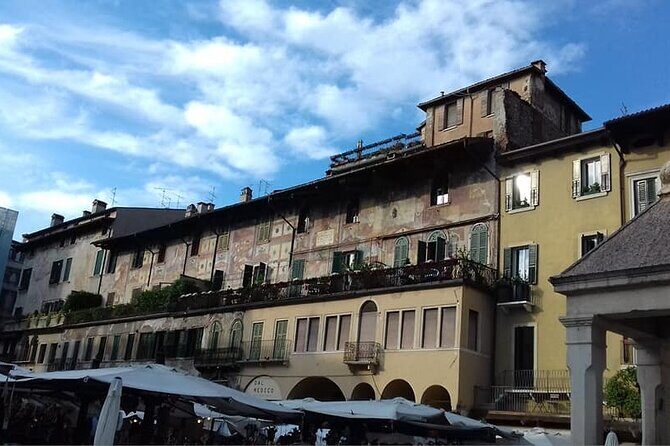
This is the kind of tour that works well when you have limited time in Verona but you want more than a highlights loop. The route is designed like a timeline: Roman bones, medieval muscle, and then the love-story ending that Verona is famous for.
The tour lasts about 2 hours 30 minutes to 3 hours, and you’ll move at a walk-and-stop pace. That’s long enough to get real context at each landmark, but not so long that you’ll burn an entire day. It also has that practical feel: you’ll see multiple top sites without needing to plan each entry ticket yourself.
It’s also a good size for conversation. With up to 15 people, you’re more likely to get your questions answered, and you won’t feel like you’re part of a stadium tour. If you’re traveling with family or going solo, it tends to keep things friendly.
Other city tours we've reviewed in Verona

Starting at I Portoni della Bra: Where the Tour Sets Its Tone
You’ll meet at I Portoni della Bra, Corso Porta Nuova 2, Verona. The goal at the start is simple: get your bearings fast, then move you into the city’s biggest “anchor” landmark—Arena di Verona.
This meeting point matters because the gate area can be a bit tricky to find in practice. I’d treat your first 10 minutes as part of the tour. Use Google Maps on your phone, arrive a few minutes early, and keep your device handy for last-minute check-ins. If you’ve got a schedule that can’t bend at all, build in a little buffer—Verona’s walking routes are easy, but directions at the exact meeting door can be finicky.
The tour ends near the most famous photo stop: Casa di Giulietta (Via Cappello 23). That’s convenient for the final act, but it also means the end zone can be busy. Plan to embrace the crowds for the finish rather than fight them.
Arena di Verona: Free Entry and the Monument’s Secret History
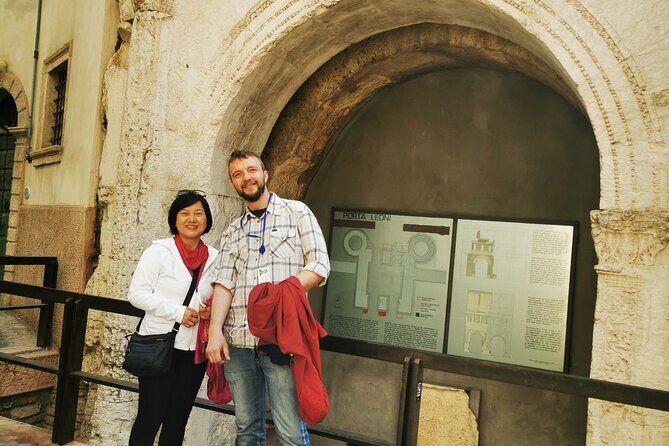
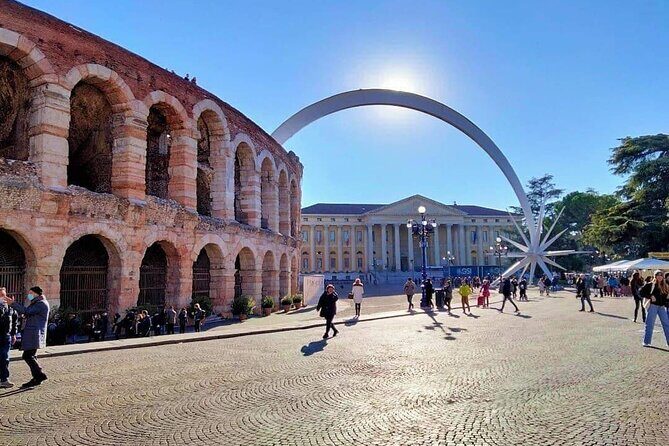
The first stop is Arena di Verona, and the best part is that the admission ticket is free for this stop. Even if you’ve seen photos before, getting inside (or at least properly oriented there) makes it easier to understand why Verona’s Roman past still shapes the whole city.
This is where a good guide earns their pay. The aim isn’t just “look at the amphitheater.” It’s the context—how the monument fits into the city’s identity and how later centuries kept reusing that Roman presence as a point of reference.
What you’ll like here: you’re starting with something huge and legible, so the rest of the walk makes more sense.
Possible slowdown: if you’re visiting on a busy time window, you may spend extra time moving through the immediate area before you get your full explanation.
Scaligero Bridge and the Roman-to-Medieval Visual Line
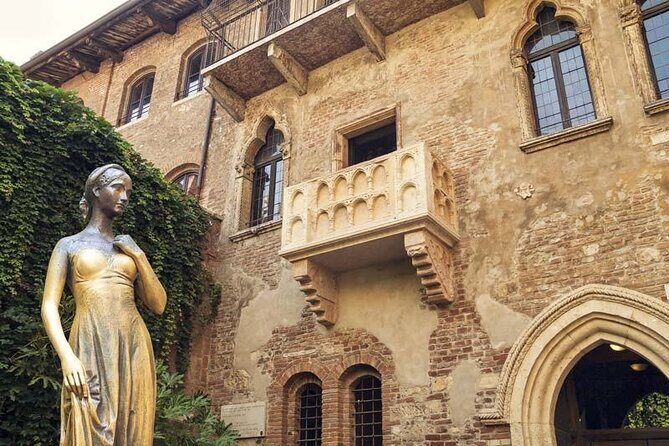
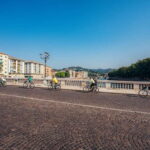
Right after the Arena, you head to Scaligero Bridge, where the route goes for a quick win: it’s famous, it’s photogenic, and it’s medieval. The stop is short (about 8 minutes) and the admission ticket is included.
From there, the tour leans even more into “spot this, remember that” architecture:
- Arco dei Gavi (about 10 minutes) is a Roman-era triumphal arch with a unique story.
- Then comes Porta Borsari, another Roman highlight and a World Heritage Site, with free admission (about 10 minutes).
This trio works because it teaches your eye. After Arena and the bridge, you start seeing how Verona uses stone and built form to communicate status—Roman authority early on, then later medieval identity picking up the story.
One consideration: Porta Borsari and the surrounding streets can be compact. You’ll want to keep your space and let the group flow, especially if you’re stopping for photos.
San Lorenzo and Santa Anastasia: Churches That Show the City’s Layers
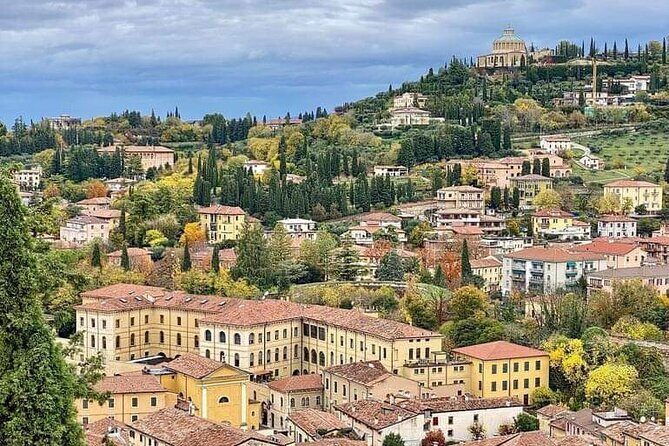
Next is Chiesa di San Lorenzo (Verona), described as a unique Romanesque church from the XII century, with admission included. You’re given enough time (about 15 minutes) to absorb the feel of the space rather than rush past it.
Then the itinerary includes Basilica di Santa Anastasia, the city’s biggest church (10 minutes), but here’s the key practical point: ticket is not included.
That difference matters. If you want to go inside Santa Anastasia fully, you’ll need to budget separately or be ready for a “see from the outside / brief visit” approach depending on your group flow.
Weather and event reality check: churches in Verona can close or limit access due to weddings and other events. If that happens, the guide will usually help you shift focus to what you can still see right there. Just know that church interiors are the one part of Verona that can be out of the tour’s control.
Other historical tours in Verona


Arche Scaligere and Piazza dei Signori: Medieval Power in Plain Sight
After the church stops, the walk heads into the medieval political core with Arche Scaligere (about 15 minutes), which the itinerary frames as the most representative medieval area in the city, with free admission.
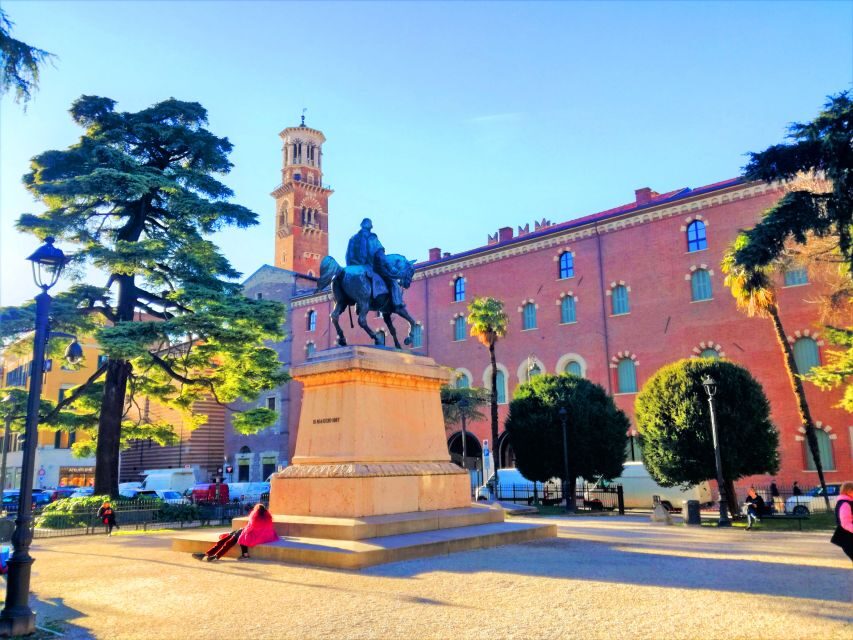
Then you shift to Piazza dei Signori (about 20 minutes), the political center of Verona. This is one of those places where a guide makes a big difference: the square looks like a square, but with the right stories it becomes a map of power—who mattered, what families did, and why these spaces were built to impress.
This pair is also where the tour title starts feeling real. You’re not just moving between famous buildings. You’re watching the city’s political identity develop and then show up in the streets and monuments.
Photo tip: Piazza dei Signori can be a perfect “pause and look around” moment. Even if you’re not the type who plans photos, take a minute here to see sightlines. Verona loves long views made by architecture.
Piazza delle Erbe: Where Verona Lives Between the Landmarks
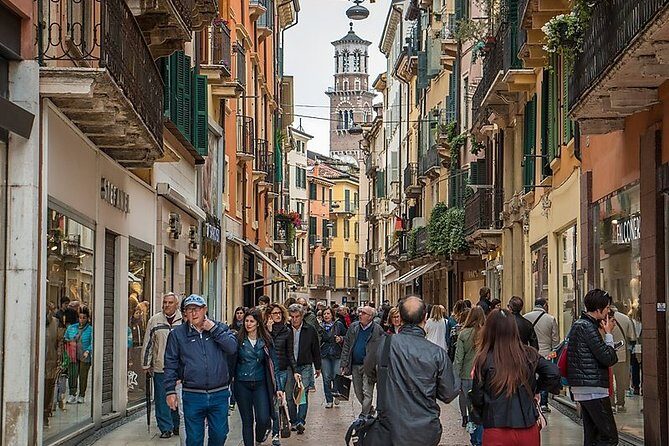
Next stop is Piazza delle Erbe (about 20 minutes), the city center where you’ll have tons of options for what to see next. The atmosphere is a big part of why this square works so well during a guided walk: you’re not sealed inside a museum vibe. You’re in the middle of everyday Verona life.
This is also the moment where I recommend you pace yourself. You’ve already seen big monuments. Now you’re in the heart of the city, and you’ll be tempted to keep looking around even after the tour moves on. If you plan a post-tour gelato stop or a late lunch, Piazza delle Erbe is a smart place to land.
Romeo’s House to Casa di Giulietta: The Love-Story Ending (and the Crowds)
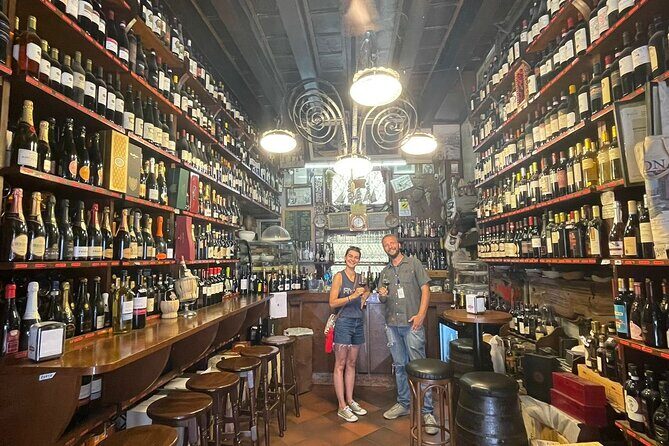
The tour brings you toward the Romeo and Juliet story with:
- Romeo’s House (Casa di Romeo) (about 5 minutes), free admission
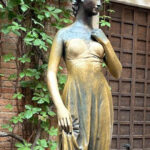
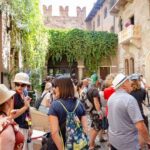
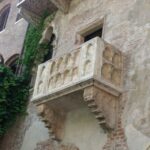
- Casa di Giulietta (about 20 minutes), free admission, and positioned as the best possible tour ending
This structure is clever. You start the “Romeo” side briefly, then let the tour lead you to the “Juliet” finale when you have full momentum and context.
Now for the practical part: Casa di Giulietta is the most famous stop, which means it’s also the most crowded. Plan for that. You can still enjoy it—but you’ll enjoy it more if you treat it as part sightseeing, part atmosphere, not as a quiet heritage moment.
A tip that helps: if you want photos without fighting the biggest bottleneck, aim to do your photos early in the Casa di Giulietta time window, then spend the rest of the stop listening and looking. It’s the stories and the details your guide highlights that make this ending feel earned instead of rushed.
Guide Style Matters: Eugenio’s Stories and the Q&A Advantage
The biggest consistent theme in the experiences shared is the guide’s role in turning buildings into meaning. Eugenio has been described as warm, attentive, humorous, and very in-depth about history and art. What that means for you in real life: you won’t just hear dates and names. You’ll get explanations that help you connect what you see across stops.
I also like that this tour is set up to answer questions. In a small group, you can actually ask things. And the guide seems to personalize the flow based on what the group cares about—especially if your interests are history-heavy or art-heavy.
Two practical notes from real-world experience you should factor in:
- Churches may be closed or limited due to weddings and events.
- Timing sometimes shifts within the same day, and the guide may coordinate adjustments with the group.
One more thing: some participants noted that Eugenio helped them avoid getting lost by arranging pickup help (including meeting them near key transit points). If you’re worried about navigation, consider that as a potential support—just confirm expectations before you rely on it.
Price and Value: What $70.14 Buys You in Verona Time
The price is $70.14 per person, and the duration is about 2.5–3 hours. That can feel steep until you look at what’s included and what isn’t.
Here’s how the admission mix works on the itinerary:
- Arena di Verona: free ticket
- Scaligero Bridge: ticket included
- Arco dei Gavi: free
- San Lorenzo: ticket included
- Porta Borsari: free
- Arche Scaligere: free
- Romeo’s House: free
- Casa di Giulietta: free
- Santa Anastasia: ticket not included
So you’re not paying extra at every stop. You’re paying for the guide’s time and expertise plus a set of admission moments that reduce the “ticket hunting” headache.
Also, the tour offers pickup and uses a mobile ticket, both of which can save time and stress in a city where meeting points can be tricky.
Is it the best deal if you already know Verona and plan to wander alone? Maybe not. But if you want a guided storyline across Roman and medieval sites, and you want help interpreting what you see while keeping the schedule tight, this price can feel fair.
Logistics Tips So You Don’t Lose the First 15 Minutes
A few practical things to keep in mind before you go:
- Meeting point precision matters. The start is at Corso Porta Nuova 2 near I Portoni della Bra. Construction or local changes can make signage less obvious.
- Use your phone. One of the biggest complaints in situations like this isn’t the walking—it’s missing the exact spot because directions were missed.
- Wear comfy shoes. You’ll cover a lot of ground across multiple stops, and Verona sidewalks can be uneven in places.
- Bring water in warm weather. People have noted very hot days (even around 35°C), and you’ll appreciate a pause if the day is warm.
- Keep flexibility. If a church is closed for an event, the group still needs to move. The best experience comes from going with the flow rather than expecting every single interior.
A final scheduling tip: the tour is often booked around 50 days in advance, so if you’re traveling in peak season, don’t wait until the last moment to lock your preferred time window.
Who Should Book This Verona History Walk?
Book this tour if you want:
- A first-time Verona route that connects Roman and medieval scenes
- A guided walk where the city’s art and architecture get explained in plain language
- A manageable length for a day that’s already packed
Skip it (or think twice) if you:
- Want total independence and hate meeting points
- Can’t handle crowds near the end
- Need every church interior guaranteed (events can affect access)
Should You Book This Tour?
Yes, you should consider it if Verona is high on your list and you want a guided route that ends in the Juliet zone with the stories already in your head. The price makes sense because several major stops have free or included admission, and the small-group size helps you actually understand what you’re looking at.
But go in smart: use your phone for the meeting point, wear good shoes, and assume church access could vary. If you’re the type who likes history tied to real buildings (not just facts), this is likely to feel like the best use of your Verona hours.
FAQ
How long is the Verona history tour?
It runs about 2 hours 30 minutes to 3 hours (approx.).
What does it cost per person?
The price is $70.14 per person.
Is the tour offered in English?
Yes, it’s offered in English.
Is pickup included?
Pickup is offered.
How many people are in the group?
The tour has a maximum of 15 travelers.
Where does the tour start and end?
It starts at I Portoni della Bra, Corso Porta Nuova, 2, 37122 Verona VR, Italy and ends near Casa di Giulietta on Via Cappello, 23, 37121 Verona VR, Italy.
Are tickets/admissions included?
Some stops have included or free admission (Arena di Verona, Scaligero Bridge, Arco dei Gavi, San Lorenzo, Porta Borsari, Arche Scaligere, Romeo’s House, and Casa di Giulietta). Santa Anastasia is noted as not included.
What are the tour operating times?
The listed opening hours are Monday to Sunday with tour windows of 9:30 AM–11:30 AM, 12:00 PM–2:00 PM, and 2:30 PM–4:30 PM.