REVIEW · VERONA
Verona e-bike tour: city center and panoramic views
Book on Viator →Operated by Ways · Bookable on Viator
Verona turns easy with an e-bike. In just a few hours you glide from Roman arches to hilltop views, and the small-group ride feels personal instead of rushed, with guides like Priscilla or Frenk running the show. I like the panoramic views at Castel San Pietro and the Torricelle, plus the fact that you’re covering real highlights without wearing yourself out. One drawback to plan for: bike setup can take a bit, and if your group moves fast, some photo stops feel more like quick snaps than time for poses.
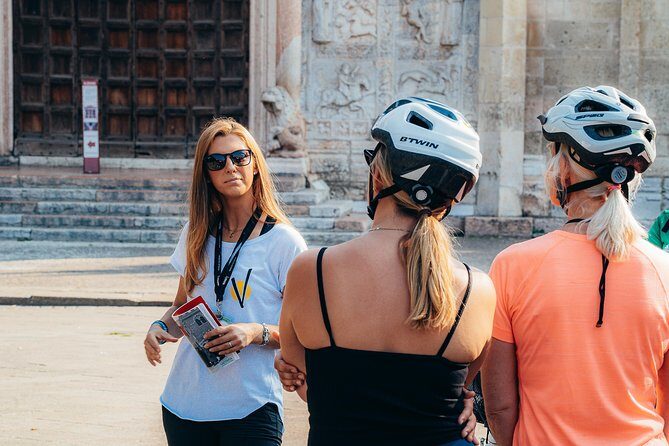
You’ll start in Verona’s center near Via Teatro Ristori, 7, hop on, then follow your guide through piazzas and ancient streets that sit inside the UNESCO-listed historic core. Expect a route that mixes major landmarks with quieter corners, ending back where you began with a free map so you can keep exploring on your own.
This isn’t a laid-back stroll. The ride is easy to intermediate, but it does use roads open to traffic, so you need good riding skills. Kids under 14 aren’t allowed, there’s a 155 cm minimum height to use the bike, and the tour isn’t suitable if you have mobility issues.
In This Review
- Key things I’d pin on your radar
- Getting Started at Via Teatro Ristori: what the ride feels like from minute one
- Roman Verona first: Arco dei Gavi, Porta Borsari, and Piazza Bra
- Juliet, Scaliger tombs, and the Duomo: where the story gets layered
- Ponte Pietra and the Adige: a calm stretch you’ll feel
- Torricelle and Castel San Pietro: the hill climb that actually feels easy
- Via Sottoriva, San Fermo, and Castelvecchio: the calmer, older streets
- Basilica di San Zeno Maggiore and the Arena pass: big sights with smart timing
- Price and value for a 3-hour highlights sprint
- Photo time, group pacing, and staying comfortable on real streets
- Should you book this e-bike tour of Verona?
- FAQ
- How long is the Verona e-bike tour?
- What’s included in the price?
- Where does the tour start and end?
- Is this tour easy to ride?
- Are children allowed?
- What happens if it rains?
Key things I’d pin on your radar
- Castel San Pietro + Torricelle: effortless climbing thanks to the e-bike, then big views over rooftops and the Adige.
- Roman highlights are close together: you’ll see the Arena area, Ponte Pietra, and Roman gates without hiking across town.
- A serious UNESCO target: much of the route runs through Verona’s World Heritage historic center.
- Small group size (max 12): it helps the guide keep everyone together and makes the ride feel more guided than chaotic.
- Comfort-focused e-bikes: riders rave about bike quality, with some mentioning fat tires for cobblestones.
Getting Started at Via Teatro Ristori: what the ride feels like from minute one
The tour meets at Via Teatro Ristori, 7, and it’s close enough to public transport that you can usually reach it without a long taxi hunt. The experience runs about three hours, and the group stays small—up to 12 people—so you’re not fighting a crowd every time the guide stops to explain something.
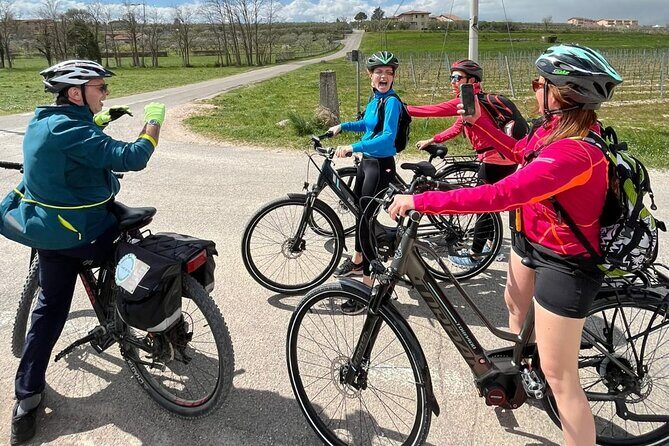
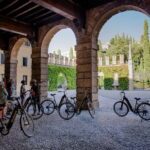
You’ll get an e-bike, a helmet, and a local licensed guide. That helmet detail matters more than it sounds: you’ll be on city streets, and you don’t want to treat this as a casual spin like it’s all private paths. The pace is designed to be leisurely, with the e-bike doing the heavy lifting where the route turns hilly.
A common practical note: bike distribution can take longer than you’d hope, especially if you arrive right before departure. If you’re the type who likes a quick start, arrive a few minutes early, use the bathroom nearby if you need it, and mentally switch into patience mode for the first 10–20 minutes. After that, most people find the ride flows smoothly.
Other bike and e-bike tours in Verona
Roman Verona first: Arco dei Gavi, Porta Borsari, and Piazza Bra
The opening stretch is a smart warm-up because it’s packed with recognizable ancient structures. You’ll pass under the Arco dei Gavi, a Roman triumphal arch that once marked a city gateway. From the bike, it’s easy to slow down and absorb the scale without squinting for details from the edge of a sidewalk.
Next comes Porta Borsari, one of Verona’s best-preserved Roman gates. The guide points out original Latin inscriptions that have survived centuries, and being on a bike helps you keep context: this isn’t just one building, it’s a living piece of the old street system, still sitting in the middle of the modern city.
Then you roll through toward Piazza Bra, Verona’s largest square. It’s a good place to reset—space to regroup, fountains and cafés around you, and a wide-open view that makes the city feel less “maze-y.” If you’re arriving for the first time, this early anchor point is useful. It gives you orientation fast, so later landmarks don’t feel random.
Juliet, Scaliger tombs, and the Duomo: where the story gets layered
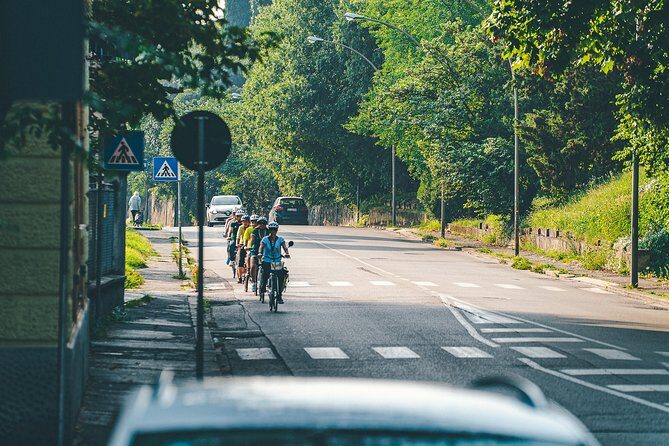
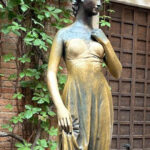
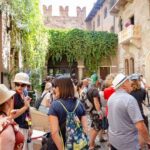
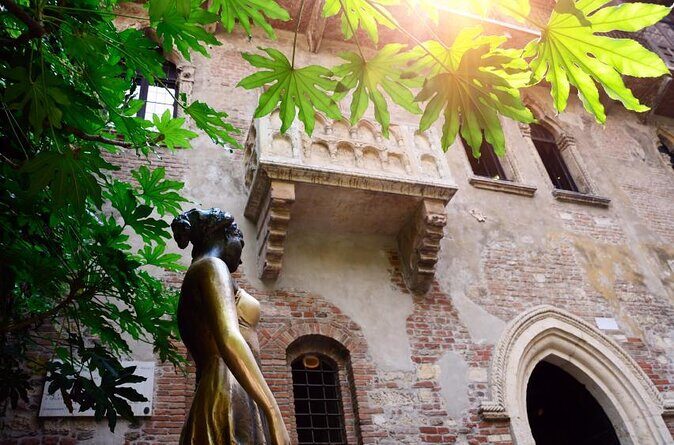
After the Roman baseline, the tour shifts into Verona’s legend-and-power era. The stop at Casa di Giulietta is exactly what you expect in the best way: the courtyard and balcony tied to Shakespeare’s Romeo and Juliet. It’s one of those places where everyone takes photos, but the guide’s job is to keep it from turning into pure crowd-watching by adding context about how the story helped shape the site’s modern fame.
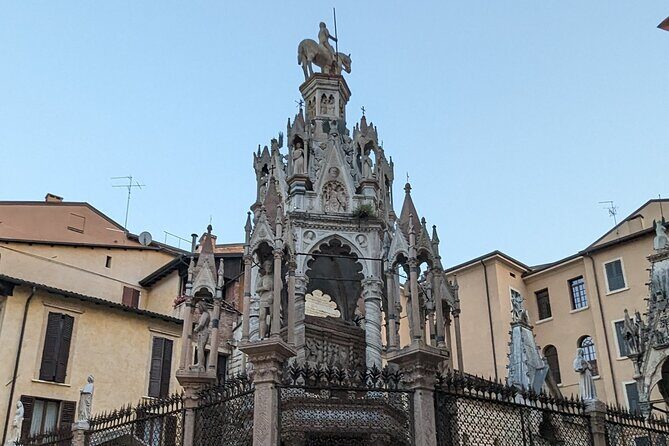
From there, you move to the Arche Scaligere, the ornate Gothic tombs of Verona’s medieval rulers. This is the kind of stop that’s easy to miss on your own, because you usually won’t wander into a quiet courtyard expecting big architecture. On a bike tour, you get there without turning it into a long detour—then you get time to look up and notice how the stonework acts like a canopy over the tombs.
Next is the Duomo di Verona (Cattedrale di Santa Maria Matricolare). You’ll see a blend of Romanesque and Gothic styles, plus sacred art inside (at least from the outside and during the scheduled visit time). The key value here isn’t checking off a box—it’s seeing how Verona mixes eras in the same walking radius. That’s the whole trick of doing this by bike: you cover distance, but you don’t skip the visual transitions that make the city interesting.
Ponte Pietra and the Adige: a calm stretch you’ll feel
One of the most relaxing segments is the ride to Ponte Pietra, Verona’s oldest bridge. Crossing it by bike gives you something walking tours rarely manage: continuity. You’re still moving when the Adige appears, so the experience feels like a transition rather than a dead stop.
The guide also steers you toward the riverside path where you can appreciate the water and the cityscape. If you like moments that feel more quiet than central piazzas, this is your payoff. You’re still in the middle of town, but the Adige creates a natural “breathing space” that makes the city feel less hectic.
This section also helps you pace yourself. After the cathedral-and-courtyard intensity, the river walk feels like a reset before you hit the hillier route.
Torricelle and Castel San Pietro: the hill climb that actually feels easy
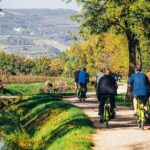
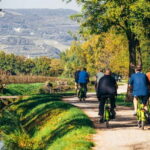
Here’s where the e-bike earns its keep. You’ll head up via Via Torricelle, cycling through the green hills above Verona. The point isn’t just to say you went uphill—it’s to trade street noise for silence and nature, and then come back down with better views of the whole city.
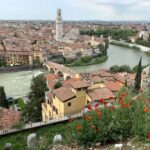
Then you reach Piazzale Castel San Pietro, the panoramic terrace. This is the stop that tends to stick in memory because you can finally see Verona as one layout: rooftops, bell towers, and the river bending through town. If you’ve ever visited a city where you couldn’t get your bearings until your last day, this is the antidote. Getting the wide view mid-tour makes the rest of the landmarks “click” later.
A practical note: one review mentioned the turbo assist making the climb fun even for people who were new to e-bikes. That tracks with how these rides are designed. You’re not grinding your way up; you’re enjoying the ascent while the motor handles the hard part.
Other Castelvecchio and Old Town tours in Verona

Via Sottoriva, San Fermo, and Castelvecchio: the calmer, older streets
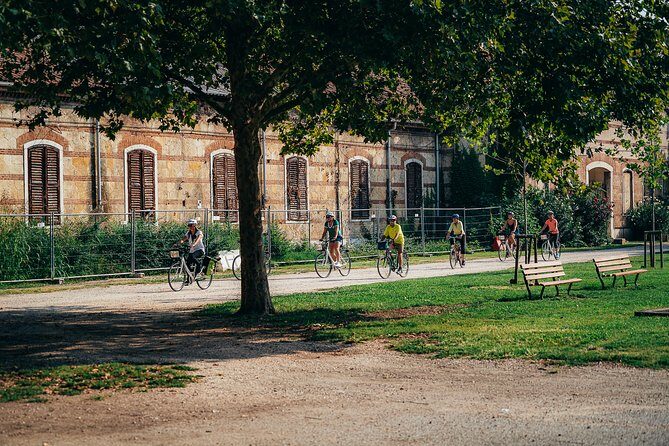
After the hilltop view, the route drops you back into Verona’s older, more atmospheric lanes. Via Sottoriva is a great example. It’s a medieval street feel—stone arches, shaded alleys, and a sense of local texture rather than just landmark tourism. On a bike, you can move through this kind of street without losing your energy for later.
Then there’s Chiesa di San Fermo, a church known for being built on two levels, with Gothic details and frescoes. This is the kind of architecture detail that’s hard to spot if you’re just passing by. Here you get time to look, and the ride format keeps it from becoming a long standalone church visit.
Next comes Ponte di Castelvecchio, where you ride alongside the medieval fortress and cross its crenellated bridge over the Adige. The fortress looks imposing even from the bike seat, but the real win is the angle: you see both the river and the stone shapes in motion, which makes the place feel more alive than a single photo.
Basilica di San Zeno Maggiore and the Arena pass: big sights with smart timing
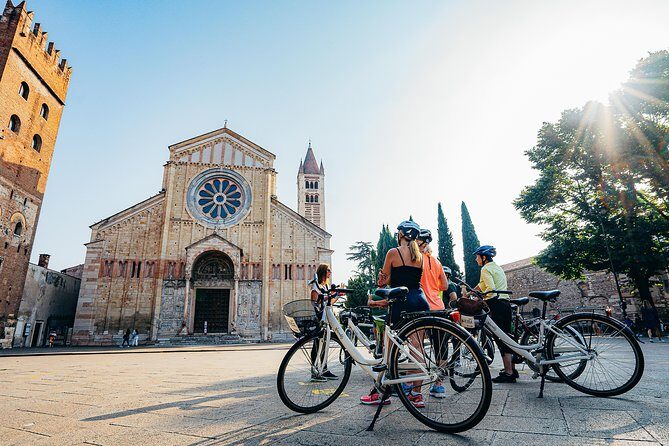
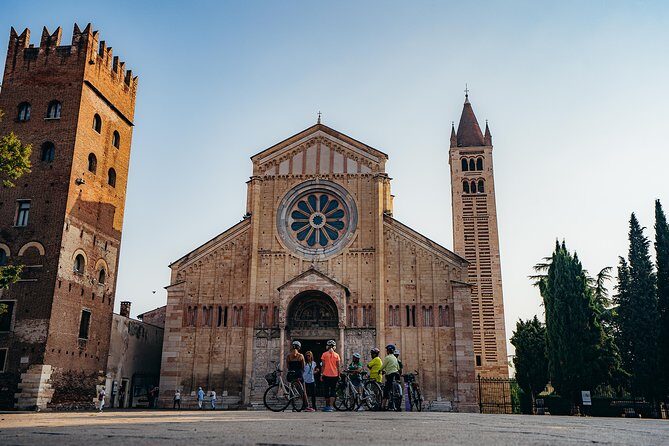
The tour finishes at Basilica di San Zeno Maggiore. This stop has a “quieter side of Verona” feel—cobbled streets, a Romanesque masterpiece, and a calm end point that doesn’t feel like the energy is still building. It’s also a nice way to end: you get a sense of Verona’s depth beyond the most famous names.
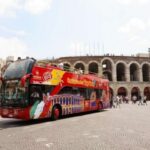
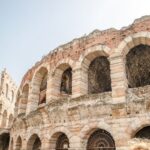
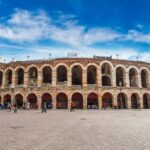
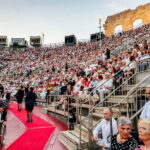
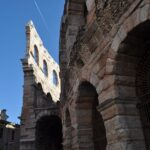
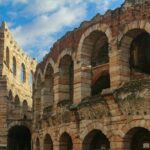
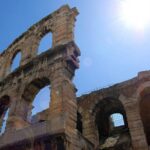
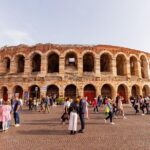
One highlight you’ll pass near but not enter is the Arena di Verona. You’ll ride by the Roman amphitheater and hear stories connected to it, including the fact that it’s still used for major opera nights. Admission isn’t included, so you’re seeing it from the outside and within the tour’s scheduled time window. If you want to go inside, plan to add that separately.
Price and value for a 3-hour highlights sprint
At $54.44 per person for about 3 hours, this is priced for convenience and time. You’re not just getting transportation—you’re getting a guide to connect the dots between monuments, plus an e-bike and helmet. The route is designed so you see multiple major sights and several “you’d skip this alone” stops without having to navigate your own route.
It also helps that the group stays small (max 12). In a city like Verona, where walking between key sites can chew up time, a guided e-bike loop often feels like the best use of a half-day. If you’re only in Verona for a day, this is a strong way to establish your priorities for later.
A small practical perk: you get a free map when you return your bike, so you can steer your next hours without guessing.
Photo time, group pacing, and staying comfortable on real streets
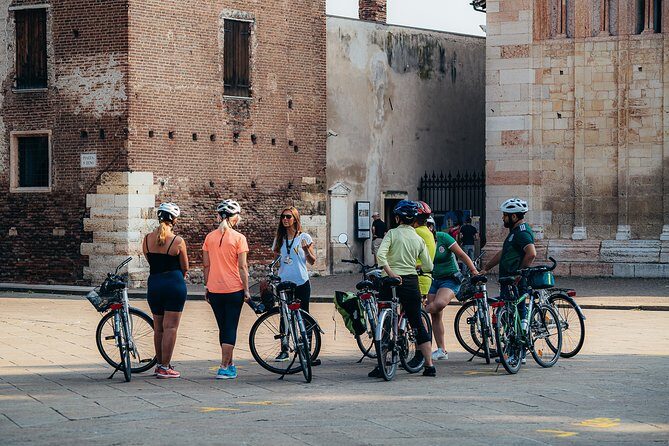
A few things can affect your comfort, and it’s worth planning around them.
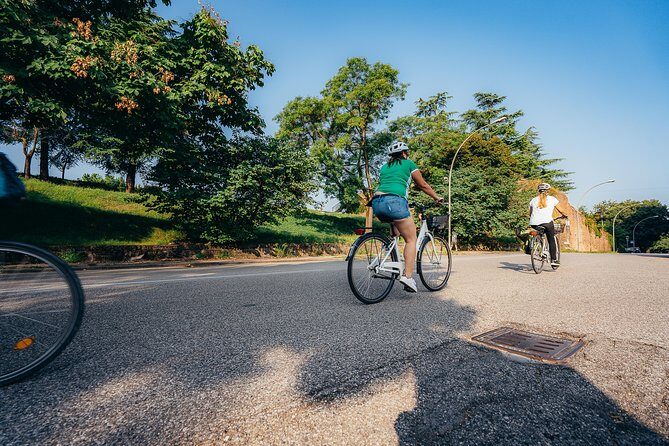
First, you’ll be on roads open to traffic, even if the guide chooses safer routes. That means you should ride confidently, keep an eye on the bike ahead of you, and avoid sudden moves to stop for photos. One shared frustration from a rider was missing some photo moments because the group moved along. Translation: treat this as a tour where the guide controls timing, not an open-ended photo safari.
Second, the bikes are set up for comfort. Multiple riders praised bike quality and even mentioned fat tires as helpful over cobblestones. Still, bring the mindset that Verona streets can be uneven. Wear comfy shoes and keep a steady cadence.
Finally, the best guides in this group are the ones who watch the line and keep people together. Several riders named guides like Frank, Maria, and Isabella as especially good at pacing the group and making everyone feel safe.
Should you book this e-bike tour of Verona?
If you want to see a lot of Verona fast—Roman gates, Juliet’s courtyard, cathedral views, river bridges, and hilltop panoramas—this is a strong choice. The e-bike does the work for you, the group size stays manageable, and the ride is built to give you both landmarks and quieter texture.
Skip it if you hate riding near traffic, if your mobility needs mean you can’t handle uneven city surfaces, or if you only want slow wandering with long photo breaks. This tour is easier to enjoy when you’re comfortable following a guide’s timing.
For most people, it’s an ideal first-half-day activity. Get your bearings, take in the big views at Castel San Pietro, and then use the free map to choose what to revisit later—without rushing.
FAQ
How long is the Verona e-bike tour?
It runs for about 3 hours.
What’s included in the price?
The tour includes e-bike use, a local licensed guide, and a helmet. The Arena di Verona admission is not included.
Where does the tour start and end?
It starts at Via Teatro Ristori, 7, 37122 Verona, and it ends back at the same meeting point.
Is this tour easy to ride?
The ride is rated easy/intermediate. You’ll need good riding skills because it uses roads open to traffic.
Are children allowed?
Children under 14 aren’t allowed. There’s also a minimum height of 155 cm to use the e-bike.
What happens if it rains?
The tour will not be canceled due to rain. In case of rain, the guide decides the best alternative for the whole group, and refunds will not be guaranteed if you don’t accept the offered alternative.