REVIEW · VERONA
Dark Historical Verona Walking Tour
Book on Viator →Operated by Girolami Maria Pia · Bookable on Viator
Dark stories, calm pace, and a great local guide. This walk turns Verona’s famous romance into something more honest, taking you from the Arena area to the Scala tombs and darker public-memory spots as the city cools down at night. It’s the kind of guided route that helps you see the city’s layers without the stress of wandering.
I especially love the way Maria Pia and other guides tell local legends and hard facts side-by-side, so you understand what you’re looking at instead of just ticking off places. I also love that it’s a small group (up to 15), with a clear path so you stay oriented even when you’re in unfamiliar streets.
One possible drawback: the theme is serious, with cruelty and violence discussed as history. If you want a light, only-pretty Verona, this may feel heavier than you expected, and you won’t enter the Arena itself since the focus is on stories and context.
In This Review
- Key highlights worth knowing before you go
- Dark Verona After Sunset: What Makes This Walk Different
- 90 Minutes, Several Departures: How the Timing Works for You
- Arena di Verona Without Entering: Why the Outside Stories Still Hit
- Sinagoga di Verona and WWII Neighbors: Learning Verona from a Different Angle
- Piazza delle Erbe: Medieval Punishments You Can Still Visualize
- Piazza dei Signori: Scala Power, a Murder Corner, and the Dante Connection
- Arche Scaligere (Scala Tombs): Family Feuds in Stone
- Casa di Giulietta: Romance History with a Harder Edge
- The Real Star: Local Guide Storytelling (Maria Pia and More)
- Price and Value at $66.52: What You’re Actually Buying
- Who This Walk Suits Best (And Who Might Skip)
- Should You Book This Dark Historical Verona Walking Tour?
- FAQ
- How long is the Dark Historical Verona Walking Tour?
- Is the tour offered in English?
- What’s included, and what’s not?
- Do I need to pay entrance fees at the stops?
- How big is the group?
- Where does it start and where does it end?
- Are service animals allowed?
- Is there a refund if I cancel?
Key highlights worth knowing before you go
- Nighttime pacing: a romantic-feeling walk that still tackles uncomfortable history
- Storytelling first: the guide experience is the main event, and it stays engaging
- Small groups (max 15): easier to follow, better questions, less getting lost
- Major Verona stops, no wasted time: Arena area, Synagogue area, Piazza delle Erbe, Signori Square, Arche Scaligere, and Casa di Giulietta
- Free admission listed for each stop: you get the value without extra site fees for entrances mentioned
Dark Verona After Sunset: What Makes This Walk Different
Verona can feel like a movie set by day. At night, it turns more human. This tour leans into that shift by focusing on the city’s darker historical moments and the legends that grew around them.
The big difference from the typical highlight-walk is what’s emphasized. Instead of only admiring facades, you learn why certain places have a reputation. You connect streets and squares to real events—public punishments, family rivalries, and the way WWII-era history touched the neighborhood around the synagogue area.
And even though the theme is dark, it is not ghost-story theater. The tone is facts, legends, and context—often told with warmth and sometimes a bit of banter, depending on the guide.
Other Verona walking tours we've reviewed in Verona


90 Minutes, Several Departures: How the Timing Works for You
This is designed to fit into a tight vacation schedule. It runs about 1 hour 30 minutes, and you can pick from several departure times, which is handy if you’re balancing dinner plans or a tight first day.
The group size matters. With up to 15 travelers, the guide can keep a steady pace without stretching the group thin. That is part of why this works as an evening activity: you can pay attention instead of trying to regroup at every corner.
You’ll also have a mobile ticket, and the meeting point is near public transportation. The tour ends at Casa di Giulietta, Via Cappello 23, which makes it convenient if you want to stroll afterward or grab something to eat nearby.
Arena di Verona Without Entering: Why the Outside Stories Still Hit
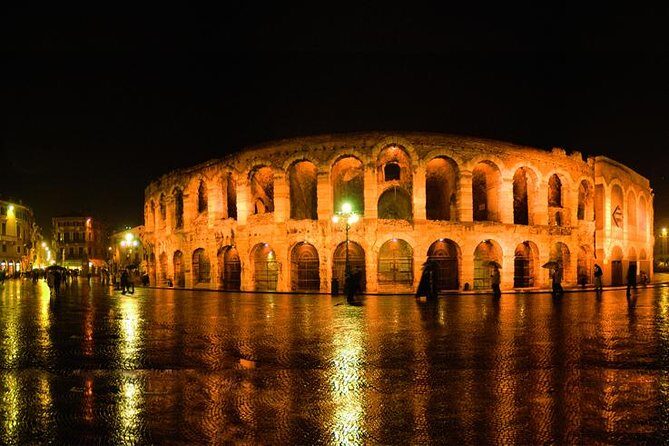
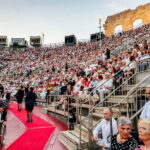
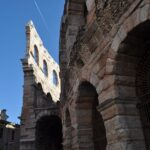
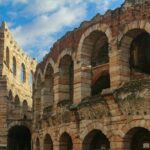
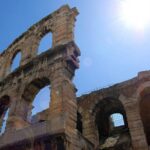
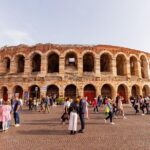
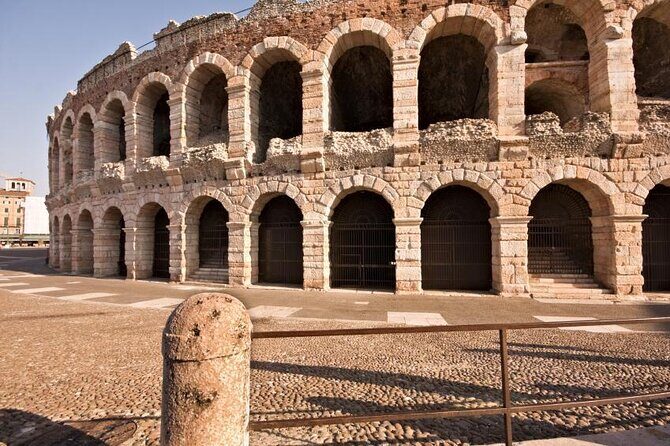
You start at the Arena area, but you do not enter the Arena. Instead, you learn the building’s history and stories tied to what happened there.
This is a smart choice if your goal is learning, not just photo angles. The Arena is already visually powerful from outside, and the guide connects that power to events that are hard to forget. You’ll hear about what happened on the Ides of March in 54 AD, and another grim moment tied to February 13, 1278, when 176 people, including children, were burnt alive.
Why this works: you get the “big-city” shock value—plus the historical framing that makes it understandable rather than just scary. The drawback is simple. If your heart wants the inside of the Arena, this tour won’t satisfy that. It’s built for context around the Arena, not for an Arena ticket experience.
Sinagoga di Verona and WWII Neighbors: Learning Verona from a Different Angle
Next comes the Sinagoga di Verona area. The story here centers on the Jewish family who lived near the synagogue during World War II.
This stop does something important for the tour. It widens the idea of what dark history means. It’s not only medieval violence and political brutality. It’s also modern history and the way communities were affected at the neighborhood level.
From a practical point of view, this is also a good time in the evening to recalibrate your focus. By the time you reach the synagogue stop, you’ve already seen the Arena’s massive scale and the public spaces of the old city. Now you’re learning how those spaces relate to real people and real risk.
Piazza delle Erbe: Medieval Punishments You Can Still Visualize
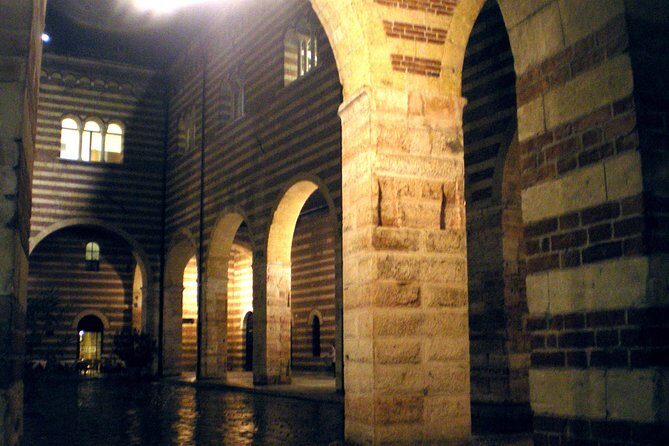
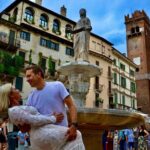
Piazza delle Erbe is one of Verona’s most lively squares in the daytime. Here, you’ll see it through a different lens.
The guide points out sites connected to medieval punishments. You’ll watch the square’s architecture and street layout while learning about cruelty tied to public displays—like the pillory and a tower connected with an exposition cage. The details are meant to help you read the space, not to turn the tour into shock-for-shock’s-sake.
The value is how it trains your eye. After this stop, you’ll start noticing features like where power was displayed, where people were forced to gather, and how public life was used for discipline. If you prefer purely celebratory sightseeing, this is the part where you may need to adjust expectations.
Other walking tours we've reviewed in Verona



Piazza dei Signori: Scala Power, a Murder Corner, and the Dante Connection
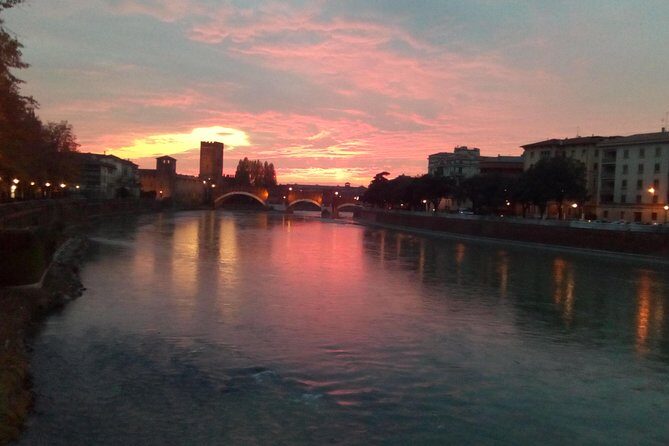
From there you move to Piazza dei Signori. This is where Verona’s political drama becomes very literal.
You’ll pass by the corner linked to the murder of Mastiff I of the Scala family in 1277. Then the guide expands the story into the consequences of power: the sad destiny of orphans, Dante and his flight from Florence, and the hard life under the Austrian-Hungarian Empire.
What I like about this segment: it gives you a timeline feel. You see how Verona’s stories aren’t isolated events. They connect rulers, displaced people, and changing regimes. You also get a better sense of why the city’s identity is so layered—romance on top, politics underneath.
One consideration: if you get uneasy with repeated references to violence and oppression, this stop may feel intense. The guide’s job is to keep it coherent and historically grounded, but the subject matter is still serious.
Arche Scaligere (Scala Tombs): Family Feuds in Stone
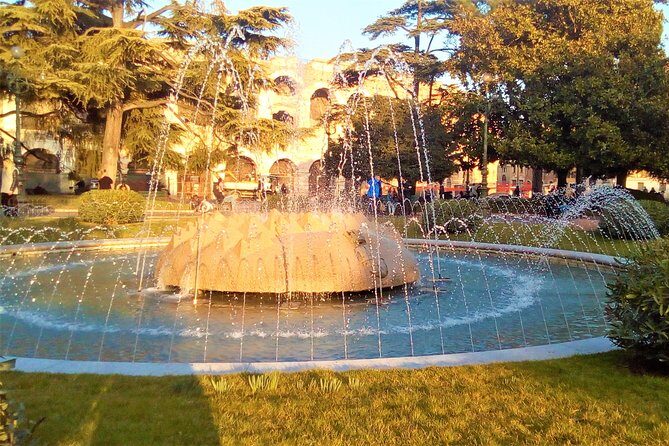
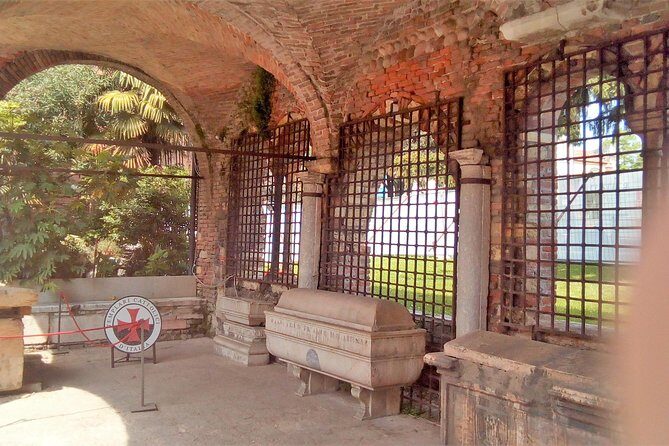
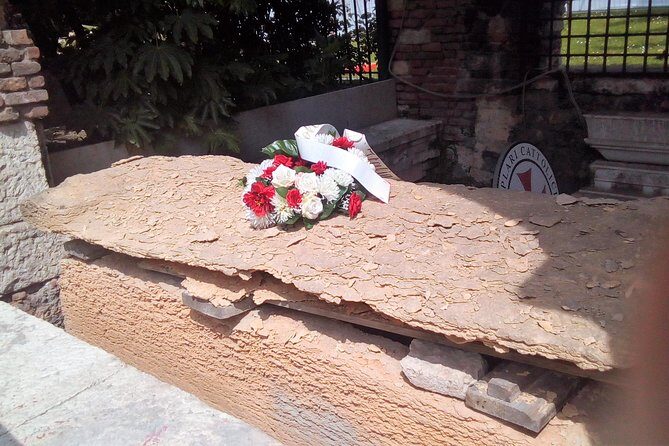
Now you’re at the Arche Scaligere, the Scala family tombs. This is often where the tour’s “dark” theme lands most strongly, because the stone monuments are so physical.
The guide explains plots tied to the end of the family’s rule: hate among brothers, murders, and attacks. You don’t just learn names. You learn how conflict shaped who got remembered, who got buried here, and why these monuments carry tension in their symbolism.
This stop is a great example of the tour’s best method: connect visual cues to human motives. After you hear the stories, you tend to look at monuments differently—less like decoration and more like historical records.
Casa di Giulietta: Romance History with a Harder Edge
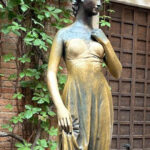
The walk ends at Casa di Giulietta. This is the part where Verona’s famous love story shows up, even in a tour about dark history.
You’ll hear the sad story of the two doomed lovers. It’s a reminder that Verona’s romance isn’t separate from its tragedies. In this city, love legends, politics, and family conflict all orbit the same streets.
A practical bonus: because the tour ends right there, you don’t have to plan your own late-night navigation. You can keep walking, grab dinner, or head back easily afterward.
If you’re expecting only crime-and-violence history, this last stop may feel gentler. But if you’re here to understand how Verona’s identity is built, it actually works as a closing emotional contrast.
The Real Star: Local Guide Storytelling (Maria Pia and More)
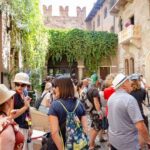
The guide experience is the thread that holds the evening together. I’d book this mainly for the way the stories are delivered.
Maria Pia shows up repeatedly in the feedback as lively, engaging, and passionate about Verona. People highlight that the tour feels more like walking with an old friend than standing in a lecture line. Another guide mentioned in the feedback is Frank, praised for keeping the tour going even during rain and for entertaining ages from adults down to a 9-year-old.
Here’s what you should take from that if you’re deciding whether this fits your style:
- If you like conversational storytelling and the guide builds connections between architecture and events, you’ll likely love it.
- If you want a strictly academic, neutral tone, you might find the dramatized energy too much. One account noted feeling it had extra drama. So I’d call it history with personality, not museum narration.
Good guides also tend to tailor. In this case, the tour can adjust so the group’s interests get more attention. That matters because Verona is full of small details, and a guide who points them out changes your entire experience.
Price and Value at $66.52: What You’re Actually Buying
At $66.52 per person, this is not a budget throwaway. But for a short evening tour, it’s also not overpriced given what you get.
You’re paying for:
- a local guide who connects multiple eras and themes,
- a compact 1.5-hour route that covers several major sites,
- English service,
- a small group capped at 15 travelers,
- and stops that list free admission tickets in the tour flow, which helps you avoid extra costs at each stop.
The timing also supports value. Since it’s popular enough to be commonly booked about 37 days in advance, you’ll usually have options. Booking earlier can improve your chance of getting the departure time that fits your schedule.
If you’re traveling with limited time in Verona, this kind of evening orientation can be a strong first-day plan. It helps you understand what you’ll see the next day when you’re walking on your own.
Who This Walk Suits Best (And Who Might Skip)
This is a great fit if you:
- like history that includes legends and the human side of politics,
- enjoy guided walking routes that help you avoid getting turned around,
- want a night activity in Verona that feels different from the classic romantic circuit,
- and you like learning how buildings and squares reflect power and public life.
It also works well for mixed ages. One family with a wide age span reported that the guide kept interest across adults and a child of around 9. That suggests the stories are paced for comprehension, even when the topics are heavy.
I’d consider skipping if you:
- want only light sightseeing,
- prefer a tour focused purely on architecture details without dramatic storytelling,
- or you’re very sensitive to discussions of cruelty, murder, and oppression. This tour is history-based, not ghost-based, but it is still dark in subject.
Should You Book This Dark Historical Verona Walking Tour?
Yes, I think you should book it if you want Verona to feel real, not just pretty. The combination of a compact route, a strong guide-led story style, and major stops like the Scala tombs and the synagogue area makes it a useful way to build context fast.
You’ll get the most out of it if you’re open to hearing uncomfortable facts explained clearly, and if you enjoy asking questions while walking. If you want an experience that’s half romance and half political truth, this evening tour is built for you.
If your ideal Verona evening is only charming and upbeat, you might prefer a lighter walking tour instead. But if you’re here to understand how a city holds onto both beauty and brutality, this one is worth your time.
FAQ
How long is the Dark Historical Verona Walking Tour?
It runs about 1 hour 30 minutes, approximately.
Is the tour offered in English?
Yes, it is offered in English.
What’s included, and what’s not?
The tour includes a local guide. Hotel pickup and drop-off are not included.
Do I need to pay entrance fees at the stops?
The tour flow lists admission tickets as free at the stops mentioned in the route.
How big is the group?
The tour has a maximum of 15 travelers.
Where does it start and where does it end?
It starts at CXQV+F2 Verona (meeting point) and ends at Casa di Giulietta, Via Cappello 23, 37121 Verona VR, Italy.
Are service animals allowed?
Yes, service animals are allowed.
Is there a refund if I cancel?
You can cancel for a full refund if you cancel up to 24 hours in advance of the experience start time.