REVIEW · VERONA
3 Hour Walking tour of Verona and Arena
Book on Viator →Operated by VENEZIA TOUR ITALY · Bookable on Viator
Verona in three hours is actually doable. This compact walk threads together Roman gates, medieval power, and the Arena area so you know what you’re looking at before you start snapping photos. I like that it moves at a friendly pace while still covering big-ticket landmarks like Castelvecchio and the Arena.
I also like the money-to-meaning ratio: the Arena museum ticket is included, while the other stops are basically “show up and look,” which keeps the day from turning into a pile of extra fees. One drawback to consider: at $171.52 per person, this is best value if you want a guide to connect the dots, not just a quick stroll through photo stops.
In This Review
- Key highlights worth your attention
- A well-paced Verona walk that actually fits in 3 hours
- Meeting at Via Teatro Ristori and starting on time
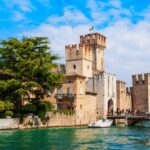
- Castelvecchio: the Scaliger fortress that turns into a museum
- Ponte Scaligero (Castelvecchio Bridge) and the Adige riverfront
- Arco dei Gavi: a Roman honorary arch with private-family flair
- Porta Borsari: the Roman gate you can read like a timeline
- Piazza delle Erbe: the oldest square and the Roman forum over it
- Torre dei Lamberti: medieval verticals near the square
- Piazza dei Signori (Piazza Dante): where politics played out in stone
- Arena di Verona: Roman amphitheater and your included museum entry
- What you’re paying for at $171.52 (and when it feels fair)
- Who this Verona tour suits best
- Quick advice to make the most of it
- Should you book the 3-hour Verona and Arena walking tour?
- FAQ
- How long is the Verona and Arena walking tour?
- What time does the tour start and where do I meet?
- Is the tour in English?
- What’s included in the price?
- Do I need to buy tickets for the other stops?
- Will we return to the meeting point?
- Does the tour run in bad weather?
Key highlights worth your attention
- Arena museum entry included so you’re not left figuring out ticket plans mid-day
- A mostly level 3-hour walk that’s manageable for a lot of visitors
- Roman-to-medieval storyline from Porta Borsari through Piazza delle Erbe and Piazza dei Signori
- Big sights, short stops (about 20–25 minutes each) that fit a first visit
- Small group cap (16 max) which helps the guide keep things on track
- Guides like Frank and Maddy are known for clear explanations without turning the tour into a lecture
A well-paced Verona walk that actually fits in 3 hours
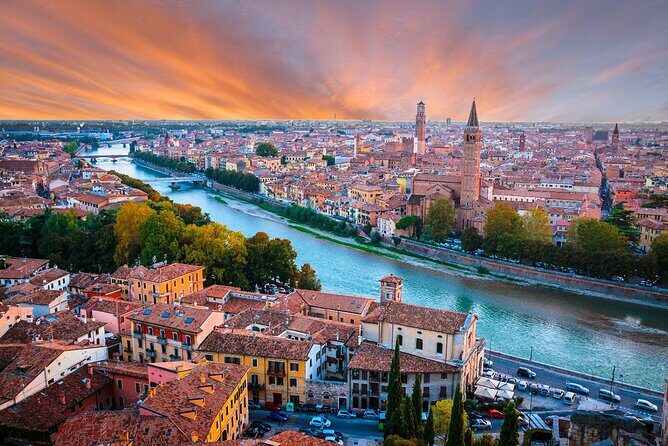
This tour is built for people who want the best of Verona without spending the whole day commuting between sites. You get a guided loop that hits fortress, bridges, Roman architecture, market squares, and then finishes at the Arena area. The whole thing clocks in around 3 hours, with the walking kept pretty reasonable for most visitors.
You also get a practical setup: you’ll receive a mobile ticket, the tour runs in English, and it’s a shared group with a maximum of 16 people. That small group size matters more than it sounds. With fewer people, your guide can answer questions and keep the pace steady, especially at tight corners and busy piazzas.
If you’re the type who likes to understand where you are—why something is here, what it used to be, and what to look for—this tour will feel satisfying. If your goal is mainly photos and you’re allergic to explanations, the price may feel heavy unless you especially care about the Arena museum stop.
Other Verona walking tours we've reviewed in Verona

Meeting at Via Teatro Ristori and starting on time
Your day begins at Via Teatro Ristori, 7 (37122 Verona) with a 10:00 am start. You’ll also end back near the meeting point. That matters because it reduces the “where do we end up?” stress, and it helps you plan lunch afterward.
Also, think about the weather. The tour continues in all conditions, so bring what Verona asks for: water, sunscreen, a hat, and an umbrella. In cooler months, dress warmly. And if you’re in warmer months, it’s smart to have something that covers bare shoulders when you go inside any church areas the day may touch. Comfortable shoes are a must—Verona’s streets are charming, but they’re not built for flip-flops.
Castelvecchio: the Scaliger fortress that turns into a museum
Stop one is Museo di Castelvecchio inside Castelvecchio, a medieval fortress in Verona’s historic center. This place is strongly tied to the Scaliger Signoria, and it’s considered the city’s most important military monument. In other words, you’re not just looking at pretty stone—you’re looking at a defensive statement.
What you’ll likely notice here:
- The fortress is part of Verona’s “power story,” not just an isolated landmark.
- It’s the kind of site where a guide helps you see details you might otherwise miss (like how the complex functioned as a stronghold).
This stop is about 25 minutes and doesn’t require you to buy a ticket for the visit portion listed here. That’s a good use of time because the architecture does the heavy lifting. You’re left with a mental image of how medieval Verona protected itself—then the rest of the walk makes more sense.
Practical tip: If you only have a short attention span for museums, don’t worry. Your time is limited, and the guide framing keeps it from turning into a long museum slog.
Ponte Scaligero (Castelvecchio Bridge) and the Adige riverfront
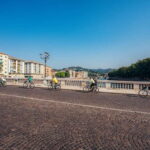
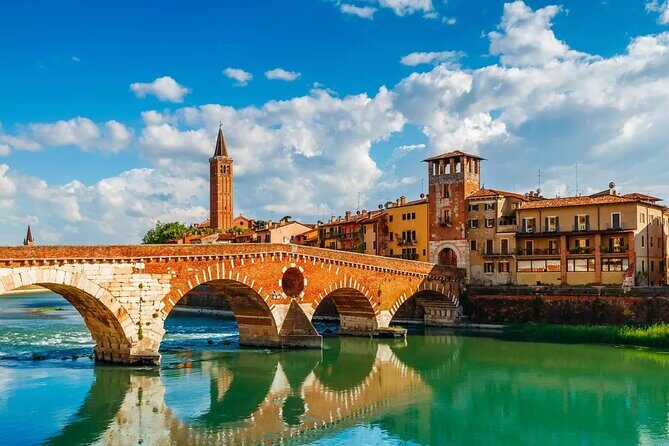
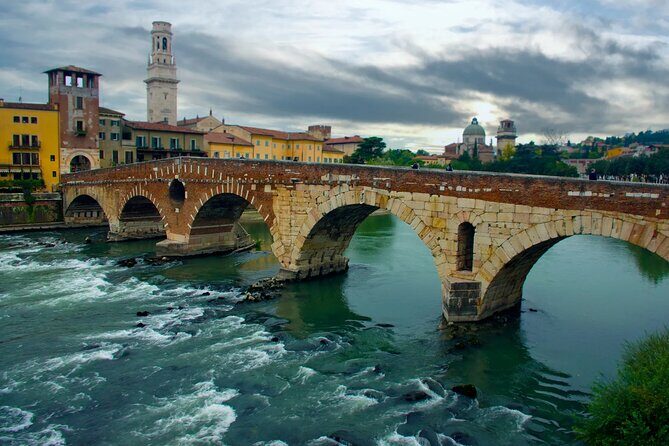
Next up: Ponte Scaligero, also called the Scaliger Bridge. This is one of those landmarks that instantly feels “strategic” because it sits over the Adige River and connects back into the Castelvecchio fortress complex.
What makes this bridge memorable is its medieval daring. It’s described as a work of infrastructure and military engineering, and it’s considered one of the most admirable efforts of Veronese medieval times. That’s exactly the kind of line that changes how you see a bridge. Instead of thinking only about crossing, you start thinking about control, defense, and movement of people and goods.
This stop is also around 25 minutes, with no extra paid admission required for the stop itself. If you’re the type who likes to orient yourself in a city, this bridge helps you understand the geography of Verona quickly.
Arco dei Gavi: a Roman honorary arch with private-family flair
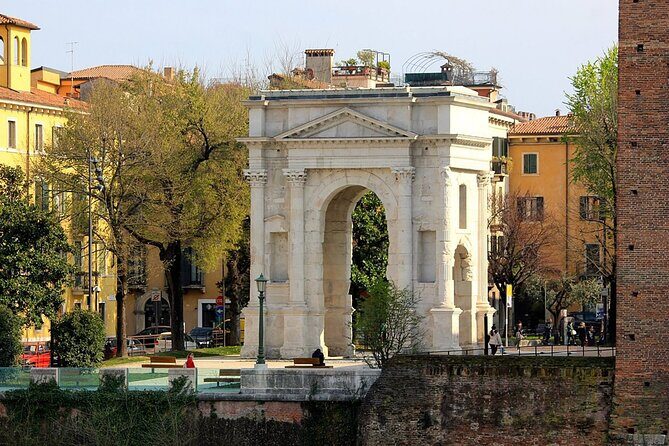
Then you shift into Roman-era details at Arco dei Gavi. This arch sits along the ancient Via Postumia, just outside what used to be the Roman city walls. It’s a rare example of an honorary and monumental arch tied to a private family rather than a public empire announcement.
A few things make it interesting:
- It dates to around the middle of the 1st century.
- It’s connected to the Gavia family, which adds a more personal human angle to Roman architecture.
Time on this stop is short—about 25 minutes—but that’s honestly perfect. You get the context (what it is, who it was for, where it fits), and then you move on.
Why a short stop works here: It keeps the day from getting stuck on any single monument. The goal is to build a timeline of the city as you walk.
Other walking tours we've reviewed in Verona


Porta Borsari: the Roman gate you can read like a timeline
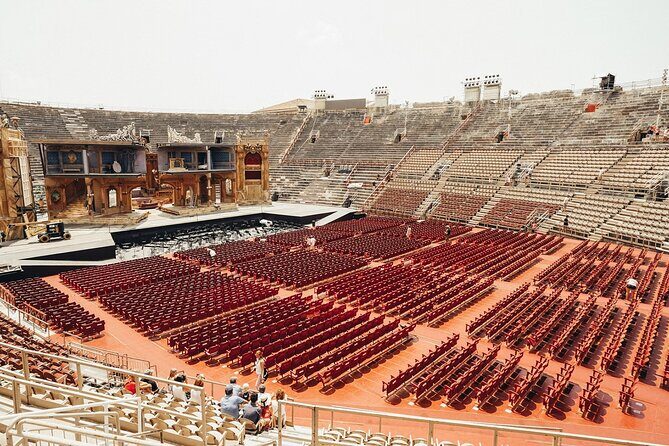
At Porta Borsari, you’ll be looking at a Roman gate along Verona’s walls. It’s recognized as a World Heritage Site, and it’s historically known as Porta Iovia because of the nearby temple dedicated to Jupiter Lustralis.
If you’ve ever felt lost at Roman ruins because you don’t know what came before what, this kind of guided stop helps. A gate isn’t just a gate. It tells you how the city managed entry, defense, and movement.
This is another 25-minute moment, and it’s one of those stops that benefits from a guide explaining:
- how the gate relates to the surrounding ancient city layout
- what clues the naming and nearby temple connection offer
No separate admission is required for this stop in the way the Arena museum is handled later in the tour.
Piazza delle Erbe: the oldest square and the Roman forum over it
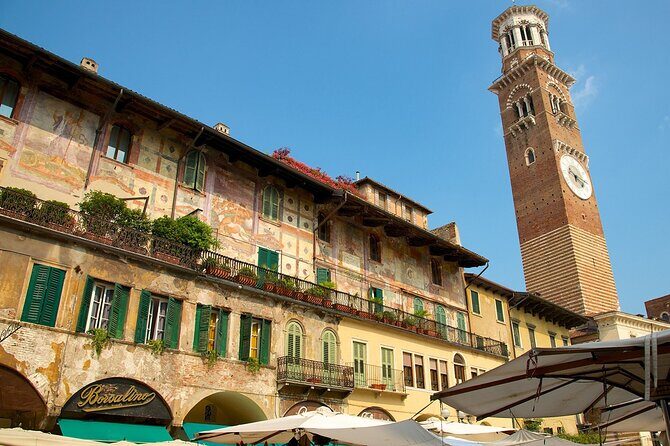
Now for one of Verona’s main stages: Piazza delle Erbe. This square is the oldest in Verona and sits above the Roman Forum area. Over time, Roman buildings gave way to medieval ones, and the square became the center of political and economic life.
There’s also a modern touch: in 2012, it was named the most beloved Italian square in the world. Even if you’re skeptical of awards, that kind of recognition is useful. It tells you this is a place people keep coming back to—not just once for a photo.
This stop is about 20 minutes. With that amount of time, you can do two things well:
- look at the layout and try to picture it as the Roman center of civic life
- notice the shift from Roman foundations to medieval structures
Practical moment: If your stomach is already thinking lunch, this square is a great place to pause and breathe. Just keep your energy for the next stop—tower views and the Signori square are coming.
Torre dei Lamberti: medieval verticals near the square
Near Piazza delle Erbe sits Torre dei Lamberti, a medieval tower. This is one of those landmarks that helps you scale the city. From ground level, Verona’s buildings can look like they’re all the same height. A tower breaks that illusion and gives you a sense of direction and geography.
The time here is around 20 minutes, and it fits perfectly in the flow of the walk. You’re not asked to climb, and you’re not forced to commit to a long visit. Instead, you get a quick guided stop that helps you connect the tower to the heart of town.
If you like “orientation points” in cities, this one is helpful.
Piazza dei Signori (Piazza Dante): where politics played out in stone
Next comes Piazza dei Signori, also known as Piazza Dante. This square developed in the Middle Ages as the Scaliger palaces rose nearby, and it served political, administrative, and representational functions.
This is where Verona’s medieval identity becomes loud. The piazza is framed by monumental buildings, linked by arches and loggias. In plain terms: it’s designed to show authority and power.
You’ll spend about 20 minutes here. That’s enough time to grasp the feel of the place and understand why it mattered. If you’ve ever walked through a square and thought it was just pretty, this stop is the antidote. You get the “why” behind the architecture.
Arena di Verona: Roman amphitheater and your included museum entry
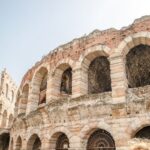
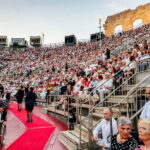
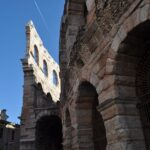
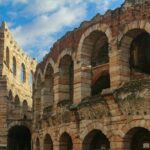
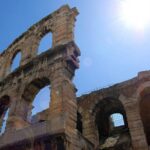
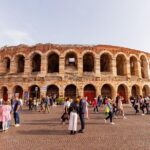
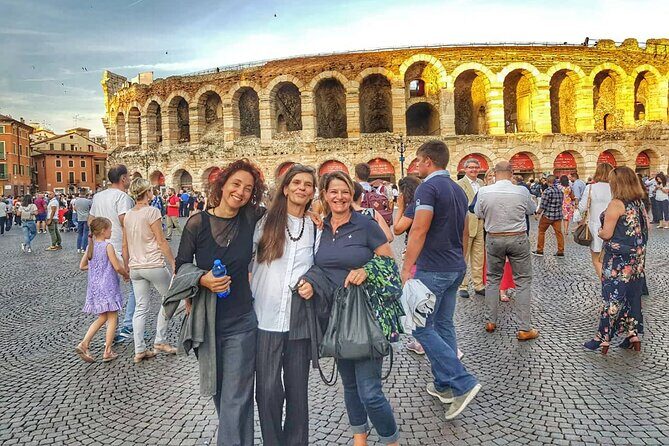
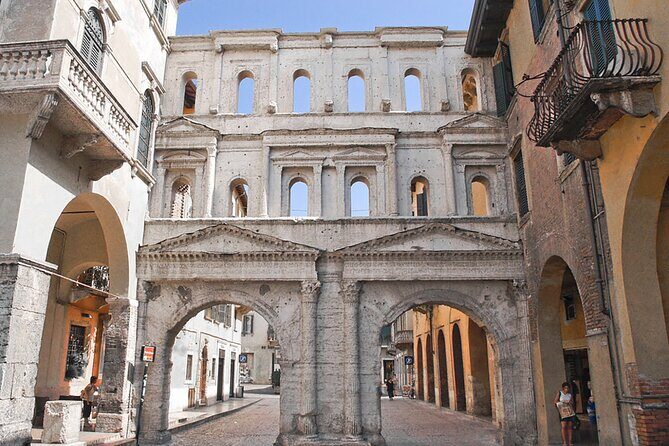
The finale is the Arena di Verona, a Roman amphitheater in the historic center. It’s one of Verona’s biggest icons, and it also sits in the cultural orbit of Romeo and Juliet, even if you’re not a theater person.
The key practical point: you get entrance ticket to the Arena museum included. That turns the final stop from sightseeing into a more complete visit. You’ll likely spend around 20 minutes here on the included visit portion.
This is also where you’ll feel the difference between a generic “look at the famous building” stop and a guided finish:
- the guide helps you understand what the arena was built to do
- the included museum access gives you a bit more depth than just standing outside
For value-minded planning: If you were already considering visiting the Arena museum on your own, this tour can make sense. You’re paying for the guide time plus that entry.
What you’re paying for at $171.52 (and when it feels fair)
At $171.52 per person, you’re not just buying access to buildings that mostly don’t charge. Most of the stops are free from an admission standpoint (as listed), and that’s exactly why the guide matters.
So here’s the value logic I’d use:
- If you want the city explained in a tight, logical route, the price can feel fair because you’re buying time with a licensed guide and not spending that time guessing.
- If you mainly want quick photo stops and you’re already comfortable with Roman and medieval Verona background, you might feel the cost doesn’t match what you personally use.
Guides seem to be a strong point. People have raved about the ability of guides like Frank and Maddy to keep the pace lively and informative without info overload. That “balance” is huge on a three-hour schedule. It’s the difference between learning something real and getting lost in a wall of dates.
Who this Verona tour suits best
This tour is a great fit if:
- you’re visiting Verona for the first time and want a clear overview
- you like Roman and medieval architecture, especially Scaliger-era power
- you want a route that’s compact and logical (three hours, end near where you started)
- you prefer guided context over self-guided wandering
It’s also a good option if you’re traveling with limited time and want a plan that works in most weather.
If you’re the type who hates group tours, this one might still work because the group cap is 16 max and the stops are timed so you’re not waiting around forever. Still, it’s shared, so plan for some crowd moments, especially near major sights.
Quick advice to make the most of it
A few small moves can make a big difference:
- Wear comfortable shoes and expect cobblestones or uneven spots.
- Carry water. Three hours in Verona can feel warmer than you expect.
- Use the guided stops to build a mental map. When you leave, you’ll know what you saw and where it sits in the city story.
- If you’re sensitive to crowds, aim to stay close to your guide at the busiest points.
Should you book the 3-hour Verona and Arena walking tour?
I’d book it if you want a first-pass Verona tour that connects Roman gates, medieval squares, and the Arena area into one story—fast. The included Arena museum entry is a practical win, and the small group size helps keep the experience from feeling chaotic.
I’d think twice if you expect the price to buy lots of extra paid access beyond the Arena museum, or if you’re purely a photo-first traveler who doesn’t care about context. In that case, you might do fine with a self-guided route focused on the landmarks you care about most.
If you do book, do it because you’ll use the guide. That’s what turns famous buildings into understanding—especially in a city where every corner hints at a different era.
FAQ
How long is the Verona and Arena walking tour?
It’s about 3 hours.
What time does the tour start and where do I meet?
The tour starts at 10:00 am at Via Teatro Ristori, 7, 37122 Verona VR, Italy.
Is the tour in English?
Yes, it’s offered in English.
What’s included in the price?
The tour includes a licensed tour guide, an Arena museum entrance ticket, and the Arena museum entrance.
Do I need to buy tickets for the other stops?
Based on the tour information, the other listed stops show admission ticket free, while the Arena museum entrance is included.
Will we return to the meeting point?
Yes, the activity ends back at the meeting point.
Does the tour run in bad weather?
Yes. Tours continue in all weather conditions, so bring essentials like water, sunscreen, a hat, and an umbrella.