REVIEW · VERONA
2-hour Private Guided Walking Tour of Verona
Book on GetYourGuide →Operated by Veronatours · Bookable on GetYourGuide
If you like your sightseeing with context, this tour fits. You start at the Roman Arena, then move through Verona’s story from Roman walls to medieval romance. I especially like how the route links famous stops—like Juliet’s balcony—to the streets you’d otherwise walk past without noticing.
The biggest thing to consider is the pacing: it’s a 2-hour walk, so you’ll want comfortable shoes and realistic expectations. If you want to linger for long museum-style breaks at every stop, you may feel a little time-pressed.
In This Review
- Key points at a glance
- Why This 2-Hour Private Walk Works in Verona
- Starting at Piazza Bra: The Roman Arena, Up Close
- Roman-Era Layers and an Ancient Gate Moment
- Juliet’s Balcony and Capulet House: Story, Reality, and Why It Wins
- Piazza Erbe: The Market Square That Still Feels Like a Market
- Piazza dei Signori: Verona’s Living Room and Its Statues
- The Arena and Roman Theater: Seeing More Than One Ancient Stop
- Pace, Private Group Size, and How It Feels on the Ground
- Price and Value: What You’re Really Paying For
- What to Bring (and Why It Matters Here)
- Where You Meet and How the Tour Ends
- Who Should Book This Tour
- Should You Book This Private Guided Walking Tour of Verona?
- FAQ
- How long is the 2-hour private guided walking tour of Verona?
- Where is the meeting point for the tour?
- Does this tour run in bad weather?
- What language is the guide?
- Is this a private group tour?
- What sights are included?
- What should I bring?
- Is the tour wheelchair accessible?
- What are the cancellation and confirmation details?
Key points at a glance
- Roman Arena as the kickoff: you begin at Piazza Bra and get the amphitheater explained right away
- Juliet’s story with local color: Capulet house, Juliet’s Club, and the balcony in one tight loop
- Two classic squares: Piazza Erbe (market roots) and Piazza dei Signori (the social heart)
- Roman Theater and excavations: you’ll see more of the ancient layers than most self-walk plans
- A pace that works for questions: a private group format keeps things flexible
- Clear meeting spot: Piazza Bra by the equestrian statue of King Vittorio Emanuele
Why This 2-Hour Private Walk Works in Verona
Verona can feel like two cities at once. On one side, you’ve got Roman stone—cool, heavy, and built to last. On the other side, you’ve got medieval streets, love stories, and squares where people actually live their day.
This tour is designed for that mix. In just two hours, you get from the big Roman showpiece to the headline “Romeo & Juliet” stops, then into the squares that make Verona feel local instead of theme-park. Because it’s private, you’re not getting chopped up into a giant crowd rhythm. Your guide can slow down when you want photos, or speed up when you’re hungry to keep moving.
One practical note I really like: the meeting point is easy to find—Piazza Bra, by the statue of King Vittorio Emanuele on horseback—so you spend less time hunting and more time seeing.
Other Verona walking tours we've reviewed in Verona


Starting at Piazza Bra: The Roman Arena, Up Close
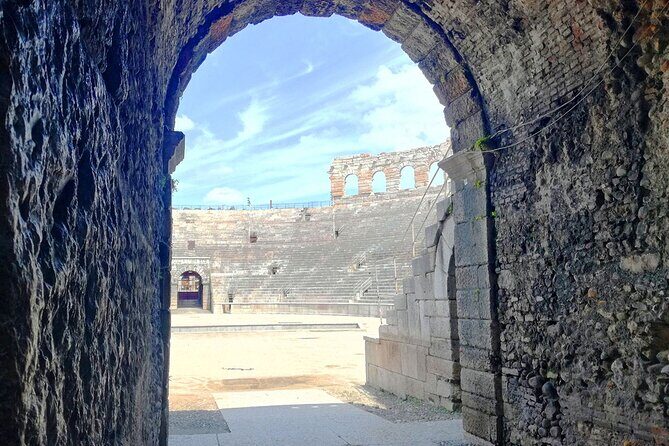
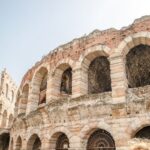
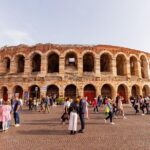
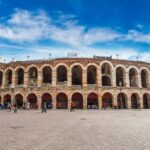
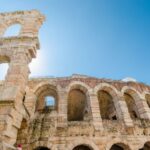
The tour begins at the Roman Arena area in Piazza Bra. Your guide starts you at the Roman amphitheater, the true heart of Verona’s ancient core. Even if you’ve seen amphitheaters before, it still hits different here because it’s so tightly woven into the city you’re walking through.
You’ll marvel at how imposing it looks, and you’ll also hear what makes it especially well preserved for something this old. That combination matters. If you’re only snapping photos, the Arena is pretty. With context, it becomes a measuring stick for the whole town—where the Romans put power, and how later generations built around it.
This is also a smart way to start because it gives you a mental map. Once you understand where the ancient center sits, the later stops—Roman-era details and medieval sites—make more sense. You stop treating them like separate tourist bullets and start seeing them like a timeline.
Roman-Era Layers and an Ancient Gate Moment
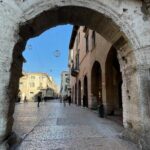
Between the Arena and the next key sights, you’ll pass through parts of Verona tied to its Roman past, including an ancient Roman gate experience described for this route.
This is where a local guide earns their fee. Roman Verona isn’t just one big monument; it’s fragments in the walls, proportions in the streets, and little clues in the built environment. On your own, you might notice a sign or a plaque and move on. With a guide, you learn what those elements were for and how they relate to the city you’re walking now.
I also like that the tour is framed to include Roman-era excavations. That means you’re not only looking at polished landmarks—you’re getting the “how we know” layer too. It turns the stones into evidence, not just scenery.
Juliet’s Balcony and Capulet House: Story, Reality, and Why It Wins
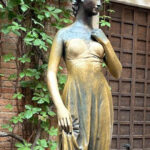
Next comes the romance stop: Capulet house territory, where you can pause and think about why Juliet has become so much more famous than Romeo. It’s an oddly funny question, but it also sets up a useful way to look at Verona’s cultural branding.
You’ll also learn about Juliet’s Club as part of this segment. That’s the kind of detail that makes the story feel connected to real people in Verona today, not just a literary reference. It’s not just Shakespeare on a plaque; it’s a living tourist tradition that the city has shaped into something visitors and locals both recognize.
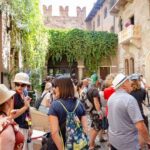
And yes, you’ll get to the balcony. The line and the crowds you may expect at the balcony are exactly why this is better as a guided stop than a standalone “go figure it out” mission. Your guide helps you make sense of what you’re looking at, so you don’t spend the entire time wondering where to stand, what matters, or what the details mean.
Piazza Erbe: The Market Square That Still Feels Like a Market
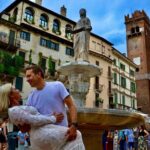
After the romance, you shift into everyday Verona at Piazza Erbe. This is described as likely the oldest continuously functioning marketplace in the world. That’s a big claim, but even without debating the exact ranking, the feeling is clear: it’s a square that’s meant for daily trade and daily life.
With a guide, Piazza Erbe becomes more than a picturesque stop. You get a sense of the market’s role in the city—how people moved, shopped, negotiated, and used the square over centuries. The best part is that it doesn’t feel staged. It feels practical.
A nice bonus in this segment: guides often point out small visual tells you’d miss on your own. One small detail from a guide experience stands out—like noticing old flood markings or engravings on buildings. When your guide calls that out, the square starts to feel like an archive of real weather and real history, not just photo angles.
Other private tours in Verona


Piazza dei Signori: Verona’s Living Room and Its Statues
Right next door is Piazza dei Signori, described as the living room of the city. That metaphor is useful. This isn’t just where you pass through. It’s where you pause—because the square has the right mix of architecture, open space, and people-spotting energy.
This stop also includes the statues of poets and knights. A guide helps you connect those figures to the wider culture of Verona. Without help, you might read them as decoration. With help, you get a sense of what the city wanted to honor and display.
This is also a good place for a breather. It’s not a “run to the next thing” square, which makes it ideal for questions. If you want to ask about what to do after the tour—where to eat, what to see nearby—your guide can usually steer you based on your time and tastes.
The Arena and Roman Theater: Seeing More Than One Ancient Stop
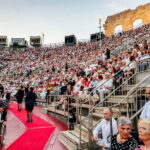
The highlights for this tour include visiting the Arena and the Roman Theater. The value here is that you’re not just collecting names of monuments. You’re getting multiple angles of Roman Verona—how different structures served different purposes and how the ancient city’s layout influenced what came later.
Even in a short walking format, this helps you build a mental picture. When you visit one major site alone, it can feel isolated. When you see the Arena plus the Roman Theater in the same guided window, you start to understand the system behind the spectacle.
Pace, Private Group Size, and How It Feels on the Ground
This is a private group tour, priced for a group up to 20. That sounds large on paper, but private group format usually changes the experience compared with big public tours. You’re more likely to get attention when you ask questions, and you’re less likely to feel herded.
I also like that the tour is built for a gentle pace. That matters because Verona’s best details are often small: inscriptions, stonework, a clue on a building corner, the kind of thing you only notice when you’re not being rushed. In one guide experience, there was plenty of time to take photos and stop when something caught attention.
If you’re the type who likes to pause for a coffee, you may find the guide willing to work that into the flow. That kind of flexibility is one of the reasons private walking tours feel more human.
Price and Value: What You’re Really Paying For
The price is $335.32 per group up to 20 for a 2-hour guided walk.
Here’s how I think about value with pricing like this. You’re not paying per person. You’re paying for a professional English-speaking guide and a plan that links the major Verona beats into one coherent walk.
So your real cost-effectiveness depends on how many people are in your group:
- If you’re traveling as a couple or small group, you’ll feel the cost more strongly per head.
- If you’re splitting it among several people, it can quickly feel like a smart way to buy time and context in a dense historic center.
Either way, the practical win is that your guide turns famous stops—Roman Arena, Juliet’s balcony, Piazza Erbe, Piazza dei Signori—into a connected route. You’re less likely to waste time backtracking, and you’re less likely to miss those “wait, what is that?” moments.
What to Bring (and Why It Matters Here)
This tour runs rain or shine, so plan for weather that changes fast.
Bring:
- Comfortable shoes (you’ll be walking the whole time)
- A face mask or protective covering (required as listed)
If you wear shoes that look good but hurt after an hour, you’ll feel it by the Piazza Erbe segment. Verona is all stone and uneven edges, and the tour is timed tightly enough that foot pain can steal the joy.
Also bring your curiosity. This is the kind of route where your questions get answered in the moment—especially around Roman-era details and what you’re seeing in the squares.
Where You Meet and How the Tour Ends
You’ll meet in Piazza Bra at I-37121 Verona, by the statue of King Vittorio Emanuele on Horse. The tour ends back at the same meeting point.
That loop matters more than it sounds. It keeps your day simple. You don’t have to figure out transportation or puzzle out where to find your next plan. Once you’re done, you’re already in the core of Verona’s sightseeing flow.
Who Should Book This Tour
Book it if you want:
- A focused route through Verona’s top highlights in only two hours
- A licensed, professional English-speaking guide who can explain what you’re seeing
- The Roman-to-medieval story line, not just a checklist of famous spots
- A pace that leaves room for photos and questions
It’s also a solid choice if you’re traveling with someone who doesn’t want a “whole-day marathon,” but still wants more than surface-level descriptions.
It may be less ideal if you’re the type who wants to linger at each stop for a long time, or if you’re hoping for an in-depth museum-style experience. This is a walking tour built for clarity and momentum.
Should You Book This Private Guided Walking Tour of Verona?
Yes—if you value guided context and you want a tight, sensible route through Verona’s main story points. For the money, you’re buying an efficient connection between the Roman Arena, Juliet’s balcony, and the two defining squares—Piazza Erbe and Piazza dei Signori—without wasting your limited time wandering.
I’d book especially if you’re likely to miss small details on your own. A good guide turns those tiny clues—like old flood markings on a building—into the kind of information you remember long after the photos fade.
If you’re on the fence, decide based on this: do you want Verona explained in real time, or do you prefer to self-navigate and read plaques at your own pace? This tour is for the first option.
FAQ
How long is the 2-hour private guided walking tour of Verona?
The tour duration is listed as 2 hours.
Where is the meeting point for the tour?
The tour starts in I-37121 Verona at Piazza Bra by the statue of King Vittorio Emanuele on Horse.
Does this tour run in bad weather?
Yes. The tour runs rain or shine.
What language is the guide?
The guide is English-speaking.
Is this a private group tour?
Yes. It’s a private group experience.
What sights are included?
The tour focuses on the Roman Arena and Roman Theater area, Roman-era excavations and medieval sites, Piazza Erbe, Piazza dei Signori, and the Juliet’s balcony/Capulet house area.
What should I bring?
Wear comfortable shoes, and bring a face mask or protective covering.
Is the tour wheelchair accessible?
Yes. Wheelchair accessibility is listed.
What are the cancellation and confirmation details?
You can cancel up to 24 hours in advance for a full refund. Ticket confirmation is provided within 48 hours of purchase.