REVIEW · VERONA
Walking Tour in Verona: 9+ Landmarks with Live Guide
Book on Viator →Operated by Slow Travel Italia · Bookable on Viator
Verona makes sense after this 90-minute walk. You start in the center of town, then your live guide connects the dots between Roman, medieval, and love-story Verona, all while keeping it small-group and easy to follow. If you want the highlights without turning your day into a marathon, this is a smart way to get your bearings fast.
My favorite part is how the guide turns quick stops into real meaning, especially when they talk about power, love, and conflicts that shaped the city. I also like that you’re not hit with ticket math at every turn since this is mostly an outdoor route, so you can keep moving. The main thing to consider is that it’s time-boxed, and a few sights are mainly exterior here, with entry at places like the Duomo, Teatro Romano, or Torre dei Lamberti not included.
In This Review
- Key things that make this Verona tour work
- A compact Verona orientation you can actually finish
- Piazza delle Erbe: Start where Verona shows off
- Torre dei Lamberti: The “look down” payoff
- The historic staircase: Medieval class lines, in stone
- Piazza dei Signori: Where civic power shows off
- Casa di Giulietta: Fast photo stop, big legend energy
- Arche Scaligere: Scaliger power, Gothic style
- Ponte Pietra: Roman arches over the Adige
- Duomo and Teatro Romano: Exteriors that still tell a lot
- How the live guide makes the stops stick
- Timing, pacing, and what to wear
- Price: what you’re really paying for
- Who this tour is best for
- Should you book this Verona walking tour?
- FAQ
- How long is the Walking Tour in Verona?
- What’s the price per person?
- What language is the tour offered in?
- How big is the group?
- Where does the tour start?
- Where does the tour end?
- Are admission tickets included?
- What’s included in the tour?
- Can I get a mobile ticket?
- What’s the cancellation policy?
- Is the tour friendly for most travelers?
Key things that make this Verona tour work
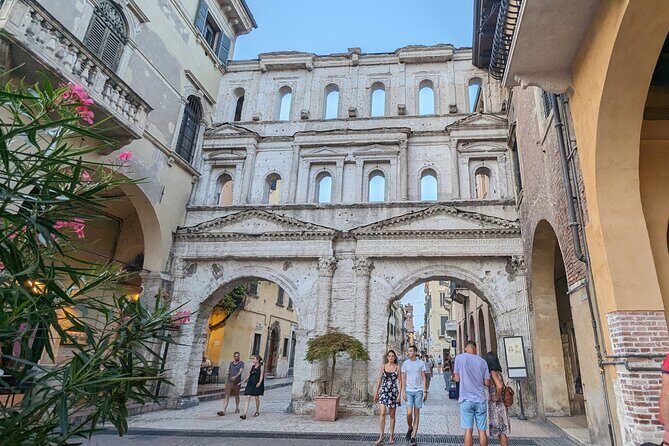
- Maximum 12 travelers means you get more than head-count-level attention
- A 90-minute format that’s great for jet lag, tight schedules, and first-time orientation
- Outdoor-focused sightseeing so you spend time looking, not ticket-wrestling
- Stories that connect eras from medieval Verona back to Roman remains
- Guides you can actually ask questions to, with real flexibility on the pace
- Ends near Verona Cathedral so you can keep exploring right after the walk
A compact Verona orientation you can actually finish
This tour is built for people who want to see a lot without getting worn out. In about 1.5 hours, you’ll cover the core landmarks that define Verona’s postcard look, then you’ll walk away with a mental map you can use the rest of your trip.
The small-group size matters. When you’re not stuck in a big crowd, it’s easier to hear the guide, ask questions, and get decent photos without playing camera shuffle. And since the route is mostly outdoors, it’s a good hedge against weather or scheduling surprises.
Other Verona walking tours we've reviewed in Verona


Piazza delle Erbe: Start where Verona shows off
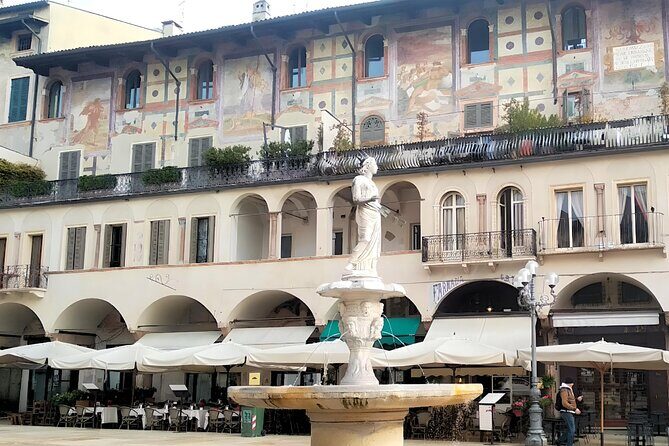
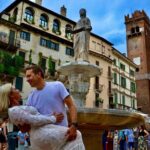
You begin at Piazza Erbe (Piazza delle Erbe), 38a and it’s a great choice. This square is the social and commercial center of the historic core, with colorful buildings all around and market-style life that makes it feel like Verona is happening right now.
Look closely at the details your eyes would skip on a self-guided walk. The area includes landmarks such as the Baroque Palazzo Maffei and the Madonna Verona fountain. Your guide also helps you understand why this square mattered for centuries, which turns the space from pretty scenery into a place with a job in the city’s story.
Time note: you’ll spend about 10 minutes here, which is enough for a first pass and a few photos, but not for a long browse of everything around the market vibe.
Torre dei Lamberti: The “look down” payoff
From Piazza Erbe, you head toward Torre dei Lamberti, the medieval tower that dominates the skyline over Verona’s historic center. Even if you don’t climb, the tower is a landmark you’ll keep noticing as you move around town.
The practical catch: it’s a stop where the admission isn’t included, so don’t count on getting inside unless you’ve planned for it. If you do climb, you’ll likely get the kind of city views that make Verona click as a compact, layered place. If you don’t, you can still enjoy the exterior and the way it frames the rest of your route.
The historic staircase: Medieval class lines, in stone
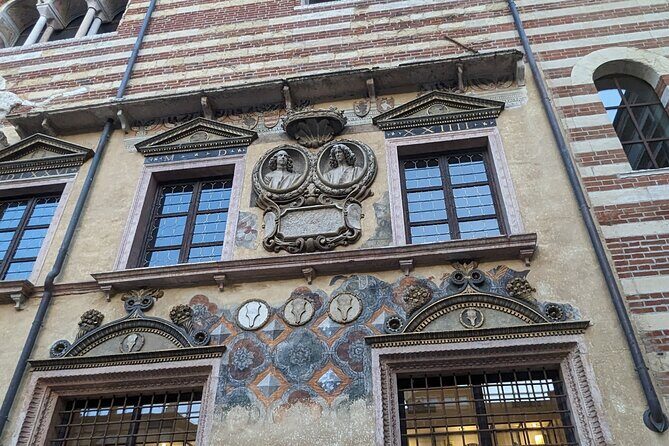
One of my favorite “wait, what is that?” stops is the historic staircase near Piazza delle Erbe. This stone stairway connects lower areas of the city with the upper spaces once associated with the ruling class.
What makes it interesting is the symbolism. It’s not just an old staircase. It’s a built-in reminder that medieval cities often organized people by status, and Verona still shows those patterns in the layout. You’ll likely notice the worn steps and the fact that people have climbed this same connection for a very long time.
Consideration: because this is a staircase stop, wear shoes with grip and plan for a short climb and a few slower moments if you’re traveling with anyone who prefers not to navigate uneven stone.
Piazza dei Signori: Where civic power shows off
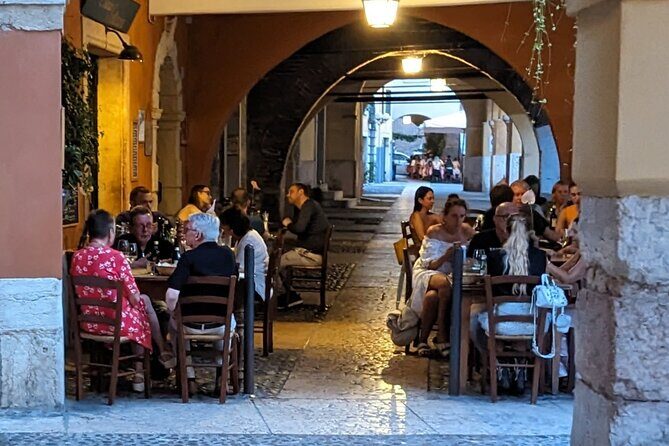
Next is Piazza dei Signori, the elegant square that gives you a feel for Verona’s public life. The architecture here is meant to impress, and it’s lined with major civic buildings such as the Loggia del Consiglio and the Palazzo del Capitano.
A quick 5-minute stop can sound too short, but it works here because the guide helps you read the square. You’re not just looking at facades; you’re seeing the stage Verona built for authority and ceremony. It’s the kind of place where context turns architecture into something you understand, not just something you pass by.
Other walking tours we've reviewed in Verona


Casa di Giulietta: Fast photo stop, big legend energy
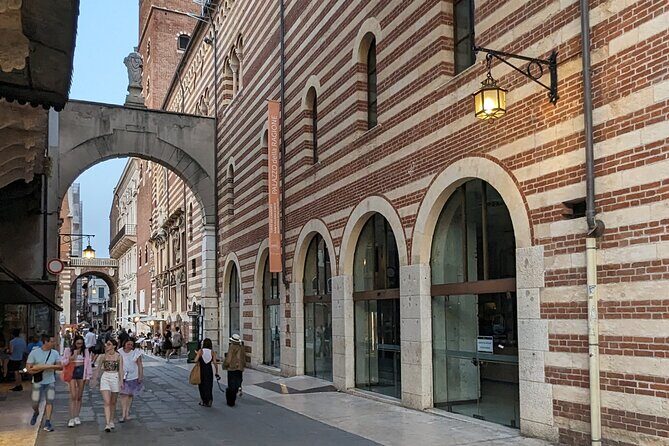
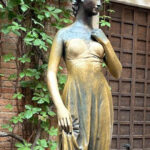
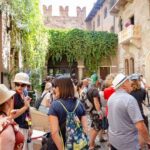
Then you’ll hit Casa di Giulietta, usually called Juliet’s House. It’s famous for a reason, and even if you’re not a hardcore romance fan, it’s an easy cultural marker for Verona.
This is a good stop to handle with a specific plan: take photos, look for the points the guide points out, and don’t try to turn it into an all-day visit. The time here is about 10 minutes, and the best use of that time is to see what’s there and move on before the crowd energy (from outside factors) becomes annoying.
Admission fees aren’t listed here, so this works well for people who prefer the exterior experience and a guided sense of place rather than spending extra time waiting in lines.
Arche Scaligere: Scaliger power, Gothic style
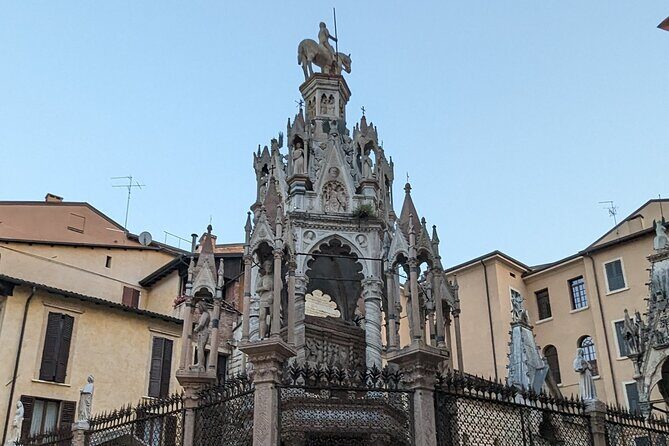
The Arche Scaligere are the gothic funerary monuments connected to the Scaligeri family. This is where Verona’s medieval power becomes visible in stone—real markers of status, influence, and legacy.
Your guide’s job is to connect the monuments to the people and the era, not just to point them out. When you understand who the Scaligeri were and why their monuments look the way they do, the stop feels less like a quick glance and more like a message Verona left behind.
Time note: expect around 5 minutes here. It’s not an in-depth monument study, but it’s enough to understand what you’re looking at and why it matters.
Ponte Pietra: Roman arches over the Adige
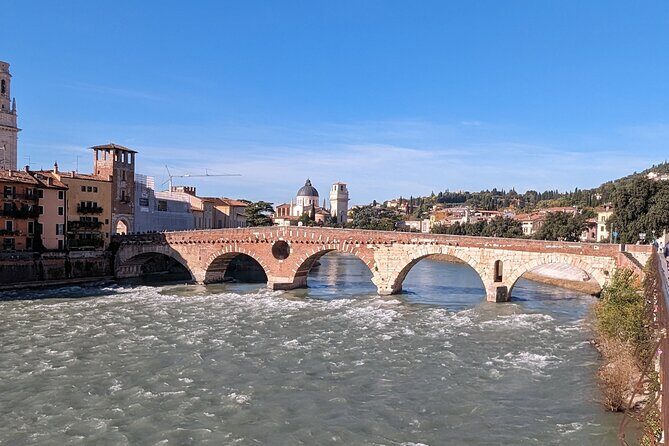
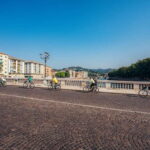
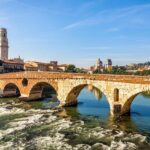
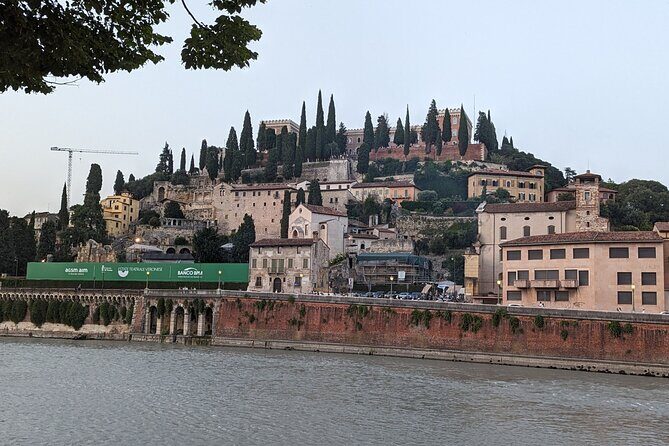
At Ponte Pietra, you’ll get one of the most cinematic views in Verona. This Roman bridge spans the Adige River, with origins dating back to the 1st century BC.
What I like about this stop is how it anchors the whole walk. After gothic funerary monuments and medieval civic squares, Ponte Pietra reminds you that Verona has been a crossroads for a very long time. The bridge’s arches are graceful, and the setting gives you those classic skyline views that make people stop and stare.
Time note: another about 5 minutes. If you want a longer linger, use the tour as your “first look” and then come back on your own afterward with more time and the right light.
Duomo and Teatro Romano: Exteriors that still tell a lot
Next comes the Duomo di Verona (Cattedrale di Santa Maria Matricolare) and the Teatro Romano.
For the Duomo, you’re looking at a Romanesque church built in the 12th century, with a facade that includes intricate carvings and sculptures. Even without going inside, it helps to have a guide explain what you’re seeing and where the building fits in Verona’s timeline. Admission isn’t included here, so if you want to enter, you’ll need to plan for any entry costs on your own.
Then comes Teatro Romano, an ancient Roman theater dating to the 1st century AD. Today it’s an archaeological site and, when conditions allow, it can host cultural events. In a short stop, you’ll still get the big win: you see the scale and layout of the ruins and learn enough to understand what a Roman theater was for.
If you care deeply about interior details, consider this your exterior-and-context pass. It’s ideal if your priority is orientation plus a framework you can build on later.
How the live guide makes the stops stick
This tour lives or dies on its storytelling, and the guides seem to deliver. I’ve seen names like Carlos and Leonardo (Leo) pop up with the same pattern: relaxed pace, lots of history tied to what you can actually see, and patience with questions and photos.
Here’s why that matters for your trip: Verona has multiple layers that look similar until someone gives you a map. A good guide helps you avoid the common first-timer mistake of treating each site as a standalone photo. Instead, you start seeing connections: how Roman remains fit under medieval choices, how public squares reflect power, and how the city’s layout still hints at social structure.
One more benefit: because the group is small and the pace is comfortable, the guide can adjust in the moment. That means you’re less likely to feel rushed or stuck following a robotic checklist.
Timing, pacing, and what to wear
The route is designed around short, efficient stops (many are 5 to 10 minutes). That’s why it works as a “do this early” tour. You’ll end with enough energy to keep walking afterward, instead of collapsing in a cafe after a long day.
Pace tip: if you want photos, give yourself a bit of grace. The tour does include photo moments, but you’re not controlling the entire schedule. Bring shoes that can handle stone streets and a short staircase.
After the walk, you finish at Verona Cathedral, Piazza Vescovado. There’s also a practical suggestion for a nearby wine stop at an old-fashioned bar called Osteria. Even if you don’t drink wine, it’s a nice cue to plan a rest break close to where you end.
Price: what you’re really paying for
At $42.17 per person for about 1 hour 30 minutes, you’re paying for three things:
- A live English-speaking guide who explains what you’re seeing
- A compact route that covers multiple top landmarks without losing hours
- A small-group experience (max 12) that keeps it conversation-friendly
Because the tour is mostly outdoor viewing, you’re also less likely to pile up extra spending on admissions just to get basic value. Some stops list admission not included (like the tower, Duomo, and Teatro Romano), which typically means the guided experience won’t automatically cover entry costs if you choose to go in.
Is it worth it? If you’re the type who likes context and hates wandering with a half-made plan, yes. If you’re totally fine with a map and photos only, then you might feel you could DIY it. But the payoff here is understanding what makes Verona Verona, in a short window.
Who this tour is best for
This walking tour is a strong fit if:
- You have limited time and want major sights in a tight loop
- You want a mental map of Verona’s center fast
- You prefer small groups and real guide interaction
- You’d like to learn how different eras connect, not just collect photos
It’s also a good match for visitors who want to return later to places they liked most, because the pacing doesn’t lock you into hours at any one stop.
Should you book this Verona walking tour?
I think it’s a yes for most first-time visitors. The price is fair for a guided experience, the group size keeps it manageable, and you’ll leave with stories that make the next walk around town easier.
Book it if you want:
- a structured way to see the core highlights
- a guide who can answer questions without rushing you
- a compact route that ends near the Duomo so you can keep exploring
Skip it (or plan differently) if you mainly want to go inside buildings for long periods. This walk is built around outdoor stops and quick orientation, not an all-in museum-style day.
FAQ
How long is the Walking Tour in Verona?
It runs about 1 hour 30 minutes (approx.).
What’s the price per person?
The price is $42.17 per person.
What language is the tour offered in?
The tour is offered in English.
How big is the group?
The maximum group size is 12 travelers.
Where does the tour start?
It starts at Piazza Erbe, 38a, 37121 Verona VR, Italy.
Where does the tour end?
It ends at Verona Cathedral, Piazza Vescovado, 37121 Verona VR, Italy.
Are admission tickets included?
Admission fees aren’t needed for this experience since it’s a walking route with outdoor viewing. Some sights list admission not included if you choose to go inside.
What’s included in the tour?
You get 1.5 hours of sightseeing with a live guide, plus stories of Verona’s ancient civilizations and love-and-conflict themes, explained in your language.
Can I get a mobile ticket?
Yes, the tour includes a mobile ticket.
What’s the cancellation policy?
You can cancel for a full refund up to 24 hours in advance. Changes within 24 hours of the start time aren’t accepted.
Is the tour friendly for most travelers?
Most travelers can participate, and service animals are allowed. It’s also near public transportation.