REVIEW · VERONA
Verona: Romeo and Juliet Guided Walking Tour
Book on GetYourGuide →Operated by Timonfaya Travel Lanzarote · Bookable on GetYourGuide
Verona’s love story turns into a real walking route. This Romeo and Juliet guided walking tour strings together the city’s main set pieces, with stops tied to Shakespeare, plus big architectural variety as you move across eras. I especially like the way the guide connects the romance and drama to what you’re seeing, and how smoothly the walk hits the highlights without wasting time. The only real drawback: it’s a fast 1.5-hour loop, so if you want lots of lingering or unhurried photo breaks, you’ll be tempted to rush ahead.
What makes it worth your attention is the combo of famous landmarks and local context. You start in Piazza Bra at the equestrian statue of King Vittorio Emanuele II, then work your way toward Juliet’s house and balcony, while the guide points out what to notice along the way. It runs rain or shine as long as conditions are safe, and the guide will wait up to 10 minutes from departure, so you’ll want to arrive on time and be ready to walk.
In This Review
- Key highlights to know before you go
- From Piazza Bra to Juliet’s Balcony: the Verona story you actually walk
- Piazza Bra and the Arena area: start with the big, pre-Colosseum energy
- Via Giuseppe Mazzini and the shift toward old Verona’s center
- Piazza Erbe: the market square stop with the right kind of noise
- Piazza dei Signori: the civic drama between eras
- Via Arche Scaligere and the Scala-family route
- Casa di Romeo: where the tour keeps the romance in focus
- Juliet’s House: balcony and statue, handled with guide-led context
- The pace: 1.5 hours that actually works as a “first Verona” tour
- Price and value: what $67.19 buys you (and what it doesn’t)
- Guides matter here: why Maria Pia and Mauro are singled out
- Who should book this Romeo and Juliet walking tour?
- Should you book? My take on the smart decision
- FAQ
- How long is the Verona Romeo and Juliet guided walking tour?
- Where does the tour start?
- Is the tour in English?
- Does the tour run in bad weather?
- Are entrance fees included?
- Where does the tour end?
Key highlights to know before you go
- Start at Piazza Bra and the Arena area, where Verona’s cultural life still happens
- Juliet’s House stop includes the famous balcony and the Juliet statue
- Piazza Erbe and Piazza dei Signori put you in the center of old Verona’s civic energy
- A quick walk that covers multiple eras, from Roman through Romanesque, Gothic, and Renaissance
- Small, focused timing that fits into a single afternoon without eating your whole day
- English guides with strong reviews, including Maria Pia and Mauro for their explanations and tips
From Piazza Bra to Juliet’s Balcony: the Verona story you actually walk
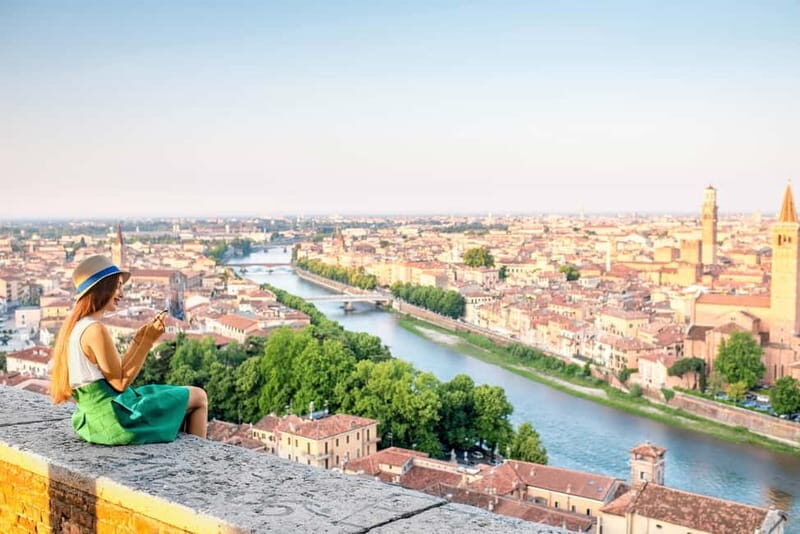
If you’ve ever wondered how Verona became shorthand for balcony kisses and family feuds, this tour answers that question by putting you on the exact kind of route a story like that needs. You don’t just hear names. You see the squares, the streets, and the landmarks in a sequence that makes the drama feel logical.
The best part is that the tour treats Romeo and Juliet as a lens, not a gimmick. The guide talks about the romance and the fallout—family rivalries, tension, and the kind of dramatic storytelling Shakespeare leaned into—while you move through Verona’s real public spaces. That matters because Verona is not a city of one big monument. It’s a layered patchwork of periods and power, and the walking route helps you notice that quickly.
It also helps that the tour is built around recognizable anchors. You start near the Arena (the Roman amphitheater area), then you pivot toward the heart of the old city, and finally you finish at Juliet’s House. You come away with a map in your head, not just a list of places.
Other Verona walking tours we've reviewed in Verona


Piazza Bra and the Arena area: start with the big, pre-Colosseum energy
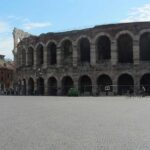
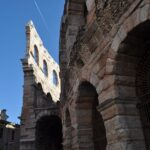
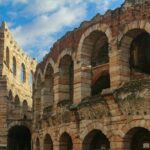
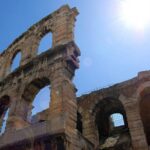
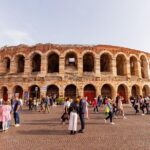
The tour meets under the equestrian statue of King Vittorio Emanuele II in Piazza Bra, and from there you get oriented fast. This is one of those starts that makes sense even if you’re not a hardcore history person. The Arena area is instantly memorable, and it sets the tone for the rest of the walk.
You’ll learn that the Arena was built before Rome’s Colosseum and that it’s still used for cultural events. That detail is more than trivia. It’s a reminder that Verona’s past isn’t locked behind museum walls. It’s still part of how the city lives today, which makes the Shakespeare connection feel less like a postcard and more like a local story with roots.
Practical tip: Piazza Bra is open and easier to spot than a side street. Still, if you’re visiting in busy hours, it helps to give yourself a little extra time so you can be at the meeting point before the group starts moving. The guide will wait only up to 10 minutes, and once you’re late, the tour keeps going.
Via Giuseppe Mazzini and the shift toward old Verona’s center

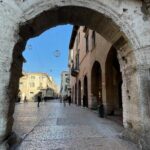
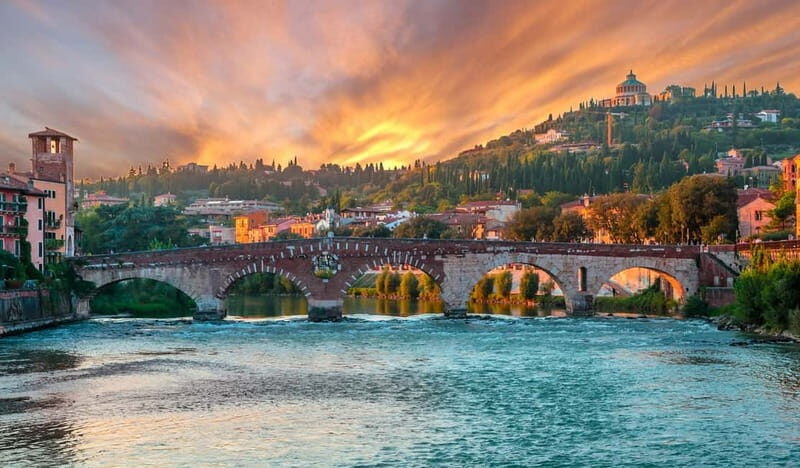
After the Arena-area start, you walk on foot along the route toward the older core of Verona, including a segment on Via Giuseppe Mazzini. This part is short, but it’s useful: it’s the transition from the dramatic, open-space feel of Piazza Bra into the tighter, more historic streets and squares.
You might think of walking tours as a way to reach highlights. This one uses the walk time for orientation. Even in the short guided portions, the guide keeps you focused on what to look for as you change zones in the city—where the urban feel shifts and how the landmarks start stacking up.
If you tend to get mentally overloaded in new cities, this is a good structure. You’re not staring at a single attraction for an hour. You’re moving through Verona in pieces that match how the city is organized.
Piazza Erbe: the market square stop with the right kind of noise

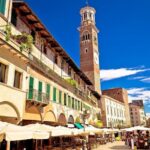
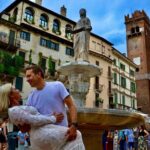
Your next major stop is Piazza Erbe, where the tour focuses on the square’s atmosphere and the landmarks you’ll actually see. This is a place that tends to feel like a living room for locals—busy, social, and surrounded by architecture that looks like it has seen everything.
In this stop, you’ll learn about:
- the lively market setting
- the Lamberti Tower
- and Domus Mercatorum, an ancient site tied to commerce
The value here is the guide’s ability to connect function to form. Market squares aren’t just scenic. They’re where people gathered to trade, talk, and build the city’s economic identity. Seeing the tower and the ancient commercial connection in the same square helps you understand why Piazza Erbe is such a strong anchor point for Verona’s story.
Possible drawback: if you’re not a fan of crowds or you’re trying to keep your photos perfectly spaced, this is the part where it can feel busy. But the tour’s timing is tight enough that you’re not stuck there forever—you get a guided pass that helps you look beyond the obvious.
Piazza dei Signori: the civic drama between eras
From Piazza Erbe, the tour continues to Piazza dei Signori, another key stop where Verona’s civic and cultural identity shows up clearly. This square is often where the city’s power feels most visible, because it’s built for public life.
You’ll spend guided time here, including walking time through the surrounding area. The tour’s larger theme becomes obvious: you’re seeing structures from multiple periods as you go—Roman through Romanesque, Gothic, and Renaissance. That’s a lot for a 1.5-hour walking tour, but it works because each square gives you a new frame.
Why this matters for you: if you’re only visiting Verona for a short time, these squares do the heavy lifting. They help you build a mental timeline fast. You don’t need to study guidebooks for weeks to start noticing patterns in style and era.
Other Juliet's House and Balcony tours in Verona





Via Arche Scaligere and the Scala-family route
Next comes Via Arche Scaligere, a short stretch but an important one because it edges you toward the story’s deeper Verona layers. This is the corridor where the tour focuses on the shift from the public squares into a more intimate, story-driven path.
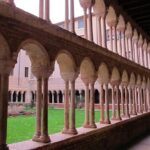
The tour description also notes that you’ll pass through medieval courtyards on your way to the Scala Family Tombs. Even without going into extra detail beyond what you’re told, this piece of the walk adds variety. Courtyards change the sound and the feel of the city. Instead of being in open-air public space, you’re moving through passages that feel built for memory and family legacy.
For photos, this is often the moment when your pictures stop looking generic. The background feels more enclosed, and the architecture feels more personal.
Casa di Romeo: where the tour keeps the romance in focus
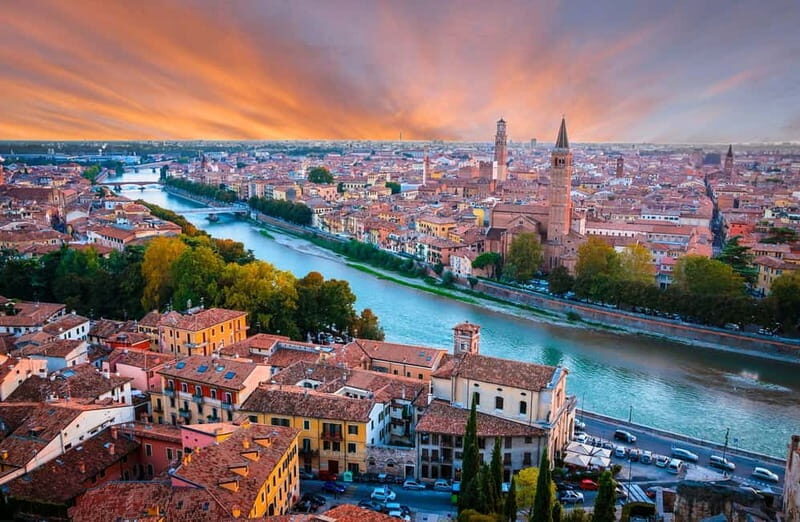
You’ll stop at Casa di Romeo, with guided time around this Romeo-related site. The tour keeps you in the romance lane here, but it doesn’t treat it as a theme park. The guide ties the idea of Romeo to the city’s storytelling tradition, and you’ll likely walk away with a more grounded sense of why Shakespeare chose Verona and how the city’s character fits the drama.
A useful way to think about this stop: it’s the tour’s midpoint emotional beat. You’ve already seen the city’s public identity in the squares and the Arena area. Now you get a more personal layer, which makes the final Juliet stop feel extra intentional.
One consideration: because this is a walking tour with multiple stops, the time at each location is limited. If you love lingering, you’ll want to save a little energy for the last stop, which is where the balcony and statue make the biggest impression.
Juliet’s House: balcony and statue, handled with guide-led context
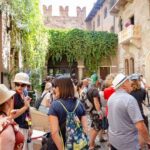
The final big anchor is Juliet’s House (Casa di Giulietta), where you get guided time to see the famous balcony and the Juliet statue. This is the stop most people book for, and the tour makes it better by giving you context before you reach it.
You don’t just end up standing in front of a famous spot. The guide’s job is to help you read the place like part of the story. With the romance and drama already explained earlier in the walk, this final stop lands with more meaning than it would as a standalone visit.
I also like that the tour structure keeps you from feeling like you did the whole city for one photo. Juliet’s House is a centerpiece, but you’ve already built a sense of Verona around it—Roman to Gothic to Renaissance cues, market-square energy, civic plazas, and the medieval courtyard feel on the way.
If you care about getting good photos: come ready for a crowd and plan to move with the group. The balcony area and statue are the kind of places where timing matters, and you’ll get the best experience if you listen and then look.
The pace: 1.5 hours that actually works as a “first Verona” tour
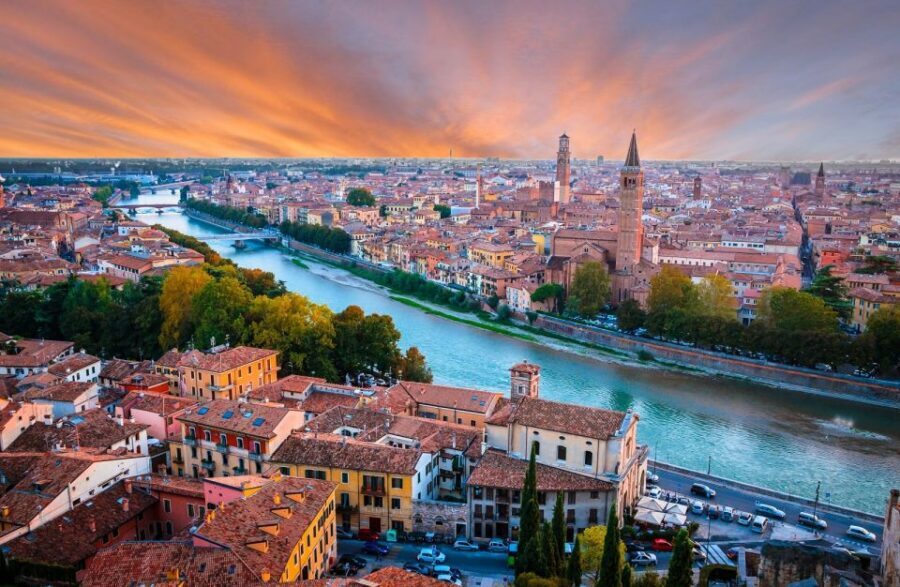
This tour lasts about 1.5 hours, and that time shape is part of its appeal. You get enough stops to feel like you covered the essentials, but not so many that you’re exhausted by hour two.
The schedule is built around walking segments and guided chunks, including:
- a longer initial on-foot segment from the Arena area
- guided time at Piazza Erbe
- guided time at Piazza dei Signori
- shorter guided moments through smaller streets
- and the longest guided time at Juliet’s House
Here’s how that helps you: if you’re arriving mid-trip and want quick context, this is a smart way to get bearings fast. If you’re leaving later that day, it’s also a clean way to pack Verona into a tight itinerary.
Also, the tour runs in bad weather as long as conditions are safe. That’s practical. Verona can throw rain into your plans, and a guided walk that keeps moving saves time compared to doing everything solo while dodging weather.
Price and value: what $67.19 buys you (and what it doesn’t)
At $67.19 per person, you’re paying for an English live guided walking tour. Entrance fees are not included, so if there are specific paid areas you want to go inside, you’ll need to budget separately.
So is it good value? For me, it comes down to time and clarity:
- The tour compresses a lot of famous landmarks into a short window.
- A good guide saves you from the common solo problem: you see the place but don’t know what to look for.
- You’re not paying for entry tickets. You’re paying for interpretation—how the romance theme connects to what the city is.
The review feedback supports that value. Guides like Maria Pia and Mauro get praised for explaining details and giving tips, and for a friendly, enthusiastic approach that makes the walk feel like more than a checklist. When a guide clearly knows how to pace and explain, you start enjoying the city instead of just marching through it.
Guides matter here: why Maria Pia and Mauro are singled out
The most consistently praised aspect is the guide experience itself. Maria Pia is described as excellent, perfect, and capable of explaining every detail, plus offering lots of tips. Mauro is noted for being incredible, extremely knowledgeable and passionate about Verona, and delivering a tour that becomes a highlight of the trip.
What you should take from that, even if you don’t get the same guide: look for that combination of story + practical advice. A good guide makes you care about what you’re looking at, and they also help you plan the rest of your day with better instincts.
If you want the tour to feel engaging rather than rushed, this is the factor that changes everything—and the strongest reviews point to it clearly.
Who should book this Romeo and Juliet walking tour?
I’d put this tour at the top of the list for:
- first-timers in Verona who want key sites without doing heavy research
- couples and families who want a fun story framework for sightseeing
- visitors who like walking tours with guided context more than museum-style stops
- travelers who want an English-speaking guide and enjoy learning as they go
I’d think twice if:
- you hate crowds and don’t do well in busy squares
- you want lots of free time at each location
- you’re planning to add several other distant activities right after, because you’ll likely want a little buffer after the walk
Should you book? My take on the smart decision
If you’re choosing between doing Verona solo or booking a guided walk that focuses on Romeo and Juliet, I’d lean toward booking this one—especially if you want the city’s story stitched together in an efficient route.
You’re getting the most requested Verona highlights: the Arena area start, Juliet’s balcony and statue, plus stops in major squares like Piazza Erbe and Piazza dei Signori. The time is realistic, and the guide-led explanations are clearly the reason many people rate it so highly.
Just be honest with your own style. If you’re the type who needs to slow down and linger for long photo sessions, you might feel the pace. But if you want a guided first pass that helps you understand what you’re seeing, this is a strong use of a short afternoon.
FAQ
How long is the Verona Romeo and Juliet guided walking tour?
It lasts about 1.5 hours.
Where does the tour start?
The meeting point is under the equestrian statue of King Vittorio Emanuele II in Piazza Bra.
Is the tour in English?
Yes, the live tour guide provides the tour in English.
Does the tour run in bad weather?
Yes, it operates in bad weather as long as conditions are safe.
Are entrance fees included?
No, entrance fees are not included.
Where does the tour end?
The activity ends back at the meeting point in Piazza Bra.