REVIEW · VERONA
Fascinating Verona: in the Footprints of Romeo and Juliet
Book on Viator →Operated by Curioseety SRLS · Bookable on Viator
Romeo and Juliet meet real Verona.
This 1.5-hour walking tour turns Shakespeare’s drama into a practical route through the city’s oldest layers, starting at the Arena amphitheater. I especially like how the guide uses storytelling to connect famous names with real places and real centuries of change.
My second big love is the walking “timeline” feel: you move through key squares and monuments and come away seeing how Roman, Romanesque, Gothic, Renaissance, and modern Verona sit side by side. One thing to consider: the Romeo and Juliet focus is brief, with most of your time spent on architecture, politics, and local history.
Because it runs rain or shine and stays in the center, it’s a nice way to get oriented fast. The group is small (max 15), and the guide waits only a short time if you’re late—so plan to arrive on time at Piazza Bra.
In This Review
- Key highlights worth circling first
- Arena amphitheater at Piazza Bra: the best opening scene
- The 1.5-hour walk: how the guide teaches Verona by eras
- Juliet’s House: balcony and statue time (and tickets you must plan)
- Herbs Square and Domus Mercatorum: markets plus merchant power
- Signori Square: seeing Roman to modern Verona in one sweep
- Scala family tombs: the final act with real power struggles
- Price and value: is $83.45 worth it?
- Who should book this Verona Romeo and Juliet story walk?
- Should you book Fascinating Verona: in the Footprints of Romeo and Juliet?
- FAQ
- How long is the tour?
- Where does the tour start?
- Where does the tour end?
- Is the tour in English?
- How big is the group?
- Does the price include Juliet’s House tickets?
- Is the tour canceled if it rains?
- How late can I arrive?
- What fitness level do I need?
- Can I cancel for free?
Key highlights worth circling first
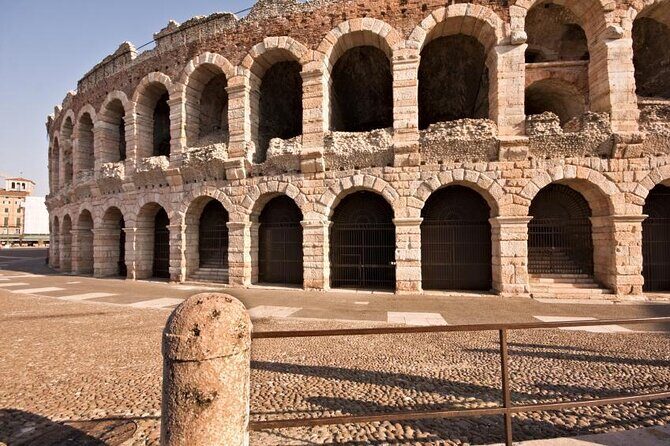
- Arena start at Piazza Bra: an ancient amphitheater still used for cultural events
- Two-person story feel: Romeo and Juliet are fictional, but the city’s drama is not
- Juliet’s House balcony stops the clock: famous balcony and statue views, with tickets not included
- Herbs Square + Domus Mercatorum: market energy and the merchant-guild link
- Signori Square architecture mix: Roman through Romanesque, Gothic, Renaissance, and modern in one area
- Scala family tombs: power struggles from the 13th and 14th centuries that echo Romeo and Juliet themes
Arena amphitheater at Piazza Bra: the best opening scene
The tour meets at Piazza Bra at 1:30 pm, right at the Arena amphitheater. This is a smart starting point because it immediately gives you scale. The Arena is a Roman artifact that predates the Colosseum and has been in use for more than 2,000 years—so before you even start walking, Verona’s age hits you.
From here, your guide sets expectations in a good way: yes, there will be Romeo and Juliet, but the goal is to understand why Shakespeare picked Verona in the first place. The romance and feuding you associate with the play is fictional (Capulet and Montague aren’t real families), yet the city’s long memory of conflict and status fits the story.
Practical value: if you’re only in Verona for a short visit, this beginning helps you build a mental map fast. You see where to aim later—because you’ll learn how these sights connect instead of just checking boxes.
Other Juliet's House and Balcony tours in Verona


The 1.5-hour walk: how the guide teaches Verona by eras

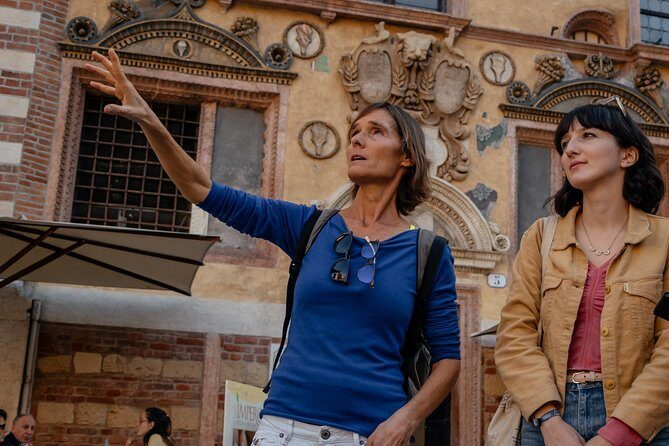
Your route is a steady stroll through winding medieval streets for about 1.5 hours. The tour description is focused on history, but what makes it work for most people is the way it’s structured: you get a sequence of places, and each one comes with “what this meant back then.”
This is where Verona becomes easy to read. The tour moves past:
- medieval courtyards and backstreets
- major squares that act like outdoor classrooms
- monuments tied to guilds, rulers, and shifting power
I like that the group stays small, with no more than 15 people. On a walk like this, a small size makes the pacing feel human. It also helps if you ask questions about architecture or want the guide to repeat a point.
If you prefer quiet museums, this may feel more energetic. But if you enjoy walking with a guide and picking up context as you go, the format is a win.
Juliet’s House: balcony and statue time (and tickets you must plan)
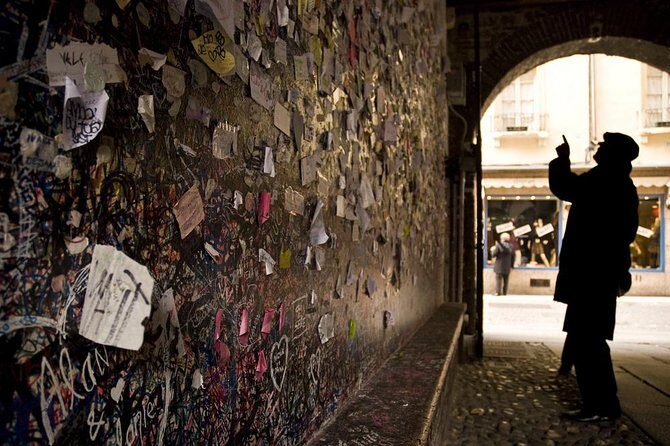
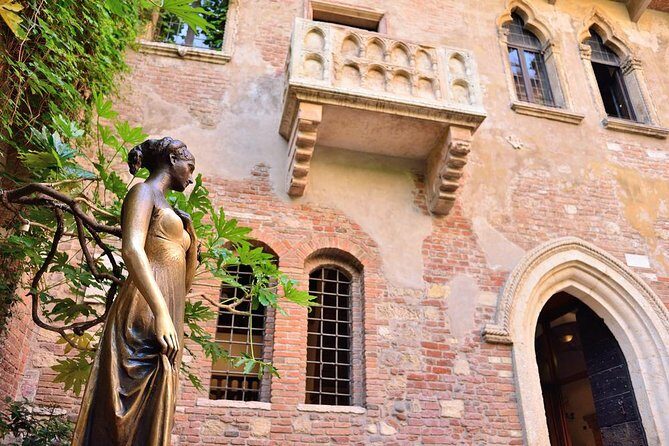
After you’ve built that background, the tour heads toward Juliet’s House (Casa di Giulietta). This is the stop many people expect—the famous balcony and the statue associated with Juliet.
Here’s the honest practical note: Juliet’s House tickets are not included, so you’ll need to handle that separately (as well as any other entrance fees). That means your total cost isn’t just the listed tour price, even though the walking guide part is included.
Also, the Romeo and Juliet content here is best treated as a pop-culture moment inside a longer story. One helpful takeaway from the guide’s framing: Shakespeare’s connections are often romanticized. The places are real, the drama is inspired, and the guide steers you toward understanding the city as the bigger character.
If you’re the kind of person who wants the play’s locations and also wants the historical reasoning behind the setting, you’ll enjoy this balance. If you only care about Romeo and Juliet scenes, you may wish you had more time at Juliet’s House on your own after the tour.
Herbs Square and Domus Mercatorum: markets plus merchant power
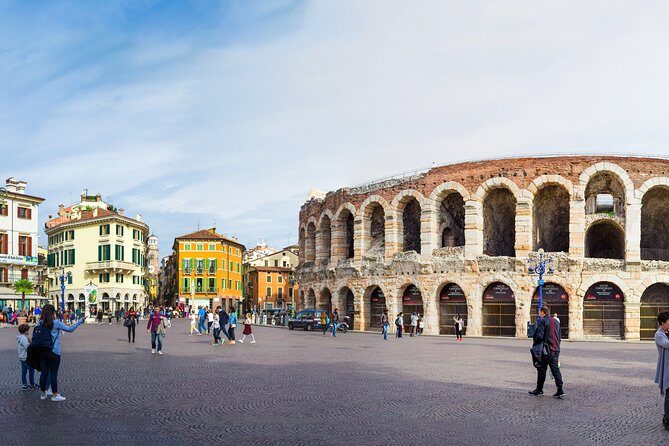
From the Juliet area, the tour continues to Herbs Square (Piazza delle Erbe). This square is lively and central, and it works well on a guided walk because it’s both visual and social. You’re not just looking at buildings—you’re watching a market-world vibe that’s easy to imagine as part of Verona’s daily life.
In the same area, you’ll hear about major landmarks tied to the city’s identity, including:
- Lamberti Tower
- Madonna Verona fountain
- Domus Mercatorum, the medieval structure connected with the merchant guild
Why this matters: guild power shaped who had money, who made deals, and who could influence local politics. That’s the kind of context that makes later “drama” feel less like fantasy. Even if the Shakespeare families are fictional, the underlying ingredients—status, rivalry, and public image—are historically plausible.
Drawback to consider: if it’s very hot or crowded in the square, the stop may feel busier than you’d like. Since the tour is rain or shine, you’ll still be there in weather that isn’t always ideal. Bring water and wear shoes you can walk in all day.
Signori Square: seeing Roman to modern Verona in one sweep

Next comes Signori Square, and this is one of the best “wow” stops for architecture lovers. The tour description makes a point of it: this is where multiple periods sit together so you can spot the layers in context.
You’re set up to notice a mix of:
- Roman elements
- Romanesque
- Gothic
- Renaissance
- and modern structures nearby
This is the kind of place where a guide helps more than you might expect. Without explanation, it’s easy to see pretty buildings and move on. With the story, you start seeing why each era left its mark—and how Verona kept building rather than starting over.
If you enjoy city walks with an art-and-architecture angle, this is the part likely to stick with you.
Other Romeo and Juliet tours in Verona




Scala family tombs: the final act with real power struggles

The tour ends with a quieter shift—through courtyards and backstreets—to the Scala family tombs. The Scalas were a ruling clan in the 13th and 14th centuries, and the guide connects the family’s scandals and power struggles to the emotional fuel behind Romeo and Juliet’s feuds.
This is a fitting closing stop because it turns the whole walk into something more than sightseeing. You go from the bright, famous names (arena, balcony, squares) into a space that feels more like memory and consequence.
Even if you never plan to become a medieval political nerd, this ending gives you perspective. It reminds you that the city’s romantic reputation rests on deeper human themes: ambition, rivalry, reputation, and family power.
Price and value: is $83.45 worth it?
The tour costs $83.45 per person and lasts about 1 hour 30 minutes. That price can feel steep for a walking tour until you break down what’s included.
What you’re paying for:
- a local professional guide
- a small group format (max 15)
- guided access to the major Verona storyline stops
- emphasis on both places and context (architecture, politics, and lore)
What’s not included:
- Juliet’s House tickets
- other entrance fees
- tips
So the true value depends on how you handle the extra ticket costs. If you were going to visit Juliet’s House anyway, the guide portion becomes easier to justify—because you’re not paying just for time, you’re paying for understanding what you’re seeing while you walk between the key spots.
If you’re short on time in Verona, this tour can be a strong intro. If you already know the architecture and just want to linger at the balcony, you might feel like the tour is a fast hit. Still, the pacing is built for a quick orientation.
Who should book this Verona Romeo and Juliet story walk?

This works best for:
- first-timers who want a guided introduction instead of wandering
- people who like a mix of architecture + story, not just scenic photos
- visitors who want to see more Verona than just one famous balcony
- groups that appreciate small-group attention (max 15)
It may not be ideal if:
- you want a long Romeo and Juliet-focused itinerary
- you need lots of free time at each stop
- you strongly dislike walking in medieval streets (it’s moderate physical fitness level, and the route includes backstreets and courtyards)
One nice detail from real-world guidance: guides like Maria and Frank (also seen as Francesco or Frenk in past groups, and Andrea as well) are praised for being animated storytellers who keep people engaged even on hot days. The same reviews highlight that the guide’s English is clear, which matters a lot on architecture-heavy tours.
Should you book Fascinating Verona: in the Footprints of Romeo and Juliet?
Yes, with one condition.
Book it if you want a fast, guided “Verona reading lesson” that uses Romeo and Juliet as a doorway into real places—Arena, Juliet’s House area, Herbs Square, Signori Square, and the Scala tombs. The small group size and rain-or-shine format also make it easy to fit into a busy day.
Consider skipping or adding extra time on your own if Romeo and Juliet is your only priority. The balcony and statue are memorable, but the tour’s main power is how it connects Verona’s multi-century architecture and politics to the themes you already know from the play.
FAQ
How long is the tour?
It lasts about 1 hour 30 minutes.
Where does the tour start?
The start point is Piazza Bra, Verona VR, Italy at 1:30 pm.
Where does the tour end?
The tour ends at Casa di Giulietta, Via Cappello 23, 37121 Verona VR, Italy.
Is the tour in English?
Yes, it’s offered in English.
How big is the group?
The tour has a maximum of 15 travelers.
Does the price include Juliet’s House tickets?
No. Juliet’s House tickets are not included, and entrance fees are also not included.
Is the tour canceled if it rains?
No. The experience runs rain or shine.
How late can I arrive?
The guide waits only a short window from the departure time, with a small late buffer (up to about 15 minutes) mentioned. Arriving later than that means you can become a no-show.
What fitness level do I need?
You should have a moderate physical fitness level, since it’s a walking tour.
Can I cancel for free?
Yes. You can cancel up to 24 hours in advance for a full refund.