REVIEW · VERONA
Verona: the Arena at the Gladiators’ time
Book on GetYourGuide →Operated by Fabio Massimo Rapanà · Bookable on GetYourGuide
Gladiators live in the stones here. This Verona Arena tour is a focused walk through the biggest Roman amphitheater still in use, with a guide who explains how it functioned for fights about 2,000 years ago. I like the way the route starts outdoors, so you understand the Arena’s shape before you step inside, and I also like the stop-by-stop look at vomitoria and the movement between gates and seating. One heads-up: you must budget for an entrance ticket on top of the tour fee, and the tour is not suitable for wheelchair users.
In This Review
- Key Highlights at a Glance
- Meeting Point at Palazzo Barbieri: Get Your Bearings Fast
- Verona Arena From the North Side: What the Bra Gardens View Teaches
- Inside the Amphitheatre: Corridors and Archways With a Purpose
- Gladiators, Wild Beasts, and Local Evidence: Stories That Stick
- Stop-by-Stop Timing: How the One-Hour Visit Flows
- Price and Value: Paying for the Guide Plus the Ticket
- What You’ll Get From a Certified Local Guide in Four Languages
- Who Should Book This Verona Arena Tour
- Should You Book the Verona Arena at the Gladiators’ Time Tour?
- FAQ
- Where do we meet for the Verona Arena tour?
- Where does the tour end?
- How long is the tour?
- Is the tour private?
- Are entrance tickets included?
- How much are Arena entrance tickets?
- Can I buy tickets on the spot?
- What languages are available for the guide?
- Is the tour wheelchair accessible?
- What’s the cancellation policy?
Key Highlights at a Glance
- Start in the shade at the Palazzo Barbieri and get the square’s layout explained first
- Bra Gardens vantage to understand the Arena’s original size and its relationship to town
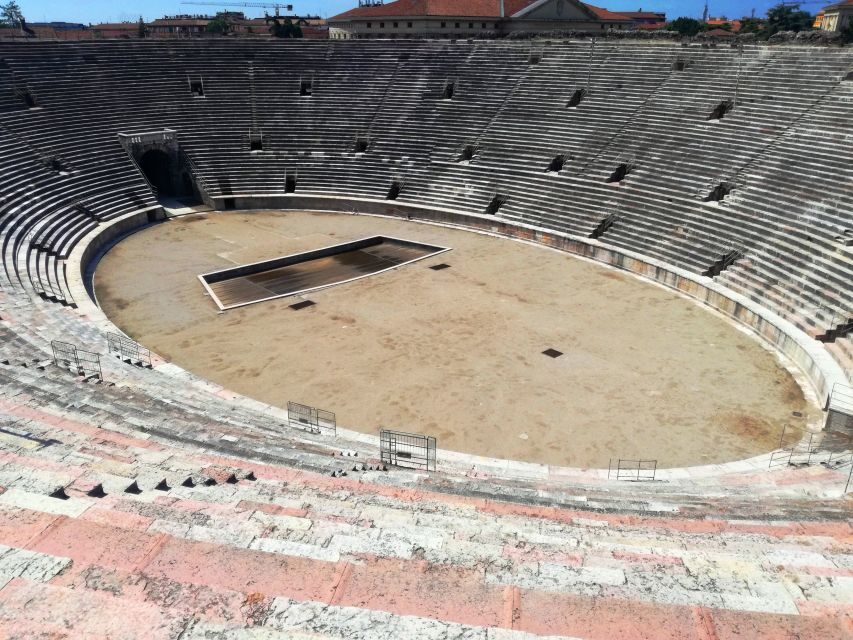
- Corridors, archways, and vomitoria shown as a working system, not just scenery
- Gladiators and wild-beast areas tied to the evidence and on-site finds
- Built-in free time at the end so you can sit, look, and take it in at your pace
- Small private group up to 8 with a multilingual guide (Italian, German, English, Spanish)
Meeting Point at Palazzo Barbieri: Get Your Bearings Fast
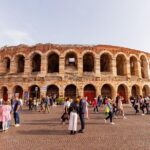
The tour begins at Palazzo Barbieri, at the Comune di Verona. You’ll meet your guide in front of the Town Hall, just under the Italian flag. This is a nice setup because you’re already in the exact urban frame that surrounds the Arena. The guide starts you with the basics you’d otherwise miss: where you are in the square, how the Arena sits in relation to the rest of Verona, and what you should watch for as you move.
Then you follow him from the southern front area of the square toward the north side. It’s not a long “march,” but you do cover just enough ground to start seeing the amphitheater as a structure, not a single photo spot. You get a quick sequence of short walking segments and brief photo pauses that keep the pace easy to handle.
If you’re the type who likes a plan, this one is thoughtful. You’re not rushed into the interior immediately. You learn the outside first, so when the route takes you inside, the place makes sense.
Other Verona Arena tours we've reviewed in Verona
Verona Arena From the North Side: What the Bra Gardens View Teaches
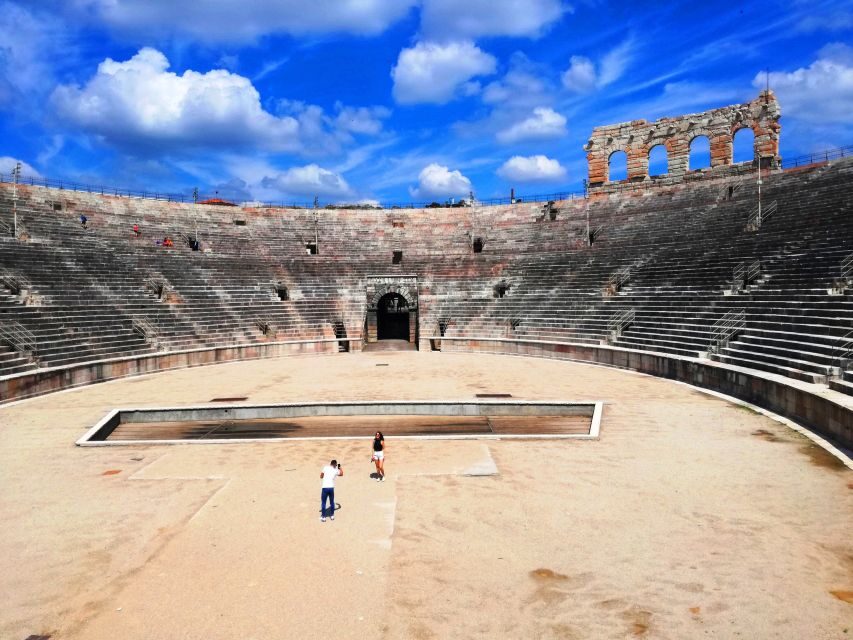
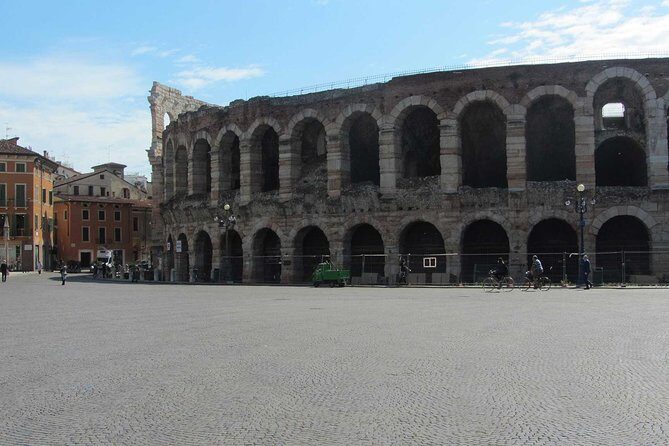
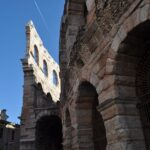
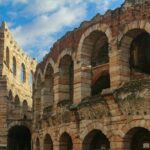
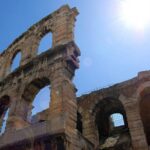
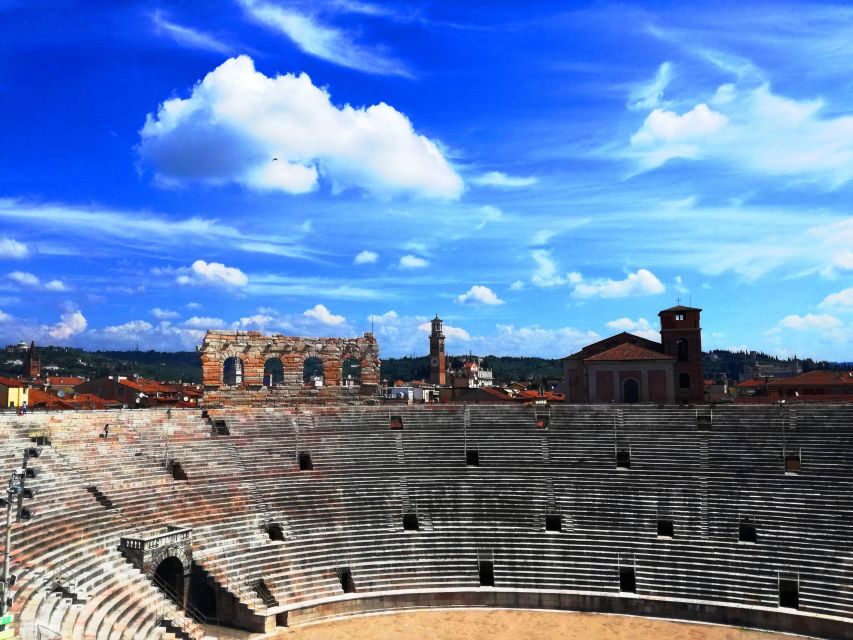
One of the smartest moments comes after you move toward the northern part of the square, in the shadow of the Bra Gardens. From here, you can carefully observe the Arena’s shape and scale. This matters because the Arena isn’t just “big.” It has a specific geometry, a relationship with the town around it, and a complex pattern of access.
Your guide points out details that help you understand evolution over time—how the Arena changed and what the layout reveals about that process. Even if you’ve seen photos of the Verona Arena before, watching the guide connect design choices to real use makes the structure feel practical, like a machine built for crowds.
Practical tip: treat this like your orientation window. If you want good photos, this is where you’ll get the chance while the guide is setting up the story. After you enter, your attention should shift from angles to movement.
Inside the Amphitheatre: Corridors and Archways With a Purpose
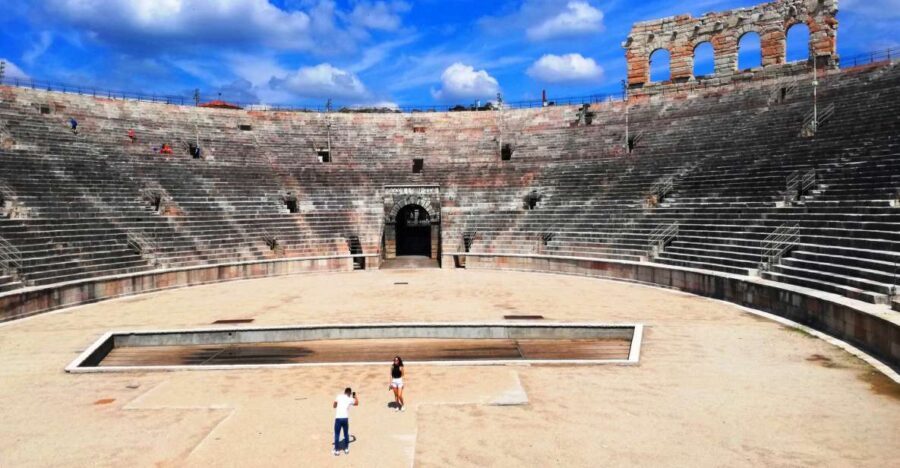
After the exterior viewing, you move toward a shaded “wing” area where you can spot additional, unexpected details. Then it’s time to enter the amphitheatre.
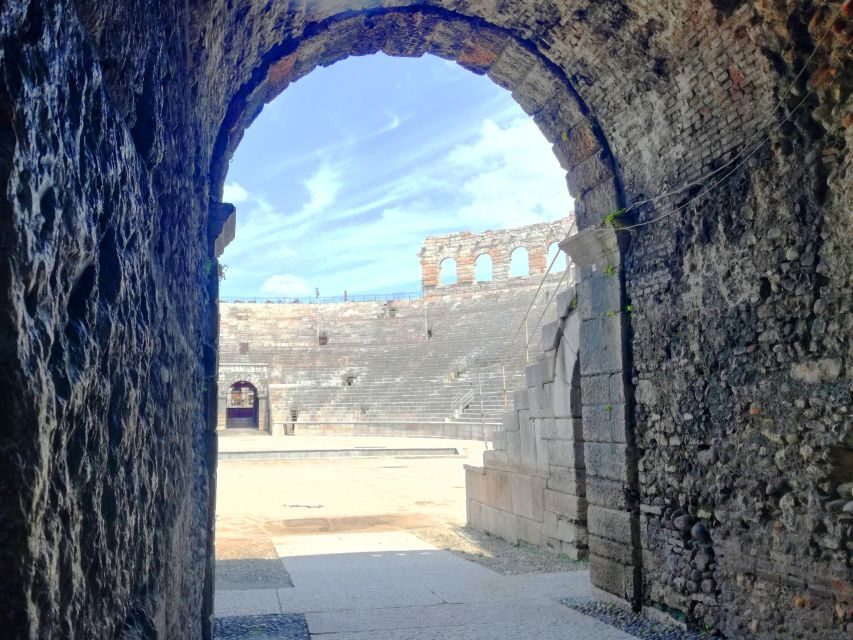
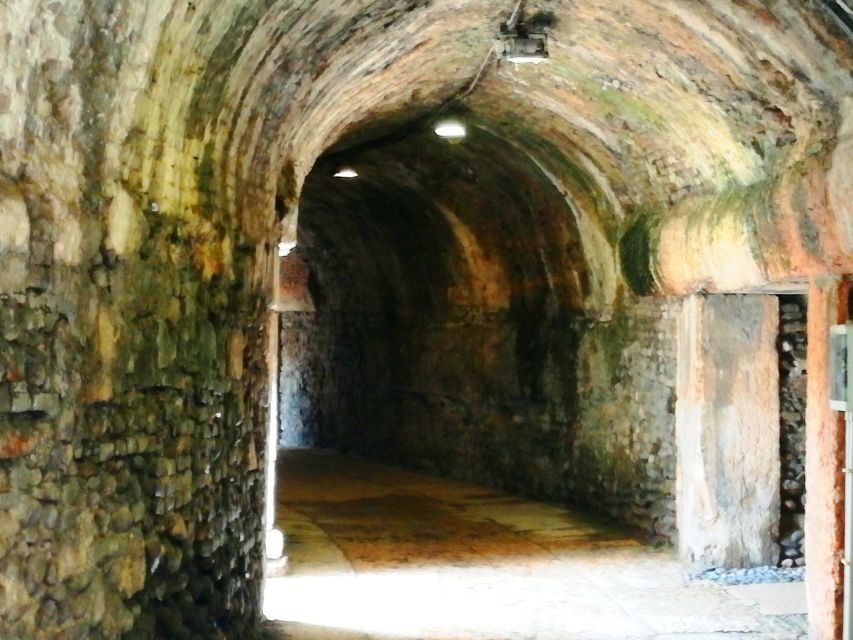
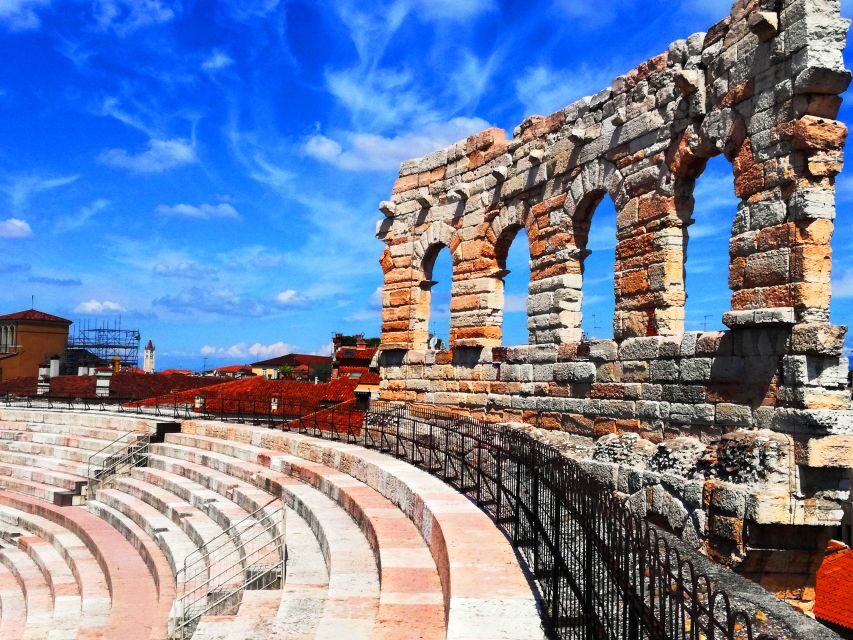
This is where the tour becomes more than a walkthrough. You don’t just look at walls and seats. You walk along corridors and through archways, guided to the engineered links between the outside gates and the internal vomitoria. Vomitoria can sound like a weird Roman word until you understand what it does: it’s about how people flowed into and out of seating areas.
So instead of treating the Arena like a static monument, the guide treats it like a place built for controlled movement. You start to notice how entrances, passages, and entry points are connected in a system. That’s the kind of “how it worked” understanding that makes later visits better, too. Even after the tour ends, you’ll likely look at the building and see pathways and timing logic, not just impressive stonework.
Small downside to consider: because you’re physically walking inside corridors and archways, it’s not the best choice if you hate tight, historical passageways or you get uncomfortable with uneven surfaces. Also, this tour is explicitly not suitable for wheelchair users.
Gladiators, Wild Beasts, and Local Evidence: Stories That Stick
Once inside, the guide takes you to places frequented by gladiators and areas used to house wild beasts. The key is how the stories are anchored to what’s locally found. The best parts aren’t just dramatic descriptions. They’re the little connections between what you see on-site and what those stones suggest about daily life during events.
In the crowd-focused world of gladiator games, it’s easy to imagine everything as chaos. This tour pushes back on that by showing you how organized the spaces were. When you understand where fighters likely moved and where animals were kept, the Arena feels less like legend and more like an operational venue.
I also appreciated the question-friendly style. Fabio Massimo Rapanà (the guide behind this experience) is known for answering questions and talking from expert knowledge. One detail I really liked: if he doesn’t have an immediate answer, he can follow up afterward with research. That kind of follow-through turns a short tour into something that extends beyond the hour.
And yes, there’s a moment to connect emotionally with the space. The guide asks you to consider entering the arena space the way a gladiator might have. Then you can take a seat on the stone steps where spectators traditionally watched. It’s not a gimmick. It’s a reminder that the Arena was built for bodies in motion, not just for staring.
Stop-by-Stop Timing: How the One-Hour Visit Flows
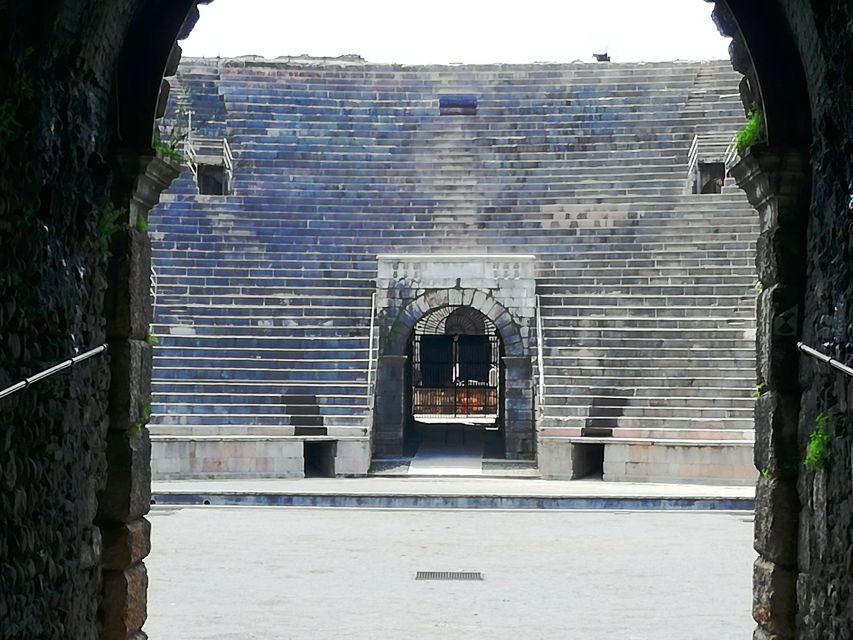
The tour runs about 1 hour. It’s built around a simple rhythm: short walks, photo moments, then the longer main visit inside.
Here’s how it generally plays out:
- Stop 1: Palazzo Barbieri (Comune di Verona)
You meet the guide under the Italian flag and get the orientation start. This is where the tour’s “story engine” turns on.
- Stop 2: Verona Arena photo stop (about 5 minutes)
You grab your first view while the guide is still framing what you’ll learn. If you’re trying to get a clean shot, this is a good window.
- Stop 3: On foot (about 2 minutes)
Short transition. It keeps you moving without tiring you out.
- Stop 4: Another photo stop (about 5 minutes)
Another angle and another moment for the guide to point out design cues.
- Stop 5: On foot (about 2 minutes)
Transition toward the shaded wing area and eventually entry into the amphitheatre.
- Stop 6: Verona Arena visit (about 45 minutes)
This is the main event: corridors, archways, vomitoria connections, gladiator and wild-beast areas, then a quieter final stop.
That final section is especially good. The tour ends in the most hidden and evocative part of the amphitheatre, and then you get free time to stay as long as you wish. I like this approach because it respects your pace. Some tours rush you out. Here, you leave with time to sit and watch your own “movie” play out in your head.


Price and Value: Paying for the Guide Plus the Ticket
The tour price is listed as $159 per group up to 8 for about 1 hour. The big value idea here is simple: you’re not just paying for someone to say facts. You’re paying for guided access, interpretation, and movement through the Arena’s layout—inside and outside—so you understand what you’re looking at.
But the entrance tickets are not included. You’ll need to purchase them separately (online or on-site with help). Ticket prices noted for 2024 are:
- Adults: €12
- Over 60: €9
- Age 18 to 25 (EU citizens): €3
- Minors and Veronacard holders: free
- First Sunday of November to March: €1
So the true cost equation looks like:
- Your group tour fee ($159) + tickets based on your ages.
How to judge value: if you’re coming with a mix of ages, the guide fee spreads well across a group of up to 8. Even if tickets are separate, you’re still paying for a guided explanation of the Arena’s functioning—access points, vomitoria, and use of different areas—rather than just buying entry and wandering alone.
Also, this tour includes skip-the-ticket-line. That can save time when you’re trying to keep Verona’s schedule from turning into a queue.
What You’ll Get From a Certified Local Guide in Four Languages
A big practical win is the guide’s ability to teach clearly in Italian, German, English, and Spanish. That means you’re less likely to lose details in translation. And since the guide is local and certified, the explanations come with a sense of what’s visible on-site and what’s supported by evidence you can actually point at.
Fabio Massimo Rapanà’s style, based on strong past feedback, leans heavily into storytelling backed by expertise. One review also noted the experience felt more like an informative performance than hands-on interaction. That’s not a negative for me. If you want guided narrative with strong structure, this fits. If you’re hoping for lots of participation games, you might find it more lecture-driven than workshop-driven.
Who Should Book This Verona Arena Tour
This is a great match if:
- You like Roman history but want it explained through spaces and movement.
- You enjoy asking questions and getting straight answers.
- You want an efficient way to understand the Arena in an hour, then still have time to sit on the stone steps afterward.
- You’re traveling with kids who can handle an hour of stories and sights. The Arena design and gladiator framing tend to hold attention.
This is less ideal if:
- You need wheelchair accessibility (it is not suitable for wheelchair users).
- You’re strongly budget-sensitive and don’t want to add ticket costs on top of the tour fee.
- You want a self-guided, wander-at-will experience only. This tour is structured, and the value is in following the guide’s route.
Should You Book the Verona Arena at the Gladiators’ Time Tour?
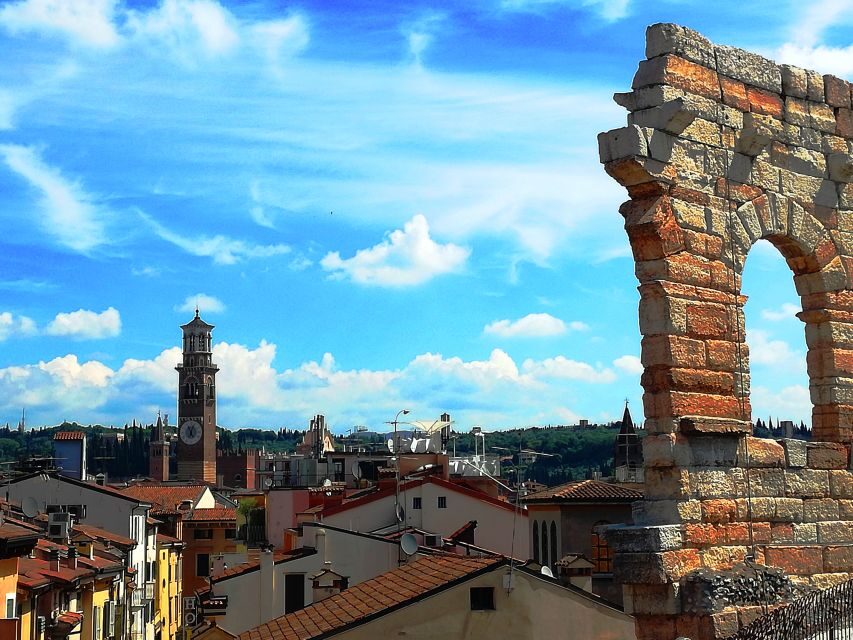
Yes, I think it’s worth booking if you want a clearer understanding of what you’re standing in. The standout advantage is the guided explanation of how the Arena worked: corridors, archways, and the link between external gates and internal vomitoria, plus a focus on gladiators and wild beasts in areas connected to evidence.
If your goal is only photos and a quick look, you might skip the guide. But if you want Verona’s biggest Roman amphitheater to make sense beyond the obvious, this is the kind of hour that pays you back every time you replay it later.
FAQ
Where do we meet for the Verona Arena tour?
Meet your guide in front of the Town Hall, Palazzo Barbieri (Comune di Verona), just underneath the Italian flag.
Where does the tour end?
The tour ends back at the meeting point.
How long is the tour?
It lasts about 1 hour.
Is the tour private?
Yes. It’s a private group, up to 8 people.
Are entrance tickets included?
No. Entrance tickets are not included in the tour price.
How much are Arena entrance tickets?
For 2024: adults €12, over 60 €9, EU citizens aged 18–25 €3, minors and Veronacard holders are free. First Sunday of the month November to March: €1.
Can I buy tickets on the spot?
You can purchase tickets online or on the spot, and the guide can help you in case you buy on the spot.
What languages are available for the guide?
The tour offers live guiding in Italian, German, English, and Spanish.
Is the tour wheelchair accessible?
No. It is not suitable for wheelchair users.
What’s the cancellation policy?
You can cancel up to 24 hours in advance for a full refund.