REVIEW · VERONA
From Venice: Private Tour of Verona
Book on GetYourGuide →Operated by Keys Of Italy / Milan and Venice · Bookable on GetYourGuide
Verona in a day trip beats the slow crawl. This private tour from Venice turns a long journey into a quick train hop, then gives you a guide for a smart, history-filled walk through the city center.
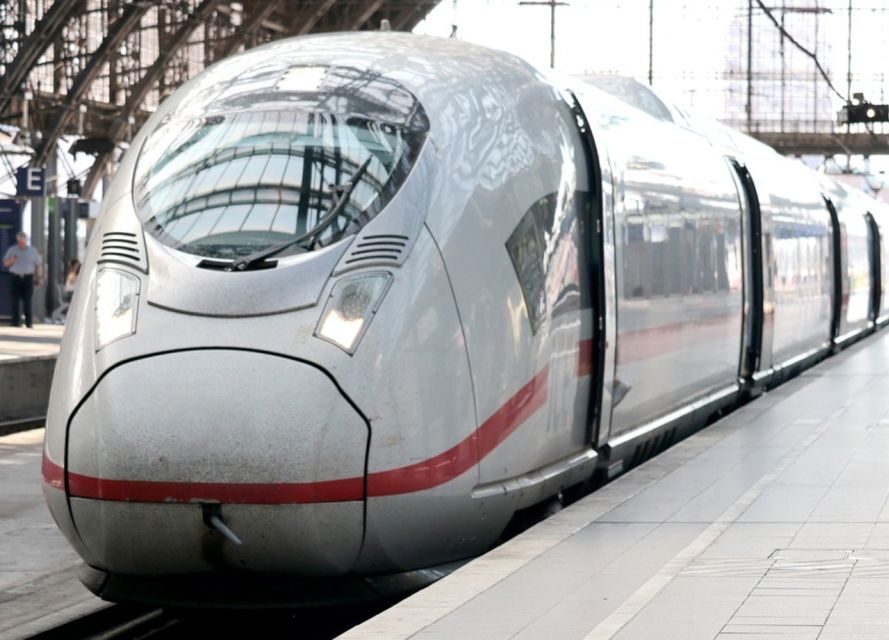
I love the high-speed train that makes the 75-mile Venice-to-Verona route feel effortless, and you get headsets so you can hear every detail while walking the cobblestones. The one thing to watch: it’s a full day (about 7 hours), and food isn’t included, so you’ll want a plan for lunch and any snacks.
In This Review
- Key highlights (what makes this tour worth your time)
- Venice to Verona: the timing that actually works
- Meeting point at Santa Lucia: start on time for an easy day
- Private guide + headsets: how you get more out of the same stops
- First stop energy: getting from the station into the historic center
- Verona at street level: cobblestones, alleyways, and the city’s layers
- Juliet’s Balcony and the 14th-century Gothic mansion connection
- Piazza delle Erbe: Verona’s main square and the rhythm of daily life
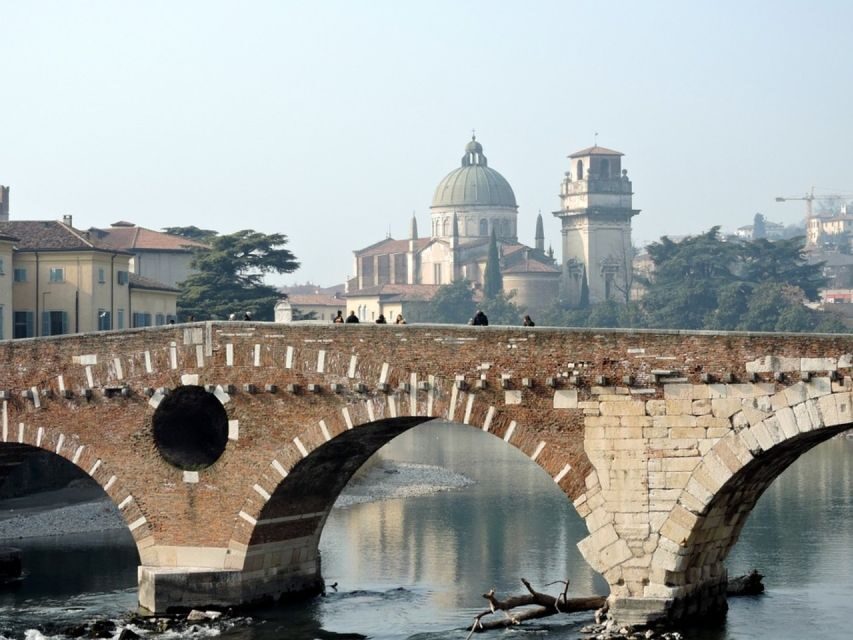
- Roman Bridge (dating back to 100 BCE): how to see Roman work in real life
- Basilica of San Zeno: stepping into a 10th-century start
- Return to Venice: included tickets keep the day stress-free
- What the tour includes (and what you’ll need to handle)
- Price and value: is $317.20 per person reasonable?
- Who this Verona day trip suits best
- Should you book this tour?
- FAQ
- How long is the Venice to Verona private tour?
- Where do I meet the guide in Venice?
- What’s included in the price?
- Is food included during the tour?
- What sights will we see during the walking portion?
- What languages are available for the guide?
- Do I need an ID or passport?
- Is there free cancellation?
Key highlights (what makes this tour worth your time)
- 75-mile high-speed train: about an hour each way, with included round-trip tickets
- A true private walking guide: commentary tailored to what you’re looking at, not a rushed script
- Juliet’s Balcony in context: a look at the 14th-century Gothic building said to connect to Shakespeare’s story
- Roman Bridge (100 BCE): you see a surviving piece of Roman infrastructure, then connect it to later Verona
- Piazza delle Erbe and local life: the main square as a living crossroads of old and new
- Basilica of San Zeno (begun 10th century): a major stop that anchors your day in early medieval Verona
Venice to Verona: the timing that actually works
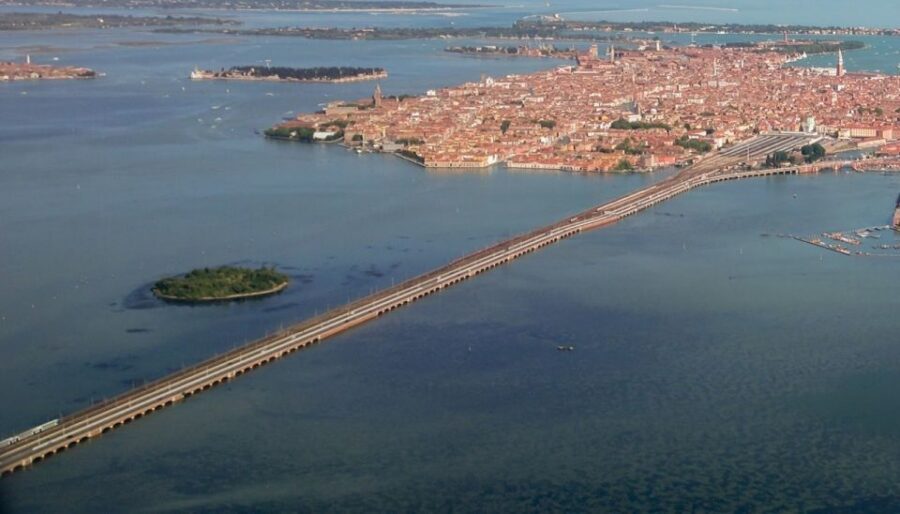
The biggest value here is how the day is built around motion and focus. You start at Stazione di Venezia Santa Lucia, and then you take a fast train straight to Verona. It’s about an hour on board, covering roughly 75 miles without the stop-and-start pain that can eat a whole day on other itineraries.
Once you arrive, you don’t wander alone. You meet your private guide at Verona’s main station, and then you shift into a concentrated walking tour that lasts about 3 hours. That structure matters. It means you spend your energy learning the city instead of figuring out where to go next.
On the way out, you also get help with friction. The tour includes an express security check, so you’re not standing around longer than you have to. And because the group is private, your pace stays human—less waiting, fewer compromises.
Other private tours in Verona
Meeting point at Santa Lucia: start on time for an easy day
Your tour start is inside Stazione di Venezia Santa Lucia, in front of the shop Kiko Milano. Arrive 15 minutes early. That small time cushion helps a lot in a big station, and it reduces the chance you’re stuck juggling directions and luggage while everyone else is already leaving.
Bring your passport or ID card, and wear comfortable shoes. Verona is a walking city with cobblestones and uneven spots. You’ll be moving through alleyways and squares, so anything even slightly uncomfortable will feel like a bigger deal by hour three.
If you’re the type who likes to arrive early and soak up the station atmosphere, you’ll be happy here—this format doesn’t punish you for extra time. It just keeps the day running smoothly.
Private guide + headsets: how you get more out of the same stops
This is a private group tour, which changes the whole feel of a day trip. Instead of sharing attention with strangers, your guide can react to what you’re curious about: architecture vs. storytelling, Roman remains vs. medieval churches, or how Verona connects to Shakespeare.
Headsets are included. That’s a big deal on this kind of tour because you’re outside for most of it—near traffic, across open squares, and through tight lanes. With headsets, you don’t have to guess what the guide said, and you can keep your eyes where they belong: on the buildings, not on the back of someone’s head.
Languages offered include English, French, Italian, and German. That matters if you’ve got a stronger preference than English-only tours.
First stop energy: getting from the station into the historic center
After you meet at Verona’s main station, you move into the old core. In one recent experience, the guide (Claudia) met the traveler at the station and handled a taxi transfer to downtown before starting the walking portion.
Not every guide will handle it the same way, but the point is consistent: you shouldn’t waste the best hours of your day trying to navigate from the station on your own. Once you’re in the center, the tour becomes all about small streets, big façades, and the kind of street-level details you’d miss if you just followed a map.
Verona at street level: cobblestones, alleyways, and the city’s layers
The walking portion is about 3 hours, and it’s designed to connect Verona’s eras instead of treating each attraction like a separate postcard.
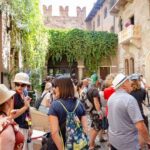
You’ll stroll through winding cobblestone alleyways lined with ornate, centuries-old buildings. That setting is more than scenery—it’s how Verona tells its story. As you move, your guide links what you see to the timeline of the city, so the Roman pieces don’t feel random and the medieval ones don’t feel like detached chapter headings.
This is where a private guide really earns its fee. You can ask questions, get clarity on details you notice, and stop for context rather than just taking photos and pushing on.
Other Venice day trips from Verona
Juliet’s Balcony and the 14th-century Gothic mansion connection
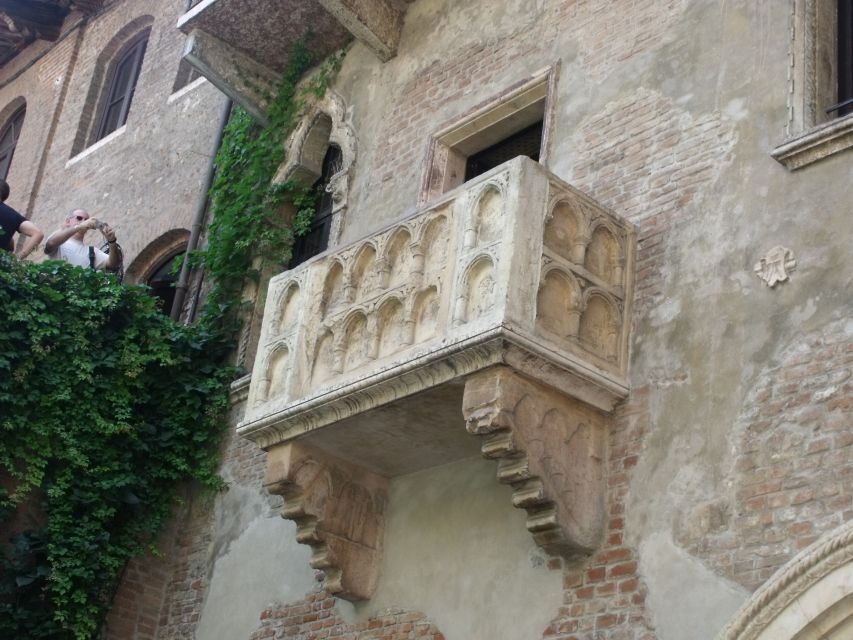
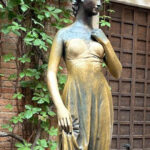
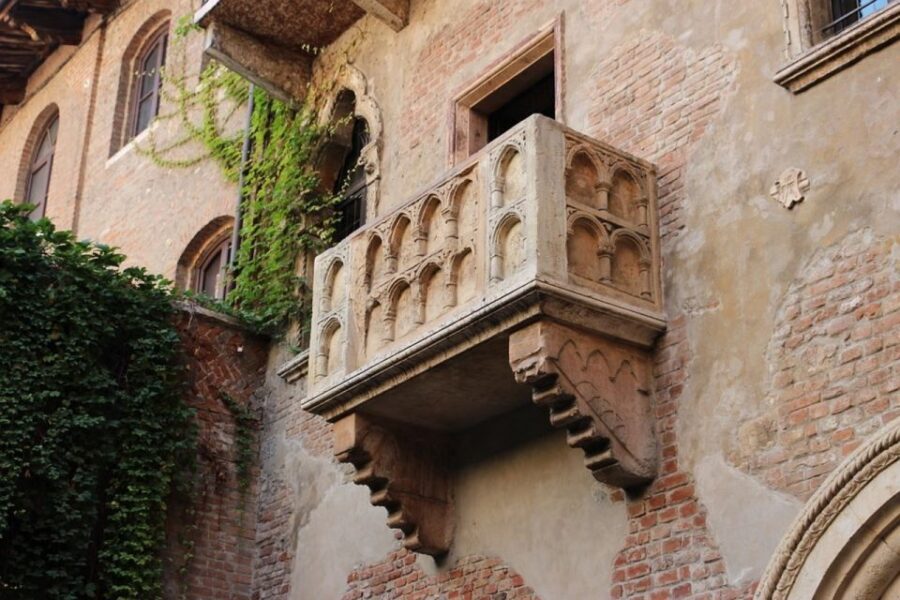
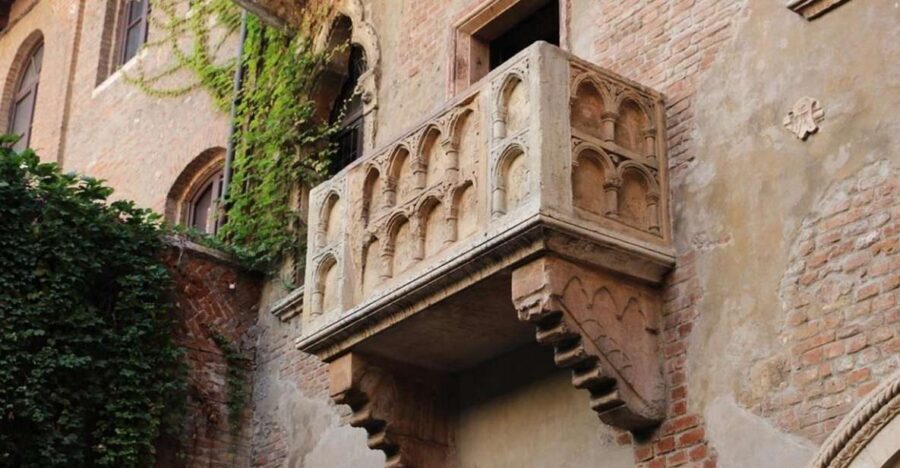
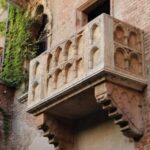
A key highlight is Juliet’s Balcony, tied to a 14th-century Gothic building said to have inspired Shakespeare’s famous Romeo and Juliet monologue. Even if you know the story well, the value of this stop is the setting: the building style, the time period implied by the Gothic architecture, and how Verona sells the Shakespeare connection without losing sight of its older identity.
Here’s the practical angle. Don’t treat it as only a landmark for fans. Use it as your orientation point for how the city turns literature into visible places. Your guide will help you understand what’s rooted in history and what’s part of the storytelling tradition that Verona is proud to carry forward.
Piazza delle Erbe: Verona’s main square and the rhythm of daily life
After the literary stop, the tour shifts to a public square: Piazza delle Erbe. It’s described as Verona’s bustling main square, and that matters because squares are where cities reveal themselves.
You’ll get time to walk through and absorb the atmosphere while learning what makes this plaza important historically and how it functions today. If you want to understand modern Verona, squares like this are the quickest way in. The buildings around the square act like reference points for the guide’s explanations of how the city developed.
Drawback to consider: squares can be busy, and your walking pace might slow slightly as you look up at façades and listen. With headsets and a private guide, it’s still manageable, but don’t expect this part to feel like a quiet museum lane.
Roman Bridge (dating back to 100 BCE): how to see Roman work in real life
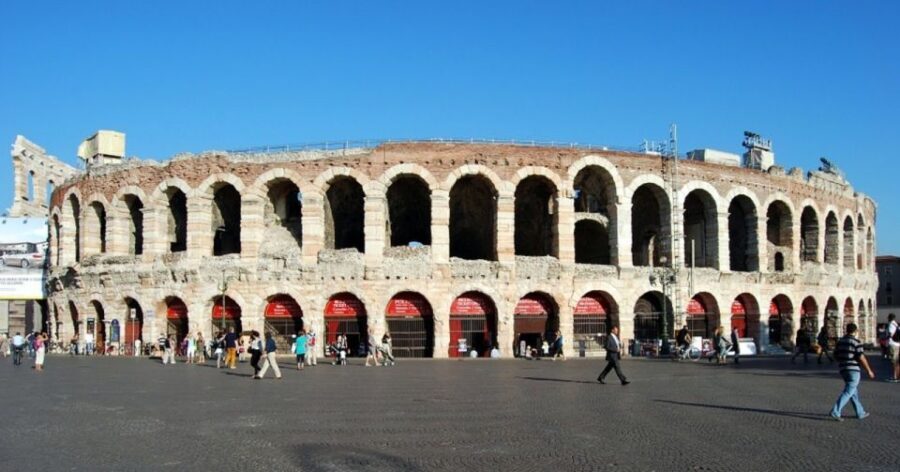
One of the most impressive moments on this tour is the Roman Bridge, dating back to 100 BCE. Seeing something that old is one thing; understanding how it fits into later Verona is what makes the stop powerful.
Your guide frames the bridge as part of a broader story of Roman structures that shaped the city long before the medieval and Renaissance layers came along. The practical takeaway for you: when you look at surviving Roman infrastructure, you’re looking at engineering and choices—routes, crossings, and long-term planning that kept working across centuries.
If you’re the type who likes explanations that connect stone and function, this stop will feel especially satisfying. It’s not just a photo opportunity. It’s a clue about how Verona was built to move people and trade.
Basilica of San Zeno: stepping into a 10th-century start
The tour finishes with Basilica di San Zeno, a standout religious and architectural stop whose groundwork began in the 10th century. This is a different kind of “timeline moment” than Juliet’s Balcony or the Roman Bridge. Instead of a single dramatic landmark tied to a story, this is a place that represents the long arc of Verona’s medieval identity.
What I like about ending here is the way it gives your day emotional weight. After walking through streets and public spaces tied to commerce, legend, and Roman engineering, a basilica stop adds grounding. Even if you’re not a church superfan, you’ll leave with a stronger sense of why Verona mattered over time, not just how it looked at a specific moment.
Return to Venice: included tickets keep the day stress-free
Once your Verona walk is done, you head back to Venice by train. Return tickets are included, which saves you the hassle of hunting for schedules mid-trip.
You’ll have a way to choose your departure time for the return journey. In one experience, the operator (Keys Of Italy / Milan and Venice) provided options for the trip back and sent train tickets promptly. That kind of planning support is exactly what makes a day trip feel reliable instead of improvised.
You end back at the meeting point in Venice (inside Stazione di Venezia Santa Lucia, by Kiko Milano). So you don’t have to solve the “how do I get back from the city center” problem.
What the tour includes (and what you’ll need to handle)
Included:
- Round-trip train tickets between Venice and Verona
- A local guide
- Headsets so you can hear the guide clearly
Not included:
- Food and drinks
That’s the main planning gap. If you like to eat like a local, plan to stop for lunch either before the walking portion or after it ends. You’ll cover plenty of ground, and waiting around for a sit-down meal can steal time you’d rather spend looking.
Also remember: you’ll likely be on your feet for much of the day. Bring comfy shoes and keep your daypack light.
Price and value: is $317.20 per person reasonable?
At $317.20 per person, this isn’t a bargain-basement tour. But it also isn’t just a ticket to Verona. You’re paying for the combination of:
- Round-trip high-speed train time savings (about 1 hour each way)
- A private local guide for about 3 hours walking
- Headsets to make the guiding usable
- Built-in support for the schedule and ticketing
Where the value clicks is if you want a day trip without guessing, without crowd management, and with explanations that connect multiple eras of Verona—Roman (including the 100 BCE bridge), Gothic/legend (Juliet’s Balcony), and early medieval (San Zeno).
If you’re traveling with others and can share the guide cost, the per-person value can feel even better. If you’re traveling solo and like to DIY with a map, you might find cheaper ways to reach Verona. But you’ll lose the structure and the clarity that makes this day trip feel efficient.
Who this Verona day trip suits best
This tour fits best if you:
- Want a focused day rather than a slow, multi-day Verona plan
- Like history that’s explained as you walk past real buildings
- Prefer a private guide who can answer questions and keep your pace
- Appreciate Roman and medieval architecture, plus the Shakespeare connection
It may not suit you as well if:
- You’re hoping for lots of free time to wander alone for long stretches
- You want food included or a planned sit-down lunch
- You dislike guided walking tours and prefer self-paced exploration
Should you book this tour?
If you want a Verona day that runs cleanly—fast train, guide waiting for you, headsets included, and a route that connects Juliet, Piazza delle Erbe, Roman Bridge, and San Zeno—this is an easy yes.
I’d skip it only if you’re dead set on self-guiding and don’t care much about context. Otherwise, the structure is strong: it protects your time, reduces confusion, and turns a short visit into a real understanding of how Verona layers its stories.
FAQ
How long is the Venice to Verona private tour?
The total duration is 7 hours, including the train ride and a 3-hour guided walking tour in Verona.
Where do I meet the guide in Venice?
The meeting point is inside Stazione di Venezia Santa Lucia, in front of the shop Kiko Milano. Arrive 15 minutes early.
What’s included in the price?
Included are round-trip tickets between Venice and Verona, a local guide, and headsets to hear the guide clearly.
Is food included during the tour?
No. Food and drinks are not included.
What sights will we see during the walking portion?
You’ll visit highlights including Juliet’s Balcony (in a 14th-century Gothic building said to have inspired Shakespeare), Piazza delle Erbe, the Roman Bridge (dating back to 100 BCE), and the Basilica of San Zeno (groundbroken in the 10th century).
What languages are available for the guide?
The live tour guide is available in English, French, Italian, and German.
Do I need an ID or passport?
Yes. You should bring a passport or ID card.
Is there free cancellation?
Yes, free cancellation is available up to 24 hours in advance for a full refund.