REVIEW · VERONA
Dante in Verona: From Inferno to Paradise
Book on GetYourGuide →Operated by Slow Travel · Bookable on GetYourGuide
Verona is a great city for stories, and this one tells them like scenes. I love how the walk turns Dante’s Divine Comedy into street-level history, and I love that you get live acting instead of just facts. One thing to consider: it’s not listed as suitable for pregnant women, so plan for a steady walking route and bring comfortable shoes.
What makes this tour especially fun is the angle. You’re not just seeing Verona’s big sights—you’re seeing why Dante cared about this place, and how the Scaliger-era world shaped the imagery people still connect to Inferno, Purgatory, and Paradise. Guides like Giovanni and Leonardo have a way of making symbolism feel human, not academic, and they keep the pace easy while covering the key stops.
If you want a straightforward, meaningful way to start (or refresh) a Verona visit, this is a solid use of 1.5 hours. At $45 per person, you’re paying for an expert guide, guided landmark time in multiple areas of the center, and the extra performance element that most tours skip.
In This Review
- Quick Take: What You’ll Love Most Here
- Verona Through Dante’s Eyes, From Inferno to Paradise
- Starting at Piazza San Fermo: Getting Oriented Fast
- Porta Leoni to Juliet’s House: Streets That Explain the Poetry
- Arche Scaligere and Lamberti Tower: Stone Monuments, Living Meaning
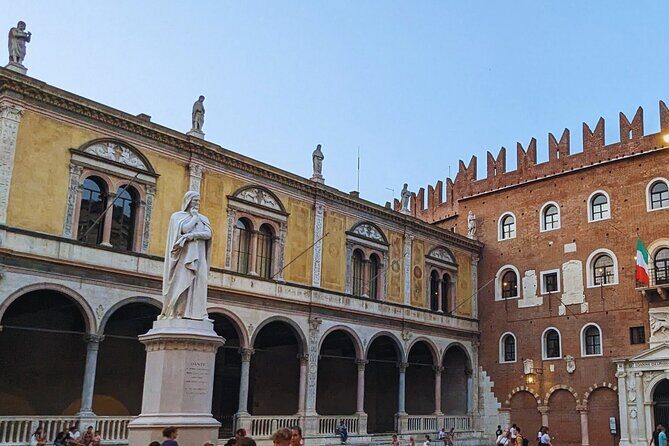
- Piazza dei Signori: The Middle of the Story
- Ponte Pietra and Verona Cathedral: From Real Bridges to Big Faith
- Live Acting With Dante: Hearing the Story, Not Just Reading It
- Price and Value: Is $45 Worth 1.5 Hours in Verona?
- Who This Tour Suits (and Who Might Skip)
- A Practical Way to Prepare Before You Go
- Should You Book Dante in Verona: From Inferno to Paradise?
- FAQ
- How long is the Dante in Verona walking tour?
- What is the price per person?
- Where does the tour start?
- Where does the tour finish?
- What landmarks are included on the route?
- What languages is the tour offered in?
- Is the tour wheelchair accessible?
- Is it suitable for pregnant women?
Quick Take: What You’ll Love Most Here
- Dante expert storytelling in 1.5 hours, focused on Verona’s streets and his writing
- Real landmarks connected to Dante’s Verona days, not generic “sightseeing”
- Inferno, Purgatory, and Paradise pieces tied to traditions and places
- Live acting with Dante, so you hear the poem-world in a new way
- A pace built for walking comfort, with stops chosen so you can rest (including shade when possible)
Verona Through Dante’s Eyes, From Inferno to Paradise
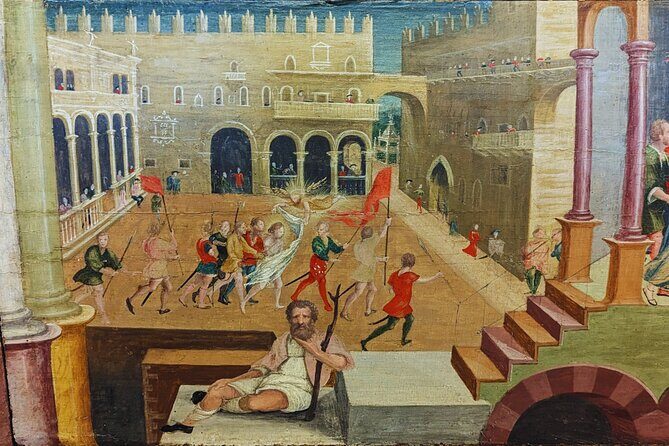
When you read Dante, it can feel like the story lives in another world. This tour flips that idea. You’re walking in Ancient Verona while the guide brings Dante to life as a traveler, poet, and human being—someone who moved through real streets, interacted with real families, and wrote with purpose.
The core value here is that the guide doesn’t treat The Divine Comedy like a distant monument. They use Verona’s visible landmarks—arches, tombs, churches, squares—to explain why Dante’s imagery landed where it did. That matters because Dante’s poetry is packed with symbolism. Seeing the settings helps you understand what those symbols might have meant in the 12th–13th century context, when civic life, religion, and politics were tightly connected.
I also like that the tour frames Dante as part of Verona’s social world. You learn that he was connected as a guest of the illustrious Scaligeri Family, who left strong traces in the city through castles, arch bridges, palaces, and frescoed street walls. Even if you’re not a deep Dante reader, that context gives you a way to look at Verona that feels more personal than postcard tourism.
Other Dante in Verona tours

Starting at Piazza San Fermo: Getting Oriented Fast

The tour starts at Piazza San Fermo, and that’s a smart place to begin. It’s central enough that you’ll feel like you’re stepping right into Verona’s everyday stone-and-street rhythm, not launching from some far-off transit stop.
Meeting instructions are simple: you’ll find a little square along a road with a bar on the corner, and you should wait in front of the church. The info notes it’s about an 8-minute walk from the Arena, so if you’re already near the main Roman sites, you won’t feel like you’re crossing the whole city to start.
Also, this is a 1.5-hour walking experience. That’s a good length for first-timers and busy travelers. It’s long enough to cover meaningful ground, but short enough that you won’t feel glued to a schedule all day.
If you’re planning your Verona day: I’d place this early. Even if you’ve read Dante before, it gives you fresh context. And if you haven’t, it still offers a map for how to look at the city afterward.
Porta Leoni to Juliet’s House: Streets That Explain the Poetry
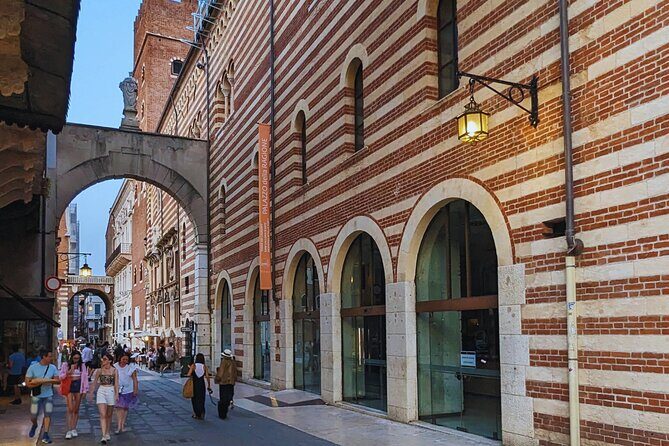
After Piazza San Fermo, you move toward Porta Leoni for a brief 10-minute sightseeing stop. A city gate is more than a photo spot. The guide uses these kinds of transitions to set a tone: you’re moving through a place that once had edges and entries—very different from today’s open feel.
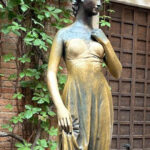
From there, you go deeper into the central Verona lanes for another 10-minute sightseeing segment tied to Dante’s world. Then you stop at Juliet’s House for about 5 minutes. Even if you think of Juliet as Shakespeare, this stop helps ground you in what Verona visitors already recognize, so Dante’s story doesn’t feel like it’s floating in a textbook. It’s a short stop, but it’s effective: you get a familiar Verona landmark, then the guide reconnects it to the deeper medieval setting.
Here’s what I’d watch for as you walk: the guide’s way of connecting “where we are” with “what the imagery is doing.” Dante’s writing often works through contrast and progression—shifting states of mind and spiritual condition. When the guide points at civic structures and explains the traditions linked to those spaces, the poem starts behaving like something you can track, not just something you memorize.
Arche Scaligere and Lamberti Tower: Stone Monuments, Living Meaning

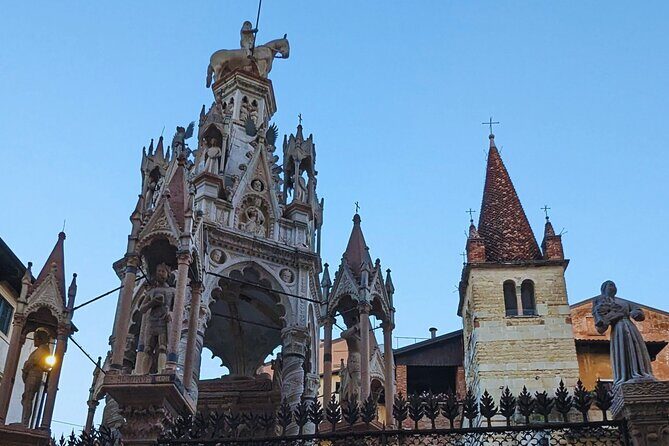
Next comes Arche Scaligere for around 10 minutes. If you like monuments with meaning, this part matters. Tombs and funerary architecture are where medieval culture gets very direct. This tour uses them as a gateway into how powerful families shaped the city’s identity—exactly the kind of environment that would influence a poet writing about fate, justice, and human choices.
Then you get a short 5-minute stop at Lamberti Tower. A tower doesn’t just give views—it signals status, visibility, and civic pride. For Dante’s-era Verona, those ideas were part of daily life, even for someone writing about the spiritual world. The guide’s job is to connect that civic energy to the symbolic language people later carried through Dante’s tradition.
One of the recurring strengths in the reviews is how guides communicated symbolism clearly, including how they explained ideas without making you feel slow or shut out. If you’re the kind of traveler who usually skips “the deeper meaning” sections, this tour might still work for you, because it anchors interpretation in physical stops you can see and walk around.
Piazza dei Signori: The Middle of the Story
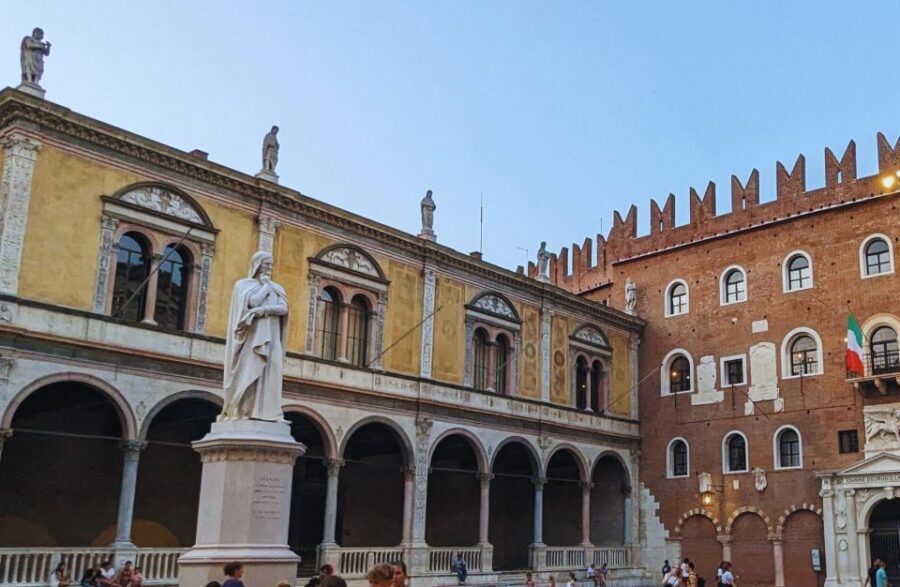
You spend about 10 minutes at Piazza dei Signori, then you come back for an additional 5 minutes. That extra time isn’t random. It usually signals that the guide wants you to settle into a square, notice details, and let the Dante connection land properly.
Squares were key stages for medieval life—public talk, religious rhythm, civic power. Dante’s work interacts with these themes because it’s about judgment, order, and moral direction. So the guide can use this kind of space to explain how “spiritual journey” themes translate to what people experienced in public life.
This is also where you may appreciate the guide’s pacing decisions. One review specifically mentioned that the guide selected stops in the shade, which can make a huge difference on warm days. Even if the weather is mild, it changes your comfort level and keeps attention from slipping.
Ponte Pietra and Verona Cathedral: From Real Bridges to Big Faith
Later, you head to Ponte Pietra for a short 5-minute sightseeing stop. Bridges are perfect for this theme. Dante’s work moves across thresholds—spiritual crossings, moral turns, and stages of the journey. Standing at a real bridge while the guide connects it to the idea of passage makes the concept feel less abstract.
After that, the tour reaches Verona Cathedral for about 10 minutes. This is where the “Inferno to Paradise” arc starts to feel less like a clever marketing phrase and more like a progression you can follow. Churches and cathedral spaces are built for a reason: they guide your attention upward, inward, and forward, and they frame belief in a physical environment.
Finally, you finish at Cattedrale di Santa Maria Matricolare. That ending location matters because it gives the tour a strong “wrap.” You’re not just stopping for a view; you’re ending in a sacred civic space, which fits the tone of Dante’s journey.
Live Acting With Dante: Hearing the Story, Not Just Reading It
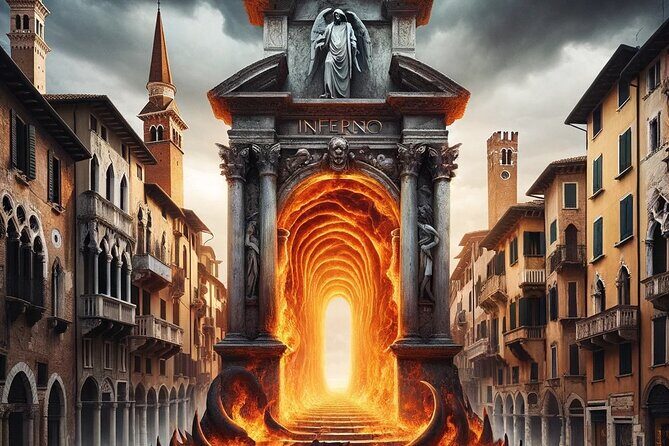
A standout feature here is the live acting experience with Dante. Instead of only listening to a summary, you’re getting performance energy. That matters because Dante’s work is intensely rhythmic and dramatic. When it’s acted, it stops sounding like distant literature and starts sounding like an event.
In the reviews, I noticed a theme: guides framed Dante in a way that felt understandable even with language barriers. Natalie’s comment is a good example of that: the guide transferred knowledge in an easy way, so you’re not stuck needing perfect background knowledge.
What I’d expect you to do during the acting segment is simple: don’t just watch—listen for how the tone shifts. Dante’s themes move through emotional registers. When the guide connects those pieces to what you’re seeing around you, the performance becomes the glue between poem-world and street-world.
If you love theater-style storytelling, this is the moment that justifies the tour as more than a standard walking history session.
Price and Value: Is $45 Worth 1.5 Hours in Verona?
$45 per person for 1.5 hours can sound either fair or steep depending on what you compare it to. Here’s the value logic: you’re paying for a specialized expert-led route (not a generic overview), you’re covering multiple major landmarks in the city center, and you’re getting live acting plus storytelling tied to Inferno, Purgatory, and Paradise.
A standard guided walking tour might give you narration. This one gives you narration with a strong thematic structure and an actual acted component. That’s where the value shows up, especially if you’re the kind of traveler who learns better through story and performance than through dates and architecture names.
Also, the tour is offered in English and Italian, and it’s wheelchair accessible. That flexibility affects value too—if you have mobility constraints, it’s often hard to find a themed walk that still works.
If your goal is only quick photos and zero thinking, you might feel you paid too much. If your goal is to understand why Verona feels the way it does through Dante’s lens, you’ll likely feel the price makes sense.
Who This Tour Suits (and Who Might Skip)
This experience fits best if you fall into one of these categories:
- You want an easy-paced walk with meaning, not a marathon history lecture
- You care about Dante and want Verona connected to his writing in a practical way
- You’d enjoy clear explanations of symbolism without needing a degree in medieval literature
- You like guided storytelling that includes a performance element
It’s not listed as suitable for pregnant women, so plan an alternative if that applies to you.
Because the tour is walking-based, bring comfortable shoes and treat it like a real city walk, not a bus tour with stops. That’s especially important in summer, when you’ll want frequent hydration and shade breaks where possible.
A Practical Way to Prepare Before You Go
You don’t need to memorize Dante. Still, you’ll get more from the tour if you do a tiny bit of prep:
- Brush up on the basic arc: Inferno, Purgatory, Paradise
- Decide what you want most: setting details, story interpretation, or both
- Wear shoes you can stand in for short bursts, since you’ll be sightseeing at several landmarks
If you arrive with at least a light familiarity, you’ll notice how the guide connects episodes to the city’s spaces. If you arrive brand-new to Dante, the tour still works—you’ll get the “who is he and why Verona mattered” layer first, then build from there.
Should You Book Dante in Verona: From Inferno to Paradise?
I’d book this if you want Verona with a point of view. It’s not just a route; it’s a way of seeing the city through Dante’s spiritual and civic world. The combination of guided landmark stops, clear thematic connections, and live acting with Dante is the recipe that makes it worth your time.
I’d skip it if you dislike walking, can’t do the physical demands, or only want a fast, photo-first itinerary. The tour is also explicitly not suitable for pregnant women, so if that’s relevant, pick another Verona activity that fits your needs better.
If you’re on a first visit to Verona, this is a strong start. If you’re returning, it can turn familiar streets into something you suddenly understand differently—one poetic stop at a time.
FAQ
How long is the Dante in Verona walking tour?
It lasts about 1.5 hours.
What is the price per person?
The price is $45 per person.
Where does the tour start?
The tour starts at Piazza San Fermo.
Where does the tour finish?
It finishes at Cattedrale di Santa Maria Matricolare.
What landmarks are included on the route?
Key stops include Verona Cathedral, Piazza Erbe square, Arche Scaligere tombs, Ponte Pietra Arch Bridge, plus other Dante-connected sights.
What languages is the tour offered in?
The tour is offered in English and Italian.
Is the tour wheelchair accessible?
Yes, it is listed as wheelchair accessible.
Is it suitable for pregnant women?
No, it is listed as not suitable for pregnant women.