REVIEW · VERONA
Dante in Verona: From Inferno to Paradise
Book on Viator →Operated by Slow Travel Italia · Bookable on Viator
Dante turns Verona into a moral map. This 90-minute walking tour strings together small, real stops—church corners, a medieval street, and Gothic tombs—so Dante Alighieri’s ideas feel close to the pavement, not trapped in a book. It’s offered in English and runs with a small group size, so the pace stays human.
I love two things most. First, the tour connects Dante to specific places in Verona, including sites tied to the Alighieri family and Cangrande I. Second, the guides lean into storytelling so you can follow the logic of the Divine Comedy without feeling lost. A possible drawback: it’s mostly outdoors and short on long indoor breaks, so plan around sun and walking pace.
In This Review
- Key highlights at a glance
- A Dante walk that turns Verona streets into a story
- Start at Stradone S. Fermo, end at the Duomo area
- The Alighieri family chapel: where Dante’s name gets local
- From a defensive tower to a clock: old rivalry in plain sight
- Piazza dei Signori: Dante’s ideas meet a central square
- Via Sottoriva: an old street with views over the hills
- Arche Scaligere: Gothic tombs and Cangrande’s afterlife in literature
- Duomo di Verona: the quieter “Paradise” stop
- Guides make the difference: Leonardo, Giovanni, and Leo’s story approach
- Price and value: why $42.05 can be fair
- Best time to go, and how to pace yourself
- Who this tour suits best
- Should you book Dante in Verona: From Inferno to Paradise?
- FAQ
- How much does the Dante in Verona: From Inferno to Paradise tour cost?
- How long is the tour?
- Is the tour offered in English?
- Where does the tour start and end?
- What is the group size limit?
- Do I get a mobile ticket?
- Can I cancel for a full refund?
Key highlights at a glance
- Small group size (max 15) for a more personal walking pace
- English guide with a mobile ticket format for quick check-in
- Stop-by-stop Dante links, from family chapels to major squares
- Arche Scaligere and Cangrande I explained through Dante’s references
- Quiet, off-the-beaten-path church time to “cool down” after the louder squares
- Admission tickets listed as free for the featured stops
A Dante walk that turns Verona streets into a story
If you like Verona for its romance, you’ll still get plenty of that here. But this tour nudges you to notice something else: the city was part of a living network—families, politics, rivals, merchants, and writers. Dante Alighieri is the thread. The idea is simple and smart: instead of talking about Dante in the abstract, you use Verona itself as the “map.”
The walk is about 1 hour 30 minutes. That length matters. It’s long enough to build a narrative, short enough that you won’t feel trapped in one place. You’ll keep moving, and the guide’s explanations ride along with the streets, squares, and monuments.
Other Dante in Verona tours

Start at Stradone S. Fermo, end at the Duomo area

Logistics are pretty friendly for a tour like this. You start at Stradone S. Fermo, 3 (37121 Verona VR) and the walk ends at Cattedrale di Santa Maria Matricolare, Piazza Vescovado (37121 Verona VR). That means you finish near the old center instead of back at the first corner.
The route is also designed for typical sightseeing energy: you’re outside, you’re walking, and you’re stopping just long enough to make the place click. The tour runs in English and carries a mobile ticket, which is useful if you don’t want to print anything.
One more practical note: the experience is listed as near public transportation, and the group is capped at 15. That usually translates to less crowding at each stop and fewer people bunching up for photos.
The Alighieri family chapel: where Dante’s name gets local
One of the first stops is tied to a place Dante would have known when it was built. In today’s version, that church now contains a chapel built by his family, the Alighieri chapel.
This is a powerful start because it flips the usual “big author” perspective. Instead of thinking of Dante as a distant figure, you’re reminded he belonged to a real family with real ties in Verona. You’re also seeing how time leaves layers. A building changes, functions shift, and yet a family memorial stays put. That’s exactly the kind of detail that makes a literary connection feel believable.
What to watch for here: don’t rush photos. Take a breath, then listen to the guide’s framing. The point isn’t just the chapel—it’s the sense that Verona shaped Dante before he ever became a legend.
From a defensive tower to a clock: old rivalry in plain sight
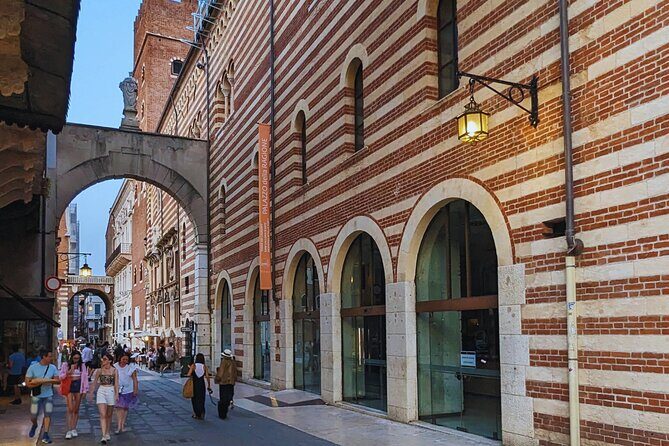
Next comes a spot that makes an old defense idea feel unexpectedly everyday. It looks like a tower clock now, but it used to serve as a tower meant to protect a noble family from rival ones.
This stop gives you context for why Dante’s world was tense. In medieval cities, a tower wasn’t decoration. It was safety. It was status. It was a visible message: we’re here, we can defend ourselves, and we matter.
Even if you’re not a medieval architecture person, you’ll get the logic. The guide’s job is to connect the built environment to Dante’s themes—power, conflict, and moral consequences—so that you start reading the city with a sharper eye.
Piazza dei Signori: Dante’s ideas meet a central square
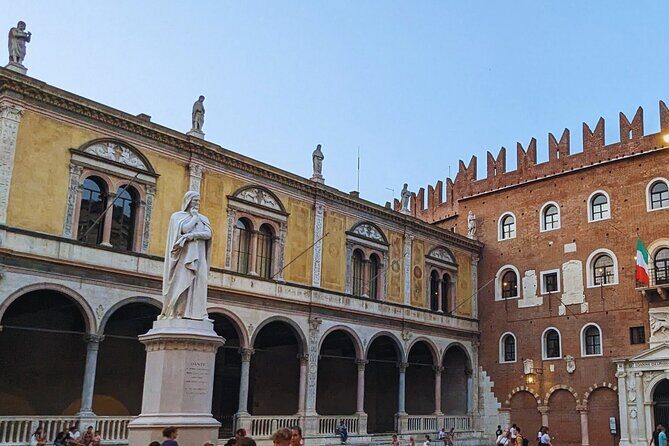
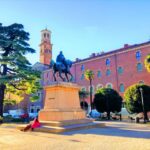
Your walk moves to Piazza dei Signori, one of the key ancient squares in Verona. This stop centers on Dante Alighieri’s life and includes mention of his statue in the piazza.
Here’s why this matters for your brain: squares like this weren’t only scenic. They were political and cultural stages. When you learn how a place worked in Dante’s time, you begin to understand why the Divine Comedy isn’t just theology or poetry—it’s also social commentary. Dante is writing about people under pressure, people making choices, and systems that reward the wrong things.
The tour keeps this stop to about 15 minutes. That’s a good pace. You won’t feel stuck in one spot, but you’ll still get the core connections: Dante in Verona’s public life, and why this square carries meaning for Inferno-related cultural references.
Via Sottoriva: an old street with views over the hills

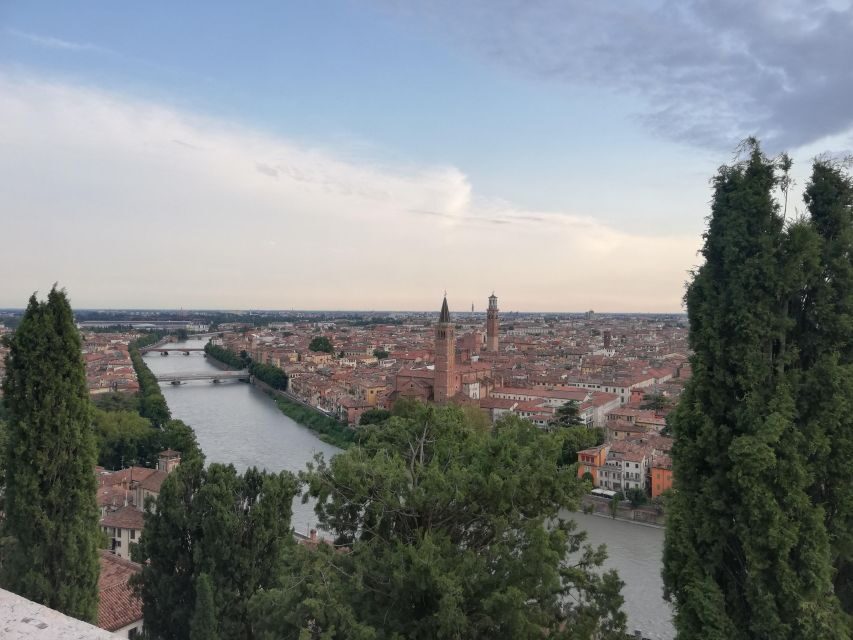
Then you shift to Via Sottoriva, described as one of the oldest and best-preserved streets in Verona, with views toward the hills of Torricelle.
This is where I like the tour’s balance. You get major monuments and then you get a human-scale street. Walking along Via Sottoriva helps you picture everyday movement—where someone might stroll, where trades might happen, and how the city’s layout shapes what people can see and reach.
Don’t treat this as a break you coast through. Listen while you walk. The guide uses small city details to keep Dante’s world grounded. It makes the whole tour feel less like a checklist and more like a story that changes with the scenery.
Arche Scaligere: Gothic tombs and Cangrande’s afterlife in literature
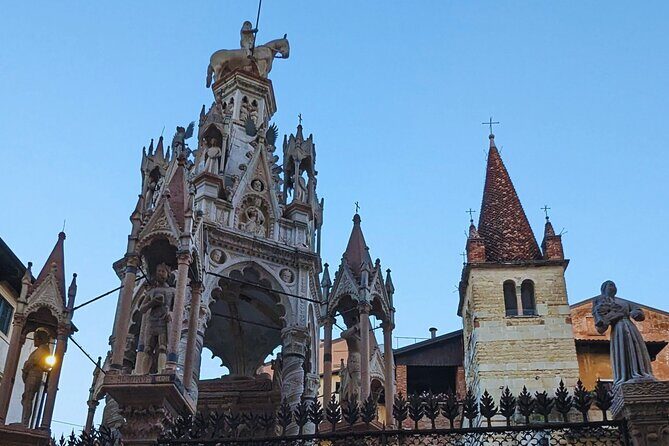
One of the most impressive stops is Arche Scaligere, a set of elaborate Gothic tombs. Among them is the resting place of Cangrande I della Scala, a powerful figure whom Dante admired and referenced in his Divine Comedy.
This is the place where the tour’s title really earns its keep: From Inferno to Paradise, yes—but also from court politics to moral literature. Cangrande isn’t just a name in a footnote. The guide explains the connection so you understand why a ruler would show up in Dante’s poetic world.
Even if Gothic tombs aren’t your main interest, I’d still plan to give this stop your full attention. The architecture does part of the work for you. It’s dramatic and ornate, and that visual impact helps you connect the political power of the era with how Dante framed human choices.
Time is again about 15 minutes, which is smart. Tombs deserve time, but too long here can drain the energy for the calmer final stretch.
Duomo di Verona: the quieter “Paradise” stop
The last major stop is Duomo di Verona – Cattedrale di Santa Maria Matricolare. The tour frames it as a place where the peace of Paradise can be felt, and it’s also described as an off-the-beaten-path spot.
This ending choice is smart for two reasons:
- After the tombs and the louder squares, you get a slower, quieter atmosphere.
- You end with a kind of emotional reset. The Divine Comedy can feel heavy. A Romanesque church gives your mind a place to land.
Expect about 10 minutes here. You’re not being asked to memorize every feature. The goal is the feeling and the thematic wrap-up: Dante’s world of moral order, ending in a space that lets you exhale.
Guides make the difference: Leonardo, Giovanni, and Leo’s story approach
From the experience of guides you might meet—like Leonardo, Giovanni, or Leo—the big strength is how they connect Dante’s life to the places you see. The best moments aren’t just facts. It’s the way the story line gets woven together so Dante becomes readable even if you’re new to him.
If you’re a Dante fan, this will still work because you’ll notice how the tour treats the Divine Comedy as a lived conversation with real history. If you’ve never really read Dante, the tour is set up so you don’t need a crash course first. The guide’s explanations keep it moving.
One practical tip: bring a notepad or save notes in your phone. Dante references can pile up fast, and jotting down a couple of names helps later when you’re back in your hotel room.
Price and value: why $42.05 can be fair
At $42.05 per person, this isn’t a bargain ticket. But for a guided, 1.5-hour walk with a small group limit and a mobile ticket, it can still be good value—especially because the stops include admission listed as free for the key locations along the way.
Where you get your money’s worth:
- You’re paying for interpretation, not just access.
- You’re getting a structured route that turns scattered sites into one story.
- The group cap at 15 helps reduce the usual “too many people at one monument” problem.
If you’re the type who likes to wander on your own, you could recreate part of this day independently. But you’d likely miss the connections that link Dante’s themes to Verona’s specific corners. This tour is basically that “missing link” in one package.
Best time to go, and how to pace yourself
The tour is short, so timing matters. In warmer months, you’ll want to plan for sun exposure and short pauses. Even the best explanation can get hard to enjoy if you’re overheated.
Wear comfortable shoes. The route is built around walking between multiple points, including streets and squares. Bring water. And if you know you prefer shade, start early in the day so you’re not fighting the strongest heat.
Since the pace is designed for most travelers and the group is small, you should feel comfortable joining even if you’re not a super fast walker.
Who this tour suits best
This experience fits best if you:
- want a Dante Alighieri outing that’s tied to real places in Verona
- enjoy literature history when it’s practical and place-based
- like guided storytelling more than museum-style lectures
- want a focused activity that doesn’t eat your whole day
It might feel less ideal if you:
- want long museum time or deep interior study (this tour keeps each stop fairly short)
- dislike outdoor walking during hot weather
- prefer a pure architecture tour without the Dante framing
Should you book Dante in Verona: From Inferno to Paradise?
I’d book it if you want Verona to make sense through one strong lens. Dante is the perfect lens because he connects politics, morality, and personal life—all to actual stone and street corners. The small group size, the English guidance, and the way the stops form a narrative give this tour a clear purpose.
I wouldn’t book it if your main goal is big standalone sights with lots of time inside. This is a story walk. It rewards attention and curiosity, not just casual sightseeing.
If you’re on the fence, a simple test works: ask yourself whether you like the idea of reading a city like a text. If yes, this tour is the kind of half-day (really less than two hours) that can stick with you long after you leave Verona.
FAQ
How much does the Dante in Verona: From Inferno to Paradise tour cost?
The price is $42.05 per person.
How long is the tour?
It lasts about 1 hour 30 minutes.
Is the tour offered in English?
Yes, the experience is offered in English.
Where does the tour start and end?
It starts at Stradone S. Fermo, 3, 37121 Verona VR, Italy and ends at Cattedrale di Santa Maria Matricolare, Piazza Vescovado, 37121 Verona VR, Italy.
What is the group size limit?
The tour has a maximum of 15 travelers.
Do I get a mobile ticket?
Yes. The tour includes a mobile ticket.
Can I cancel for a full refund?
Yes. You can cancel up to 24 hours in advance for a full refund.